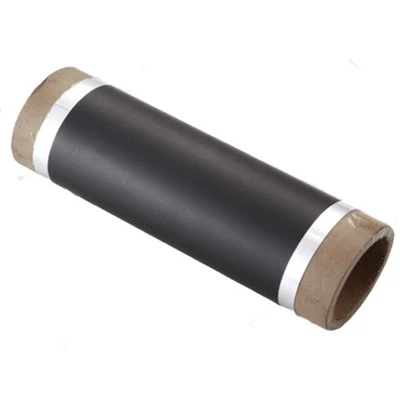
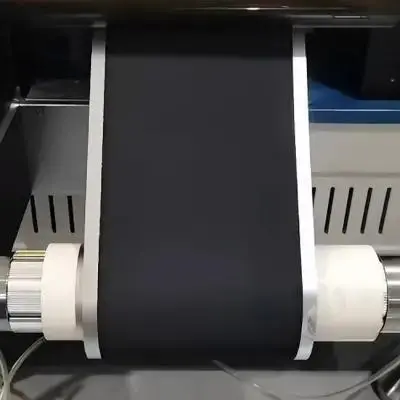
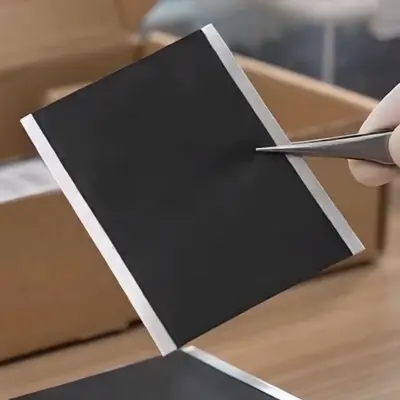
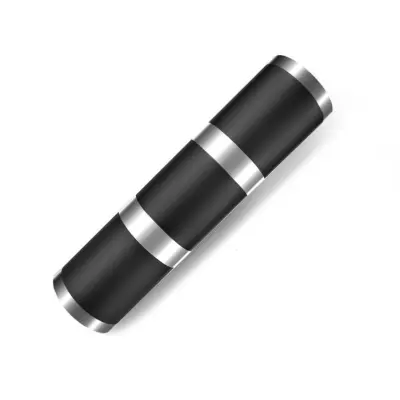

Looking for a reliable Carbon Coated Aluminum Foil Manufacturer for your battery production or material development project?
We specialize in providing Carbon Coated Aluminum Foil for lithium-ion batteries and advanced energy storage applications. By applying a functional conductive carbon coating to high-quality battery-grade aluminum foil, our products are designed to improve the interface between the aluminum current collector and electrode active materials.Compared with conventional bare aluminum foil, Conductive Carbon Coated Aluminum Foil can help reduce interfacial contact resistance, improve electrode adhesion and provide a more uniform conductive interface. It is commonly considered for cathode manufacturing where stable electrical contact and reliable coating performance are important.
We offer customized Single-Sided Carbon Coated Aluminum Foil and Double-Sided Carbon Coated Aluminum Foil, with adjustable substrate thickness, coating weight, coating width and roll dimensions.Whether you manufacture LFP, NMC, NCA or LCO lithium-ion batteries, our team can help evaluate a suitable carbon-coated current collector according to your battery chemistry, electrode formulation and production process.
For anode matching current collector, check our Carbon Coated Copper Foil page for technical comparison and bulk quotation.
Carbon Coated Aluminum Foil Specification
| Test Item | Typical Reference Value | Remarks |
|---|---|---|
| Substrate Alloy | 1060 / 1070 / 1235 | High-purity aluminum |
| Substrate Thickness | 12–20 μm | Custom thickness available |
| Coating Configuration | Single-side / Double-side | Per electrode design |
| Carbon Coating Thickness | 0.5–2 μm per side | Adjustable areal density |
| Surface Resistance | < 30 Ω per 25 μm² | Lower values available |
| Surface Energy (Dyne Value) | ≥ 50 dyne/cm | Ensures slurry wetting |
| Peel Strength | No peeling in tape test | Data provided with COA |
| Width | Custom slitting | Per coating line requirement |
| Document Support | COA, MSDS, RoHS/REACH | For supplier audit |
Specifications are customizable. Contact us with your cathode chemistry and coating process for a tailored recommendation.
What Is Carbon Coated Aluminum Foil?
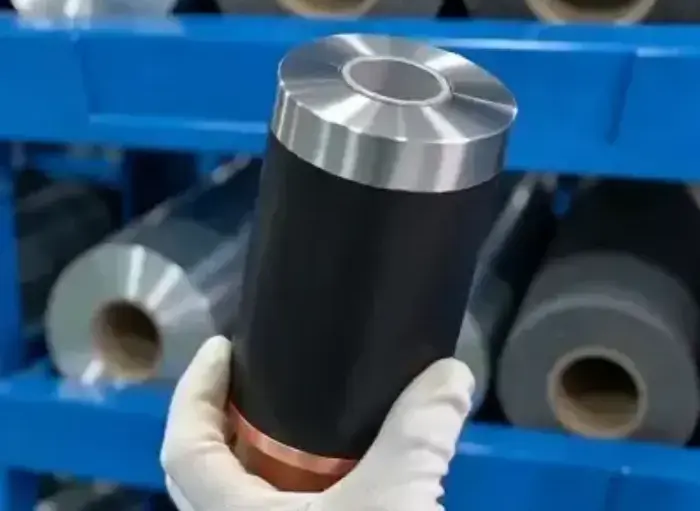
Carbon Coated Aluminum Foil is a functional current collector widely used in lithium-ion battery cathodes. It is manufactured by applying a conductive carbon-based coating to one or both surfaces of battery-grade aluminum foil. The aluminum substrate provides mechanical support and electrical current collection, while the carbon coating creates an enhanced interface between the current collector and cathode active materials.
Compared with conventional bare aluminum foil, carbon coated aluminum foil is designed to improve interfacial electrical contact, reduce contact resistance and enhance electrode adhesion, contributing to more stable electrode coating and processing. Its coating formulation and structure can be customized according to different battery chemistries, active materials, binder systems and manufacturing requirements.
👉 Explore Carbon Coated Copper Foil Specifications and Request a Sample
Product Classification: Single-Side vs. Double-Side
| Feature | Single-Side Coated | Double-Side Coated |
|---|---|---|
| Configuration | Carbon on one side; bare aluminum reverse | Carbon on both sides |
| Best cathode chemistry | LFP, high-nickel NCM, high-power / solid-state cathodes | Standard LFP and NCM/NCA double-sided electrodes |
| Typical cell format | Single-sided electrode designs; tab welding on bare side | Pouch cells, prismatic cells, stacked electrodes |
| Key advantage | Preserves bare aluminum for welding; targeted interface improvement | Uniform charge distribution and adhesion on both faces |
| Buyer selection tip | Choose single-side when one face requires bare aluminum for tab welding or when coating only one side of the electrode | Choose double-side for standard double-coated cathodes and high-energy-density cells |
👉 Need the anode counterpart? Review our Carbon Coated Copper Foil for Si-C and Graphite Anodes.
Battery Chemistry Selection Guide
| Battery System | Recommended Coating | Why |
|---|---|---|
| LFP | Single or double-side, standard carbon coating | LFP has low intrinsic conductivity; carbon coating is generally required to reduce resistance and improve rate performance |
| NCM / NCA (Standard Ni) | Double-side, standard carbon coating | Improves adhesion and reduces contact resistance for double-coated electrodes |
| High-Nickel NCM / NCA | Single or double-side, optimized coating | High-nickel materials are highly reactive; carbon layer helps stabilize the interface and suppress polarization |
| LCO | Double-side, standard coating | Improves cycling stability in consumer electronics cells |
| Sodium-Ion (Cathode) | Single or double-side, custom evaluation | Cathode current collector is aluminum; coating formulation may require adjustment for Na-ion chemistry |
Primer Selection Guide
A primer or functional coating is used to improve electrical contact, adhesion, or corrosion protection. The best option depends on your specific active material, binder, and processing conditions.
| Primer Type | Primary Function | Best Applied To / Solves What Pain Point? |
|---|---|---|
| Conductive Carbon Primer | Improves electrical contact and lowers interfacial resistance. | Standard cathode formulations including LFP, NMC, NCA, and LCO. |
| Adhesion-Promoting Primer | Enhances bonding between the aluminum substrate and the electrode slurry. | Electrodes facing peeling, delamination, or poor coating integrity. |
| Corrosion-Resistant Primer | Improves interface chemical stability. | Specific, aggressive battery chemistries and electrolyte conditions. |
Download the Primer Catalog to review our full portfolio and compatibility data.
Binder Selection Guide For Carbon Coated Aluminum Foil
Binder choice directly decides the final performance when you coat cathode slurry on carbon coated aluminum foil:
| Cathode System | Recommended Binder | Key Notes |
|---|---|---|
| LFP cathode | Modified PVDF (mainstream) / Water-based binder | Water-based binder can be used with proper primer to cut material cost |
| NCM / NCA high nickel cathode | Anti-gel modified PVDF | Avoid regular PVDF, it tends to gel with high-alkali high-nickel powder |
| Dry electrode / low-binder thick cathode | Coordinate with conductive primer | Lower binder loading while maintaining adhesion and mechanical strength |
| Sodium ion cathode | PVDF / Water-based binder system | Verify compatibility with carbon coating before mass production |
| Lithium sulfur cathode | Oxidation-resistant modified PVDF | Prevent binder decomposition under high voltage |
Our recommendation: Do not select a binder based only on the battery chemistry. The active material, conductive carbon, solvent, coating equipment, drying conditions and electrolyte all need to be considered together.
👉 Send your specification for a quotation
Application Fields
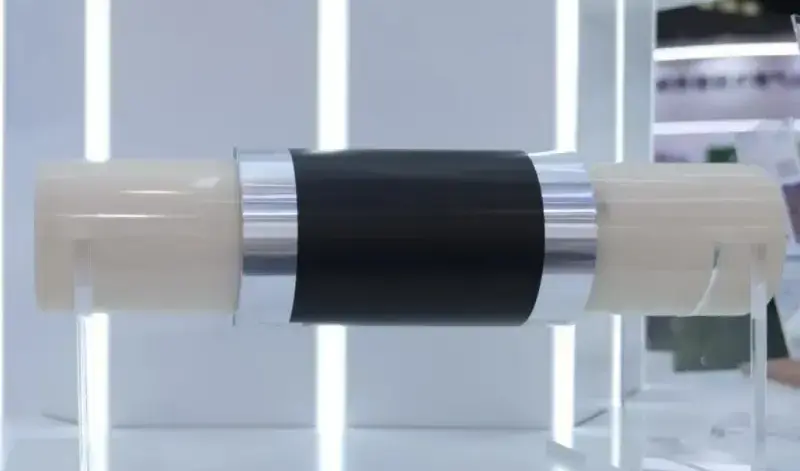
EV Power Batteries: LFP and NCM cathodes, single or double-side coated depending on electrode design
Energy Storage Systems (ESS): Long-cycle-life LFP cells where adhesion and low contact resistance are critical
Consumer Electronics: LCO and NCM cathodes in thin, high-energy-density pouch cells
High-Power / Fast-Charging Cells: LFP and high-nickel cathodes requiring low polarization and stable high-rate performance
Solid-State Batteries: Single-side coated foil for interface optimization with solid electrolytes
About Us
We are a professional supplier of advanced battery materials, specializing in functional coated metal foils and customized current collector solutions for lithium-ion batteries and energy storage applications.Our product portfolio includes Carbon Coated Aluminum Foil and Carbon Coated Copper Foil, designed to meet the diverse requirements of battery manufacturers, electrode producers and energy storage material developers.
With a focus on product customization, coating consistency and quality control, we work closely with customers to provide suitable material solutions based on different battery chemistries, electrode formulations and manufacturing processes.Whether you need single-sided or double-sided carbon coated aluminum foil, customized coating specifications or technical support for material selection, we are committed to providing responsive service and reliable delivery support.
Contact us today to discuss your battery material requirements and explore customized carbon coated aluminum foil solutions.

Equipment

Carbon Coated Aluminum Foil

Carbon Coated Copper Foil
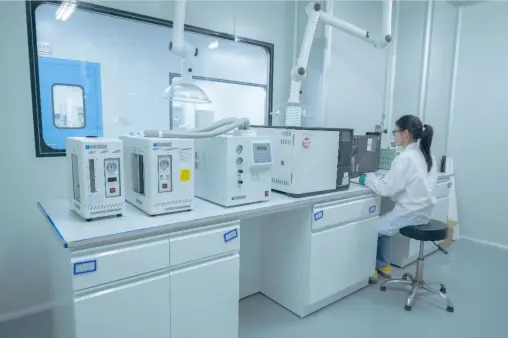
R&D Laboratory Ensuring Strict Quality Control

R&D Capability

Product Package
Partner with a Specialized Carbon Coated Aluminum Foil Manufacturer
Whether you are scaling an LFP cathode line or developing a high-nickel fast-charging platform, the electrode–collector interface determines what your cell can achieve. HS Metal provides application-matched carbon coated aluminum foil-with the primer and binder guidance you need to get it right the first time.
Send us your requirements today:
- Cathode chemistry (LFP / NCM / LCO)
- Coating configuration (single-side / double-side)
- Primer requirement (standard / custom)
- Binder system (PVDF / CMC+SBR / PAA)
- Substrate thickness and width
👉 Send Inquiry Now | Download the Primer Catalog | View Carbon Coated Copper Foil
FAQ
Q1: What is carbon coated aluminum foil used for?
A: Carbon coated aluminum foil is mainly used as a functional cathode current collector in lithium-ion batteries. Its conductive carbon coating is designed to improve electrical contact and adhesion between the aluminum foil and cathode active material.
Q2: What is the difference between single-side and double-side carbon coated aluminum foil?
A: Single-side coating leaves one face as bare aluminum, suitable for designs requiring tab welding on the uncoated side and for high-power or solid-state cathodes where only one interface needs modification. Double-side coating applies carbon to both faces, providing uniform charge distribution and adhesion for standard double-coated LFP and NCM electrodes.
Q3: Which battery chemistries can use carbon coated aluminum foil?
A: It can be evaluated for LFP, NMC, NCA and LCO lithium-ion battery cathodes. It may also be considered for selected sodium-ion and solid-state battery designs, subject to active-material, electrolyte and interface compatibility testing.
Q4: Can carbon coated aluminum foil be used for battery anodes?
A: In conventional lithium-ion batteries, aluminum foil is mainly used as the cathode current collector, while copper foil is commonly used for anodes. However, some sodium-ion battery designs can use aluminum foil for both electrodes. The correct material must be selected according to the electrode chemistry and operating potential.
Q5: What aluminum foil thicknesses are available?
A: Available thicknesses depend on the substrate grade and coating process. Common battery foil options include 9 μm, 12 μm, 15 μm, 16 μm and 20 μm. Customized thicknesses can be discussed according to your project requirements.
Q6: Can you customize the carbon coating thickness?
A: Yes. Carbon coating thickness and coating weight can be customized according to the electrode formulation, target interface properties and production requirements. Please provide your target specification for evaluation.
Q7: Which binder should I choose for carbon coated aluminum foil?
A: PVDF is commonly used in conventional solvent-based cathode systems. Acrylic-based binders may be considered for selected water-based coatings. CMC/SBR and PAA are used in specific battery formulations, but their suitability for a particular aluminum foil coating must be validated according to the active material, solvent and electrolyte.
Q8: How do I select the right primer for my battery?
A: Primer selection depends on the required function, such as conductivity, adhesion or corrosion protection. Please provide your battery chemistry, cathode active material and binder system. You can also download our primer catalog to review available options.
Q9: Can carbon coated aluminum foil replace conventional bare aluminum foil?
A: It can replace bare aluminum foil in selected cathode applications, provided the coating structure is compatible with the electrode formulation and manufacturing process. We recommend conducting sample trials before switching to mass production.
Q10: Can you provide samples for testing?
A: Yes. Sample availability and preparation conditions can be confirmed according to the required foil thickness, coating configuration and sample quantity.
Q11: What is the minimum order quantity (MOQ)?
A: Normally MOQ 50kg or 500m depends on the aluminum foil specification, coating type, customized width and production schedule. Please contact us with your requirements for a quotation.
Q12: What is the typical delivery time?
A: Normally 15-20 working days for mass production order. We will confirm the production and shipment schedule after reviewing your requirements.
Q13: How should carbon coated aluminum foil be stored?
A: Store the foil in its original protective packaging in a clean, dry environment. Avoid moisture, condensation, dust, corrosive substances and mechanical damage. Follow the agreed storage and handling instructions for your specific coating formulation.
Q14: What is carbon coated aluminum foil used for?
A: Carbon coated aluminum foil is cathode current collector material for lithium ion battery, LFP, NCM, NCA, sodium ion battery, lithium sulfur battery, solid state battery and supercapacitor. The conductive carbon layer improves slurry adhesion, reduces interfacial resistance and protects aluminum substrate from electrolyte corrosion.
Q15: Can carbon coated aluminum foil replace carbon coated copper foil?
A: No. Carbon coated aluminum foil works only for cathode; carbon coated copper foil is anode current collector. They cannot substitute each other. Check our Carbon Coated Copper Foil page for anode material.
Q16: Why is carbon coating particularly important for LFP cathodes?
A: LFP has intrinsically low electronic conductivity. The carbon layer creates a conductive bridge between the active material and the aluminum substrate, reducing contact resistance and improving rate capability. Carbon-coated aluminum foil is generally required for LFP cathode manufacturing.
Q17: Can carbon coated aluminum foil be used with water-based cathode slurries?
A: Yes. The carbon coating improves adhesion and helps mitigate aluminum corrosion in aqueous systems. However, pH control is critical-especially with PAA-based binders-to avoid hydrogen evolution and pinhole formation. Validate your specific slurry formulation with our samples.
Q18: How do I choose the right primer for my cathode?
A: Primer selection depends on your cathode chemistry and processing route. For aqueous and high-nickel systems, the primer must balance adhesion with low contact resistance. Our primer catalog provides formulation and compatibility data for different systems. Download the Primer Catalog.
Q19: Is bare aluminum foil better or carbon coated aluminum foil better for my cathode?
A: Bare aluminum foil is cheaper for stable low-rate, low-loading LFP cathode. Carbon coated aluminum foil is recommended when you see slurry peeling, high impedance, aluminum corrosion, high-rate requirement or high loading cathode formulation. We can provide samples for your side-by-side cell test.
Hot Tags: carbon coated aluminum foil manufacturer, China carbon coated aluminum foil manufacturer manufacturers