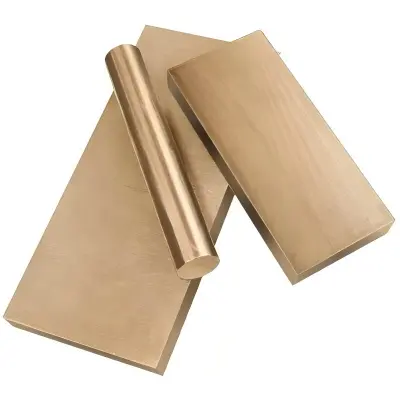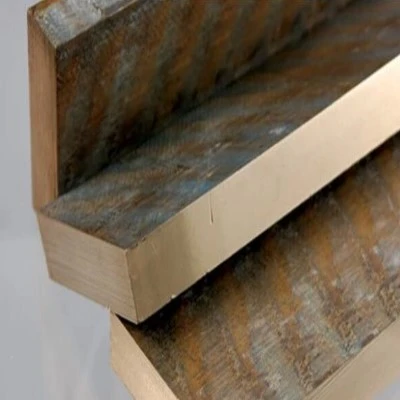
AMS-4640 nickel aluminum bronze is a high-performance alloy material. AMS-4640 nickel aluminum bronze is widely used in aerospace, shipbuilding, mechanical engineering and other fields due to its high strength, wear resistance, corrosion resistance and good processing performance. For example, in the aerospace field, it can be used to manufacture high-strength and wear-resistant parts such as landing gear bushings and bearings; In shipbuilding, it is suitable for manufacturing corrosion-resistant components such as propellers and valves; In mechanical engineering, it can be used to manufacture wear-resistant mechanical parts such as gears and shaft sleeves.
standard
C63000 is a high-performance nickel aluminum bronze alloy in the US UNS numbering system, belonging to the strongest category in the aluminum bronze family. It has multiple prominent "identity cards" internationally:
- American standard grades: UNS C63000, AMS 4640
- European corresponding grade: CuAl10Ni5Fe4 (CW307G)
- Chinese approximate grades: QAl10-4-4, QAl9-4-4-2
This material complies with multiple international standards such as ASTM B148, B150, B171, and combines the corrosion resistance of bronze with the mechanical properties of steel. It is one of the preferred materials for high load and strong corrosion environments in aerospace, shipbuilding, chemical equipment, and other industries.
Chemical Composition
The outstanding performance of C63000 is not accidental, but built on precise chemical composition design. The synergistic effect of various elements creates its characteristic of "combining rigidity and flexibility":
- Copper (Cu) residue (about 78% to 86%) as a matrix element, providing a basis for thermal conductivity and corrosion resistance
- Aluminum (Al) 9.5-11.0 core strengthening element forms an α+β biphasic structure, significantly enhancing strength and hardness
- Nickel (Ni) 3.5-5.5 enhances strength and toughness, improves fatigue resistance, and inhibits dealumination corrosion
- Iron (Fe) 3.5-5.5 refines grain size, improves wear resistance and strength
- Manganese (Mn) ≤ 1.5 assists in deoxidation to improve thermal processing performance
Strictly control impurities with a total impurity content of ≤ 1.0 to ensure material purity and stable performance
Note: The composition data is sourced from ASTM B150 standard and industry general technical specifications, and there may be slight differences among different suppliers.
The ingenuity of this composition design lies in the formation of a high hardness β phase (Cu ∝ Al) between aluminum and copper, while nickel and iron enhance their wear and corrosion resistance through solid solution strengthening and dispersion precipitation phases (such as κ phase).
mechanical properties AMS 4640 C63000 Aluminum Bronze
- High strength: It is the strongest type of aluminum bronze. The tensile strength can reach over 620 MPa in the annealed state and 760-900 MPa after heat treatment (quenching+tempering), approaching the level of high-strength steel.
- High hardness: The hardness can reach HB 200-280 (depending on the heat treatment state), and the wear resistance is excellent.
- Good toughness: Despite its high strength, its toughness is far superior to many high-strength steels and cast irons, and it can withstand impact loads.
- Excellent fatigue resistance: very suitable for components that can withstand alternating loads, such as propellers and shaft sleeves.
Workability and Fabrication of AMS 4640 C63000
C63000 offers excellent fabricability, making it highly adaptable to a wide range of manufacturing processes. Below are the most common methods used to shape and form this versatile alloy
- Machining – C63000 exhibits good machinability and can be readily processed using standard techniques such as turning, milling, drilling, and boring. With proper tool selection and cutting parameters, smooth surface finishes and tight dimensional tolerances are achievable.
- Welding – The alloy is weldable by several conventional processes, including Gas Tungsten Arc Welding (GTAW/TIG) and Gas Metal Arc Welding (GMAW/MIG). Preheating and post‑weld heat treatment are generally recommended to minimise residual stresses and preserve mechanical properties in the heat‑affected zone.
- Casting – C63000 can be cast into complex shapes using sand casting and permanent mould casting. Its good fluidity and sound solidification behaviour allow for the production of intricate components with consistent quality.
- Forging – The alloy is well suited for hot forging, producing parts that demand high strength and reliability, such as gears, bearings, and valve components. Forging refines the grain structure and further enhances the material's mechanical performance.
- Extrusion – C63000 can be extruded into a variety of profiles and cross‑sections, ranging from simple bars to complex custom shapes. This makes it particularly attractive for architectural, marine, and general engineering applications where long, uniform sections are required.
Applicable Specifications for C63000
To ensure proper selection and use of C63000, it is essential to be familiar with the relevant material specifications. Below are some of the most commonly referenced standards for this alloy:
- ASTM B150 / B150M – Covers the requirements for copper‑alloy plate, sheet, strip, and rolled bar. This is the primary specification for general‑purpose wrought products.
- AMS 4640 – Specifically applies to nickel‑aluminum bronze in the form of bars, rods, and forgings. This aerospace‑grade specification imposes stricter controls on mechanical properties and quality assurance.
- QQ‑C‑465 – A federal specification covering nickel‑copper‑aluminum alloy (nickel‑aluminum bronze) bars, rods, and shapes. It is widely used in military and heavy‑industrial procurement.
- MIL‑B‑16033 – A military specification for nickel‑aluminum bronze bars and rods intended for demanding applications such as propeller blades and high‑strength structural components, where reliability under extreme service conditions is paramount.
Product Form and Procurement Suggestions
The supply forms of C63000 nickel aluminum bronze are diverse, and can be selected according to processing needs:
- Copper rod: diameter range of 6mm to 200mm, the most common form
- Copper plate/copper strip: thickness 5mm~50mm, used for making wear-resistant plates and gaskets
- Copper tube: outer diameter 10mm~150mm, used for manufacturing shaft sleeves with uniform wall thickness
- Forging: Customizable forging to meet the needs of complex structural components
Suggestion for procurement: It is necessary to require suppliers to provide spectral analysis reports, with a focus on verifying whether the aluminum content (9.0%~11.0%) and nickel content (4.0%~5.5%) meet the standards. At the same time, confirm whether the material meets ASTM B150 or AMS 4640 standards, and clarify the delivery status of the product (annealed, age hardened, etc.) to ensure compatibility with design requirements.
Key points of use and procurement
- Cold processing avoids continuous processing without annealing and prevents cracking;
- Welding control heat input, stress relief after welding;
- Long term high-temperature conditions are recommended to be ≤ 350 ° C to prevent tissue softening;
- Clear procurement status (annealing/heat treatment/hot extrusion), dimensional tolerances, and execution standards.
Test Equipment

Applications
- Marine engineering: seawater cooling pipes, ship pipelines, condenser/heat exchanger pipes, seawater pump pipes, marine hydraulic pipes
- Chemical/Petroleum: Corrosion resistant fluid transport pipes, acid and alkali medium pipes, offshore platform pipelines
- Mechanical/Hydraulic: High pressure oil pipe, heavy-duty equipment liner, wear-resistant sleeve, valve seat/stem sleeve
- Electricity/Aviation: Corrosion resistant structural pipes, non-magnetic pipes, landing gear/hydraulic system fittings

FAQ
Q1: What is AMS 4640?
A: AMS 4640 is a high‑strength nickel‑aluminum bronze alloy, widely regarded as the benchmark for this material class.It is designated under the Unified Numbering System as UNS C63000and is known for its exceptional combination of strength, corrosion resistance, and wear resistance
Q2: What does "AMS 4640" stand for?
A: "AMS" stands for Aerospace Material Specification, published by SAE International. AMS 4640 is the specific specification that covers this nickel‑aluminum bronze alloy in forms such as bars, rods, shapes, tubes, and forgings
Q3: What is the difference between AMS 4640 and C63000?
A: They are the same material. AMS 4640 is the aerospace specification, while C63000 is the UNS (Unified Numbering System) designation.The terms are often used interchangeably.
Q4: Why is nickel added to this alloy?
A: Nickel significantly improves the material's corrosion and oxidation resistance while providing a major boost to its yield strength. It also enhances toughness and fatigue resistance without diminishing ductility.
Q5: How does AMS 4640 compare to steel?
A: AMS 4640 offers mechanical properties that rival many types of steel, but with the added benefits of superior corrosion resistance, non‑sparking characteristics, and a density about 10% lighter than steel.
Q6: What is the HR50 condition?
A: HR50 refers to the drawn and stress‑relieved temper. AMS 4640 is typically supplied in this condition to achieve optimal grain structure and mechanical properties for handling heavy loads and high‑stress environments
Q7: Why is AMS 4640 preferred for submarine applications?
A: The alloy's combination of corrosion resistance, non‑sparking properties, wear resistance, high strength, and good impact properties makes it ideal for naval use. Additionally, its anti‑damping properties are twice that of steel, which helps suppress sound for silent submarine operations.
Q8: Can AMS 4640 be machined?
A: Yes. The alloy offers good machinability with a machinability rating of approximately 30%.Standard techniques such as turning, milling, drilling, and boring can be used.
Q9: Can AMS 4640 be welded?
A: Yes. The alloy is suited for gas shielded arc welding (GTAW/TIG and GMAW/MIG) and contact resistance welding methods such as spot welding.
However, oxyacetylene welding is not recommended.
Q10: Can AMS 4640 be heat treated?
A: Yes. The alloy contains 5% nickel and is heat treatable.It can be supplied in various tempers, including annealed (TQ50) and drawn and stress‑relieved (HR50).
Hot Tags: ams 4640 aluminum bronze, China ams 4640 aluminum bronze manufacturers