


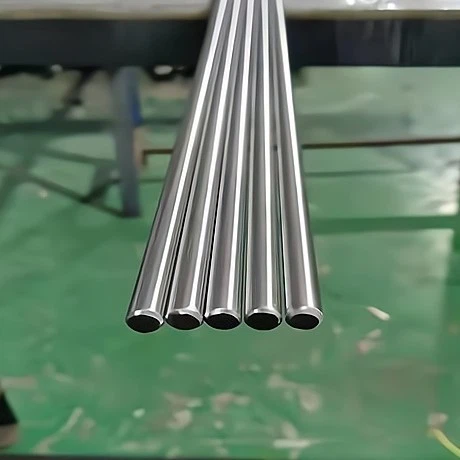


Titanium seamless tubes are widely used as heat‑exchanger tubes in seawater desalination plants. They are lightweight, high‑strength, and possess excellent mechanical properties. These tubes are employed in a variety of heat‑transfer equipment, including shell‑and‑tube heat exchangers, coil and serpentine heat exchangers, condensers, evaporators, and process piping. Their superior reliability also makes them a standard choice in nuclear power plants, where performance and safety are paramount.
Standards and Specifications
- ASTM B861: Standard specification for titanium and titanium alloy seamless pipes.
- ASTM B338: Standard for seamless and welded titanium tubes for condensers and heat exchangers.
- ASME SB861: Equivalent to ASTM B861 for industrial applications.
- DIN, ISO, and other international standards are also applicable.
Common Titanium Alloys for Seamless Pipes
ASTM B338 is the core standard for titanium seamless tubes used in seawater desalination heat exchangers. The current specification covers seamless and welded titanium and titanium alloy tubes in multiple grades, intended for heat transfer service, corrosion-resistant and elevated-temperature operating conditions.
| Common Grade | Key Features & Applications |
|---|---|
| Gr.1 (Commercially Pure) | Excellent plasticity and cold formability, suitable for parts requiring deep drawing or complex bending. |
| Gr.2 (Commercially Pure) | Industrial workhorse. Balanced corrosion resistance and strength, suitable for chemical processing, desalination heat exchangers, and general pressure vessels. |
| Gr.5 (Titanium Alloy) | The most classic α+β titanium alloy (Ti 6Al-4V). Extremely high strength and heat resistance, the first choice for aerospace and high-end medical applications. |
| Gr.7 (Pure Ti + Pd) | Palladium addition to Gr.2, providing excellent corrosion resistance in strongly reducing acids (e.g., hydrochloric acid). |
| Gr.9 (Titanium Alloy) | Strength between pure titanium and Gr.5, with good cold workability, commonly used in bicycle frames and sporting goods. |
| Gr.12 (Titanium Alloy) | Molybdenum and nickel additions significantly improve resistance to crevice corrosion in high-temperature chloride environments. |
Chemical Composition
|
Item |
N |
C |
H |
Fe |
O |
Al |
V |
Pa |
Mo |
Ni |
Ti |
|
GR1 |
0.03 |
0.08 |
0.015 |
0.2 |
0.18 |
/ |
/ |
/ |
/ |
/ |
Bal. |
|
GR2 |
0.03 |
0.08 |
0.015 |
0.3 |
0.25 |
/ |
/ |
/ |
/ |
/ |
Bal. |
|
GR3 |
0.05 |
0.08 |
0.015 |
0.3 |
0.35 |
/ |
/ |
/ |
/ |
/ |
Bal. |
|
GR4 |
0.05 |
0.08 |
0.015 |
0.5 |
0.4 |
/ |
/ |
/ |
/ |
/ |
Bal. |
|
GR5 |
0.05 |
0.08 |
0.015 |
0.4 |
0.2 |
5.5-6.75 |
3.5-4.5 |
/ |
/ |
/ |
Bal. |
|
GR7 |
0.03 |
0.08 |
0.015 |
0.3 |
0.25 |
/ |
/ |
0.12-0.25 |
/ |
/ |
Bal. |
|
GR9 |
0.03 |
0.08 |
0.015 |
0.25 |
0.15 |
2.5-3.5 |
2.0-3.0 |
/ |
/ |
/ |
Bal. |
|
GR12 |
0.03 |
0.08 |
0.015 |
0.3 |
0.25 |
/ |
/ |
/ |
0.2-0.4 |
0.6-0.9 |
Bal. |
Physical Properties
|
Grade |
Tensile Strength |
Yield Strength |
Elongation |
||
|
MPa |
kis |
Mpa |
ksi |
% |
|
|
Gr 1 |
240 |
35 |
138 |
20 |
24 |
|
Gr 2 |
345 |
50 |
275 |
40 |
20 |
|
Gr 3 |
450 |
65 |
380 |
55 |
18 |
|
Gr4 |
550 |
80 |
483 |
70 |
24 |
|
Gr5 |
895 |
130 |
828 |
120 |
20 |
|
Gr 7 |
345 |
50 |
275 |
40 |
20 |
|
Gr 9 |
620 |
90 |
483 |
70 |
15 |
|
Gr12 |
483 |
70 |
50 |
50 |
18 |
production process of Titanium Seamless Tube
The production of high‑quality titanium seamless tubes for seawater desalination heat exchangers begins with rigorous raw material preparation – the foundation of product integrity and long‑term corrosion performance.
- Raw Material Preparation & Melting
The process starts with titanium sponge, which is melted in a vacuum consumable arc furnace (VAR) to produce titanium ingots. This method ensures precise control of melting parameters, effectively removes impurities, and guarantees the high purity required for critical chloride‑rich environments. After melting, the ingot undergoes homogenising annealing to eliminate internal stresses, refine the microstructure, and optimise mechanical properties – all essential for subsequent forming and for achieving the consistent grain structure that underpins corrosion resistance in seawater service.
- Billet Forming
The annealed ingot is then precision forged or rolled into billets with specific dimensions and tailored properties. At this stage, the billet exhibits excellent plasticity and a uniform, defect‑free structure, providing a sound foundation for the seamless tube‑making process that follows.
- Perforation – The Core Seamless Forming Step
Perforation is one of the most critical steps in producing seamless titanium tubes. Using a rotary rolling mill and a piercing plug, the billet is deformed to form a hollow capillary tube, while carefully controlling inner‑wall smoothness and dimensional accuracy. This step demands precise management of rolling force, speed, and temperature to prevent defects such as folding, delamination, or surface cracking – any of which would compromise the tube's resistance to pitting and crevice corrosion in aggressive brine.
- Cold Rolling / Cold Drawing – Achieving Precision and Strength
The capillary tube then undergoes multiple passes of cold rolling or cold drawing. Each pass progressively reduces wall thickness, enhances dimensional precision, and further refines the material's mechanical properties – improving both strength and ductility. For seawater desalination applications, this cold‑working stage is particularly important: it produces a smooth, uniform inner surface that resists biofouling and minimises pressure drop, while also imparting the necessary strength to withstand high‑velocity seawater flow (typically 3‑5 m/s) without erosion or fatigue.
- Quality Assurance Throughout
Every processing step – from billet inspection to final tube finishing – is accompanied by rigorous quality checks. Dimensional tolerances, surface finish, ultrasonic flaw detection, and mechanical testing are performed to ensure that the finished tubes fully comply with ASTM B861 requirements for the specified titanium grade (e.g., Grade 2, Grade 7, or Grade 12). This stringent quality regime guarantees that the tubes will deliver the decades of reliable, maintenance‑free service that desalination plant operators expect.
Advantages
| Advantage | Benefit for Desalination Heat Exchangers |
|---|---|
| Self-healing passive oxide film | Immunity to pitting, crevice corrosion, and SCC in chloride environments |
| 30–40 year service life | Eliminates tube replacement cycles and unplanned shutdowns |
| High strength-to-weight ratio | Enables thinner walls, lighter bundles, higher flow velocities |
| Erosion resistance up to 20 m/s | No velocity-related design constraints |
| Fatigue resistance in seawater | Reliable performance under thermal and mechanical cycling |
| Low biofouling and scaling | Maintains heat transfer efficiency, reduces cleaning frequency |
| No corrosion-related maintenance | Dramatically lower operating costs over plant life |
| Lower total cost of ownership | ROI achieved in <5 years despite higher initial material cost |
Recommended Titanium Grades of Seamless Tubes for Different Working Conditions
| Titanium Grade Type | Standard Designation | Application Position in Desalination Heat Exchangers | Core Advantages |
|---|---|---|---|
| General commercial pure titanium | TA2 / ASTM Grade 2 | Conventional condensers, RO preheat exchangers, normal-temperature brine circuits | Balanced cost, superb general seawater corrosion resistance, easy welding & forming |
| Low-temperature pure titanium | TA1 / ASTM Grade 1 | Flash evaporator cold-end condensers | Ultra-low fouling tendency, outstanding stress corrosion cracking resistance |
| Palladium-alloyed titanium | Grade 16 (Ti-0.5%Pd) | Ultra-high temperature concentrated brine heaters | Top-tier anti-corrosion performance for extreme salinity environments |
| Molybdenum-nickel titanium alloy | Grade 345 (Ti-0.3Mo-0.8Ni) | High-temperature brine heating bundles | Suppress hydrogen embrittlement under long-term 80–120 °C seawater service |
About us
Luoyang Hongsheng Trading Co., Ltd is a technology‑driven industrial and commercial enterprise specializing in the development, manufacturing, and supply of high‑performance titanium and titanium alloy products. Headquartered in Luoyang, Henan Province – the heart of China's titanium industrial cluster – we are strategically positioned to leverage the region's rich resources, advanced manufacturing infrastructure, and deep technical expertise.
Since our establishment in 2017, we have grown from a trading company into an innovative technology enterprise, committed to delivering premium titanium solutions for the most demanding industrial applications. Our brand, HSMetal, was officially launched in 2018 and has since earned recognition from customers across the globe.
What sets HSMetal apart is our deep commitment to technological excellence. In 2022, we established a strategic technical cooperation with Luoyang 725 Institute – a subsidiary of China State Shipbuilding Corporation (CSSC) and one of China's most prestigious research institutions in marine materials and titanium alloys. By 2023, our technical team had collaborated with Luoyang 725 Institute to establish a dedicated research and development team, marking the company's successful transition from a trade‑focused operation to a technology‑driven enterprise.
This partnership gives us direct access to cutting‑edge metallurgical research, advanced material characterization capabilities, and decades of accumulated expertise in titanium alloy applications for marine and offshore environments. The result is a product portfolio that meets the most stringent international standards, including ASTM B861, ASTM B338, and ASME SB338.
Production And Testing Equipments

Seamless Pipe Production Line

Aging Treatment Equipment

Straight Pipe Cutting Machine
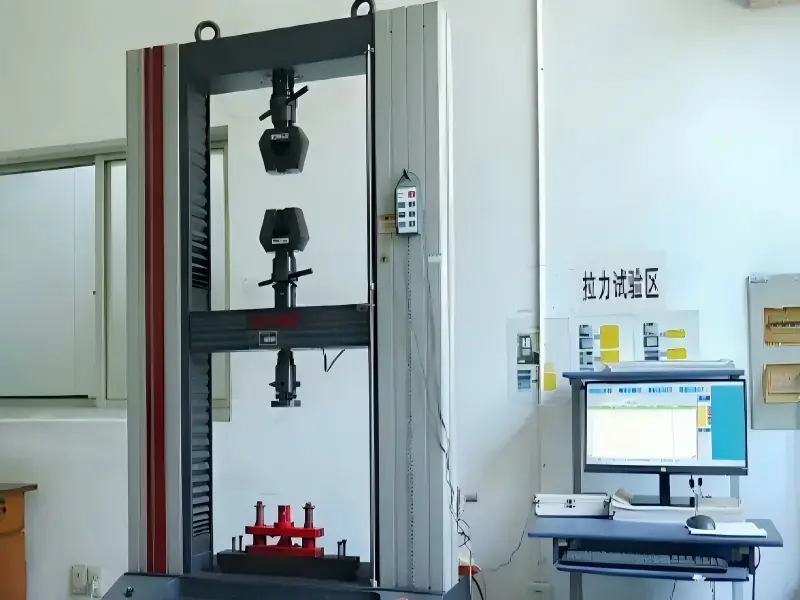
4-Tensile Testing Machine

Hardness Tester
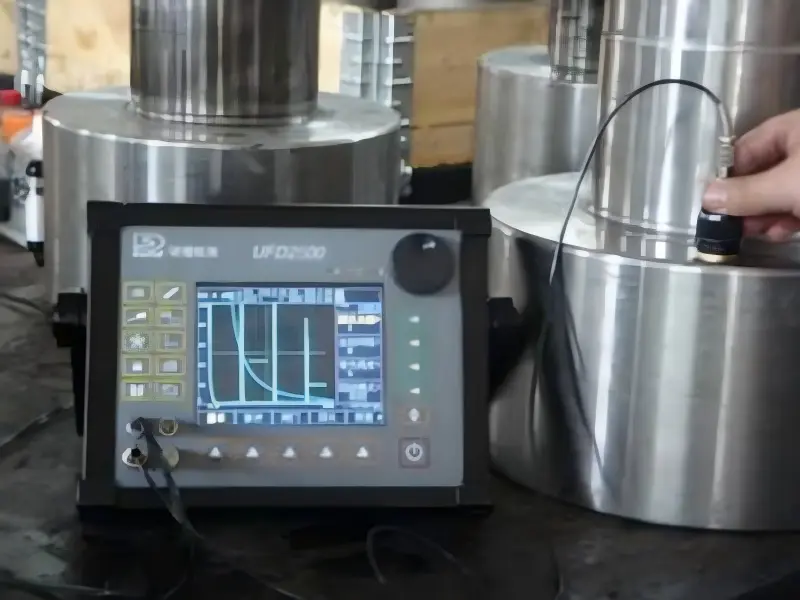
Flaw Detector
FAQ
Q1: Why choose titanium seamless tubes for seawater desalination heat exchangers?
A:Titanium exhibits outstanding resistance to seawater corrosion, pitting corrosion and crevice corrosion under long-term seawater immersion and temperature cycling. It resists erosion-corrosion caused by high-velocity seawater, avoids rust and leakage compared with copper alloy and stainless steel. Seamless structure eliminates welding seam weakness, greatly improving service reliability under vacuum and thermal cycling conditions in desalination systems.
Q2: What titanium grades are commonly used for desalination heat exchanger tubes?
A:The mainstream grade is Grade 2 (TA2, pure titanium). For higher strength requirements or higher pressure working conditions, Grade 3 / Grade 5 (Ti-6Al-4V) can be selected upon request. Main standard specifications: ASTM B338, GB/T 3624.
Q3: What are the typical dimension ranges of titanium seamless heat exchanger tubes?
A: Outer diameter: 10.0 mm ~ 50.8 mm,Wall thickness: 0.5 mm ~ 3.0 mm,Length: fixed length /random length up to 18 m Common specifications: 19.05×0.71mm, 25.4×0.91mm widely used in MED, MSF seawater desalination units.
Q4:Seamless titanium tube vs welded titanium tube for desalination: key differences
A: Seamless tube: No longitudinal weld seam; risk of seam corrosion & seam leakage eliminated. Preferred for high vacuum, high temperature, long-lifetime desalination main heat exchangers.
Welded tube: Contains weld seam; suitable for low-risk auxiliary equipment, usually lower cost. Project specifications of large-scale seawater desalination plants generally specify seamless titanium tubes for critical heat transfer bundles.
Q5:Can titanium tubes resist biofouling and microbiologically influenced corrosion (MIC) in seawater?
A:Pure titanium itself will not suffer microbiologically influenced corrosion. However, marine organisms (mussels, algae, barnacles) may still adhere to the surface. Regular on-line cleaning (sponge ball cleaning, chemical cleaning) is still required to reduce fouling and maintain heat transfer efficiency.
Q6:What temperature and pressure ranges are applicable?
A:Grade 2 seamless titanium tube: Working temperature: -50 ℃ ~ 315 ℃ Design pressure depends on tube OD, wall thickness and code calculation; widely matched with MSF / MED desalination operating conditions (vacuum to medium pressure).
Q7:How about thermal conductivity of titanium compared with copper-nickel tubes?
A:Titanium has lower thermal conductivity than Cu-Ni alloy. But titanium allows thinner wall design and far superior corrosion resistance. Comprehensive life-cycle cost is competitive for large desalination projects. Heat exchanger designers will optimize tube layout and flow velocity to compensate thermal conductivity difference.
Q8:What is the typical service life of titanium seamless tubes in seawater desalination?
A:Under properly designed, operated and maintained MED/MSF desalination units: expected service life ≥ 20 years, far longer than stainless steel and copper alloy tubes.
Q9:Is surface pickling required for supplied titanium tubes?
A:Standard supply: pickled & descaled surface, uniform metallic finish, free of oxide scale, cracks, scratches and contamination. Bright annealed surface can be provided as special requirement.
Q10:What information should i confirm you when i send inquiry
A:Sometimes we need product specification like material standard or Grade, size, Qty, shipping port, Terms like FOB or CIF etc.
Q11: How long of the delivery time(Lead time)?
A: Usually, the shipment can be delivery within 15-30days after the order confirmed.
Q12: How about the payment items?
A: LC, T/T, PayPal, Western Union etc.
Q13: Which country have you exported to?
A: Our main market is South America, Middle East, Africa and Europe. And have built long time relationship with Pakistan, US, Norway, Germany, Korea, Russia,Taiwan customers.And got continue orders from them every month.
Q14: How about the MOQ?
A: Normally MOQ is 200kg, We always expect more opportunities with you. But for some special material or special size let's communicate the actual status.
Hot Tags: ASTM B338 Titanium Seamless Tubes for Seawater Desalination Heat Exchangers, China ASTM B338 Titanium Seamless Tubes for Seawater Desalination Heat Exchangers manufacturers


