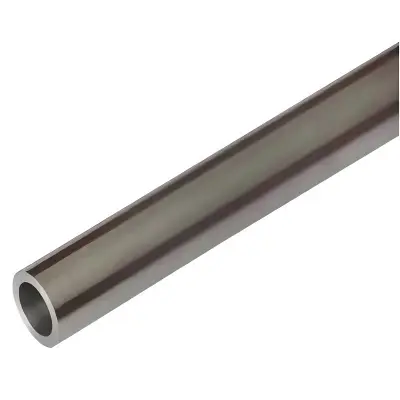
Haynes 214 Alloy (UNS N07214) is a premium nickel‑chromium‑aluminum‑iron wrought superalloy, well‑known for industry‑leading high‑temperature oxidation performance. At elevated operating temperatures above 955 °C (1750 °F), the alloy forms a dense, adherent alumina (Al₂O₃) protective scale, blocking oxygen inward diffusion and drastically extending service life under extreme oxidizing environments. Apart from superior oxidation resistance, Haynes 214 also delivers outstanding resistance against carburization, nitriding and chlorine‑bearing high‑temperature corrosion, suitable for low‑stress static high‑temperature components up to 1315 °C (2400 °F) for short‑term exposure.
Our factory supplies a full portfolio of high‑performance nickel & superalloy products including Haynes series, Monel, Inconel, Incoloy, Hastelloy, precision alloys in diversified semi‑finished & finished machined forms.
For comprehensive cross‑grade comparison and systematic buyer selection tips across mainstream high‑temperature superalloys, review our article: Haynes High‑Temperature Superalloys Comparison: Similarities, Key Differences & Buyer Selection Guide.
Product Classification & Reference Specifications
| Item | Reference Parameter |
|---|---|
| Designation | Haynes 214 Alloy, UNS N07214 |
| Material System | Nickel‑base Ni‑Cr‑Al‑Fe wrought superalloy |
| Main Alloying Elements | Ni balance; Cr 15.0‑17.0 %; Al 4.1‑5.0 %; Fe 2.0‑4.0 % |
| Typical Operating Temp | Continuous service: up to 1260 °C; peak short‑term exposure up to 1315 °C |
| Available Product Forms | Round wire, flat wire, strip, thin foil, bar / rod, machined finished components, welding filler wire |
| Wire Diameter Range | 0.10 mm‑8.0 mm (custom) |
| Strip / Foil Thickness | 0.03 mm‑3.0 mm; max width ≤1250 mm |
| Bar Diameter | 6 mm‑120 mm |
| Surface Condition | Bright annealed, pickled, polished |
| Key Properties | Excellent high‑temp oxidation resistance; good carburization / nitriding / chlorination corrosion resistance; moderate high‑temperature creep performance for low‑stress static parts |
👉 Request a Haynes 214 Quote & MTC
What Is Haynes 214 Alloy?
Haynes 214 (UNS N07214, W.Nr 2.4646) is a nickel-chromium-aluminum-iron alloy designed to provide the optimum high-temperature oxidation resistance for a wrought austenitic material, while allowing conventional forming and joining.
The key performance advantage: Haynes 214 is the most oxidation-resistant, carburization-resistant, and chlorination-resistant alloy available as a fabricable material. Its effective use temperature limit is in excess of 2200°F (1204°C) for prolonged exposure, and up to 2400°F (1316°C) for shorter exposures.
Why the Al₂O₃ scale matters: At temperatures above 1750°F (955°C), Haynes 214 forms a tightly adherent Al₂O₃-type protective oxide scale in preference to chromium oxide scales. This aluminum oxide scale provides excellent resistance to carburization, nitriding, and corrosion in chlorine-bearing oxidizing environments.
Haynes 214 vs Haynes 230 vs Haynes 188: Which Alloy Do You Need?
| Property | Haynes 214 | Haynes 230 | Haynes 188 |
|---|---|---|---|
| UNS | N07214 | N06230 | R30188 |
| Base | Ni-Cr-Al-Fe | Ni-Cr-W-Mo | Co-Ni-Cr-W |
| Strengthening | Solid solution + Al₂O₃ scale | Solid solution | Solid solution |
| Key Strength | Maximum oxidation resistance | High-temp strength + thermal stability | High-temp strength + sulfidation resistance |
| Oxidation Limit | 2200°F+ prolonged; 2300–2400°F short | 2100°F (1149°C) prolonged | 2000°F (1095°C) prolonged |
| Carburization Resistance | Excellent | Good | Good |
| Chlorine Resistance | Excellent | Good | Good |
| Sulfidation Resistance | Good | Good | Excellent - sulfate hot corrosion |
| Creep Strength | Moderate | Good | Good |
| Thermal Stability | Good | Excellent - resists grain coarsening | Good |
| Wear Resistance | Moderate (improves >200°C) | Moderate | Excellent above 400°C |
| Weldability | Good - but strain-age cracking risk | Excellent | Excellent |
| Typical Use | Mesh belts, ceramic firing fixtures, honeycomb seals | Combustors, thermocouple sheaths, industrial furnace muffle | Gas turbine combustor cans, afterburner liners |
Not sure whether Haynes 214, Haynes188, or Haynes 230 is right for your application? Read the full Haynes alloy selection guide first, then confirm your specification.
👉 Send Your Specifications for a Haynes 214 Quotation
International Grade Equivalents
International Grade Equivalents
| Standard | Haynes 214 | Haynes 230 | Haynes 188 |
|---|---|---|---|
| USA | UNS N07214 | UNS N06230 | UNS R30188 |
| Germany | W.Nr 2.4646 | W.Nr 2.4733 | W.Nr 2.4683 |
| AWS | AWS 061 | AWS 055 | AWS 052 |
Typical Applications
- Industrial Heating: Mesh belts, trays and fixtures for firing pottery and fine china, heat treatment of electronic devices and technical grade ceramics
- Aerospace: Honeycomb seals, combustor splash plates, static oxidation-limited parts
- Automotive: Catalytic converter internals, burner cup material for auxiliary heaters
- Chemical Processing: Chlorine-contaminated incinerator systems, refractory anchors, furnace flame hoods
- Medical Waste Disposal: High-temperature incineration components
Commercial and Delivery Terms
| Term Item | Details |
|---|---|
| Minimum Order Quantity | Lab‑sample: small cut‑pieces / small coil negotiable; mass‑production order MOQ negotiable |
| Incoterms | EX‑W, FOB, CFR, CIF (Incoterms 2020) |
| Payment Terms | T/T: 30 % deposit, balance before shipment; Irrevocable L/C at sight. |
| Sample Service | Evaluation samples available; buyer responsible for freight cost |
| Lead Time | Lab samples: 10‑18 working days; mass‑production: 35‑50 working days upon deposit receipt |
| Packaging | Anti‑rust oil, moisture‑proof vacuum package, seaworthy export carton / wooden case for metal alloy coils, bars & foils |
| Shipping Ports | Major China ports: Shanghai, Ningbo, Shenzhen |
| Inspection & Documents | Mill test report (MTR) supplied; third‑party material inspection available upon customer request |
👉 Contact Our Technical Team for a Haynes 214 Quotation
Why Choose Us - China Manufacturer With Full Product Form Supply
- Full product form supply. We supply Haynes 214, Haynes 230, and Haynes 188 in round wire, flat wire, strip, bar, foil, and welding wire - one supplier for all your high-temperature alloy requirements.
- Full traceability. Every shipment includes a Mill Test Certificate with chemical composition and mechanical properties verified.
- Single-grade, single-heat verified. We do not mix grades. PMI spectral verification supported.
- Custom sizes cut to your drawing. Wire diameters from 0.025 mm, strip and bar per your specification.
- Fast delivery from stock. Standard sizes ship in 7–15 days; custom sizes confirmed at order review.
- Technical support for fabrication. We provide guidance on forming, welding, and heat treatment for Haynes 214 - including strain-age cracking avoidance.
- Competitive pricing from China. Direct factory supply with flexible MOQ for trial orders.
Need Haynes 214 Alloy for Your High-Temperature Oxidation-Resistant Application?
Tell us your required form (wire, strip, bar, foil, welding wire), dimensions, quantity, and application (mesh belt, honeycomb seal, ceramic firing). We will confirm availability, provide a quotation, and ship with full documentation.
Or contact our technical team with your operating temperature, atmosphere, and fabrication requirements - we will recommend the right Haynes alloy for your design.
Explore our other high-temperature alloys → Haynes 230 Alloy | Haynes 188 Alloy | Haynes 25 Alloy | Nickel Alloy Selection Guide
Technical Article: Haynes High‑Temperature Superalloys Comparison: Similarities, Key Differences & Buyer Selection Guide
Compare Haynes 214, Haynes 230, Haynes 25 (L‑605), Haynes 188 and Haynes 282 superalloys. Understand alloy similarities, critical differences and practical selection rules to help you avoid common material‑selection pitfalls.
FAQ
Q1: What is Haynes 214 alloy used for?
A: Haynes 214 is used for mesh belts, trays and fixtures for firing pottery and fine china, heat treatment of electronic devices and technical grade ceramics, honeycomb seals, combustor splash plates, catalytic converter internals, and refractory anchors. It is chosen when you need maximum oxidation resistance at 1750°F (955°C) and above.
Q2: What is the maximum service temperature of Haynes 214?
A: Haynes 214's effective use temperature limit is in excess of 2200°F (1204°C) for prolonged exposure, and up to 2400°F (1316°C) for shorter exposures.
Q3: What is the difference between Haynes 214, Haynes 230, and Haynes 188?
A: Haynes 214 offers the best oxidation resistance (2200°F+), suitable for mesh belts and ceramic firing fixtures. Haynes 230 offers high-temperature strength plus long-term thermal stability (2100°F prolonged), suitable for gas turbine combustors and industrial furnace muffle. Haynes 188 offers high-temperature strength plus excellent sulfidation resistance (2000°F prolonged), suitable for gas turbine combustor cans and afterburner liners.
Q4: What is the chemical composition of Haynes 214?
A: Nominal composition: Ni balance (approximately 75%), Cr 15.0–17.0%, Al 4.0–5.0%, Fe 2.0–6.0%, with Co ≤2.0%, Mn ≤1.00%, Mo ≤1.00%, W ≤1.00%, Si ≤0.50%, C ≤0.15%, Y 0.002–0.040%.
Q5: Can Haynes 214 be welded?
A: Yes. Haynes 214 can be welded by gas tungsten arc (TIG), gas metal arc (MIG), or shielded metal arc (coated electrode) welding. However, the alloy is susceptible to strain-age cracking when highly stressed, highly restrained welded components are slowly heated through the 1100–1700°F (595–925°C) range. The keys to avoiding this are minimizing weldment restraint and/or heating rapidly through the intermediate temperature range.
Q6: What is the strain-age cracking risk with Haynes 214?
A: Haynes 214 exhibits age-hardening due to the formation of gamma prime (Ni₃Al) if exposed at temperatures in the range of 1100–1700°F (595–925°C). This makes the alloy susceptible to strain-age cracking in highly stressed, highly restrained welded components. Minimize restraint and heat rapidly through this temperature range during post-fabrication heat treatment or first-use heat-up.
Q7: What product forms of Haynes 214 are available?
A: We supply Haynes 214 in round wire (0.025–21 mm), flat wire, strip, foil, bar, and welding wire (TIG/MIG filler metal, 0.76–4.70 mm).
Q8: What is the tensile strength of Haynes 214?
A: In annealed condition, tensile strength is 790–1100 MPa (115–160 ksi). At elevated temperatures, tensile strength decreases - at 1800°F (982°C), it is approximately 15.0 ksi.
Q9: What is the core advantage of Haynes 214 compared with other heat‑resistant nickel‑base alloys?
A: Haynes 214 forms protective alumina scale rather than chromia scale at >955 °C, delivering far superior oxidation resistance under ultra‑high‑temperature oxidizing environments. It also performs well in carburizing and chlorine‑polluted high‑temperature conditions. It targets low‑stress static components, not heavy‑load rotating partsHaynes Int....
Q10: Can Haynes 214 be used for rotating turbine blades under heavy mechanical load?
A: Not recommended. This alloy is optimized for static low‑stress hardware. For high‑stress rotating components, please select creep‑focused superalloys such as Inconel 718 or Haynes 75.
Q11: What is the one-line rule for choosing Haynes 214?
A: Choose Haynes 214 alloy when you need the most oxidation-resistant fabricable alloy for service at 1750°F (955°C) and above - especially for mesh belts, ceramic firing fixtures, honeycomb seals, and chlorine-bearing oxidizing environments. For high-temperature strength plus long-term thermal stability, choose Haynes 230. For high-temperature strength plus sulfidation resistance, choose Haynes 188.
Q12:What is Haynes 214 alloy equivalent to?
A:Haynes 214 is identified by UNS N07214. There is no universally interchangeable equivalent grade that can be selected solely by chemical composition. When replacing Haynes 214, buyers and engineers should compare the required oxidation resistance, temperature, mechanical loading, product form, applicable specifications and fabrication requirements rather than relying only on an equivalent-grade designation.
Q13:Can you supply Haynes 214 round bar?
A:We can supply Haynes 214 round bar and rod according to customer requirements, subject to available size and applicable specifications. Please provide the required diameter, length, quantity, condition, standard/specification and application when requesting a quotation.
Hot Tags: Haynes 214, UNS N07214, Haynes 214 vs Inconel 625, alumina-forming alloy, high temperature oxidation resistant alloy, Haynes 214 supplier, N07214 bar and wire, Haynes 214 reducing atmosphere limitation