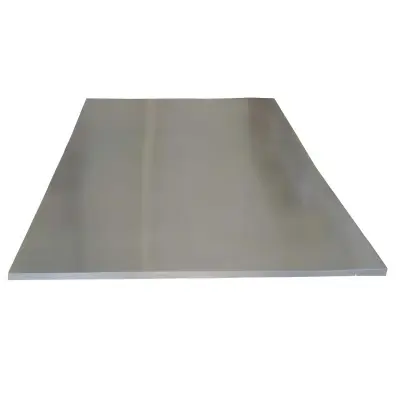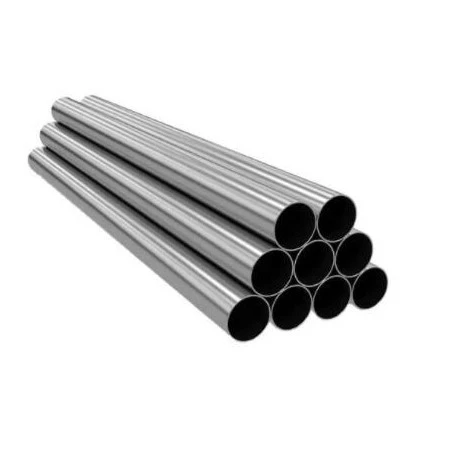

Incoloy Alloy is a nickel iron alloy containing high amounts of nickel and chromium. This alloy can still maintain excellent mechanical properties and corrosion resistance in high temperature environments. It has particularly excellent acid resistance and can effectively resist highly corrosive media such as sulfuric acid and phosphoric acid, which also makes it highly valuable in chemical equipment applications. In addition, Incoloy Alloy is lightweight, has strong oxidation resistance, and can better adapt to various extreme working conditions, ensuring its position in the high-temperature alloy market.
Standards
The production and inspection of Incoloy Alloy are carried out in accordance with internationally recognized standards. The relevant standards mainly include:
- ASTM B409: A specification for corrosion-resistant alloys that ensures the reliability of materials in various environments.
- ASTM B617: Requirements for alloy materials used in the petroleum and chemical industries to ensure their performance in harsh environments.
- ASTM B168: Refers to the heat treatment requirements in standard specifications to ensure the performance state of alloys.
Products Catalog of Alloy Material

Normal Incoloy Alloys
- Incoloy 800/800H/800HT
High nickel and chromium content for excellent oxidation and carburization resistance.
Used in heat-treating furnaces, petrochemical processing, and power generation.
- Incoloy 825
Contains molybdenum and copper for enhanced corrosion resistance.
Ideal for chemical processing, oil and gas, and marine applications.
- Incoloy 925
Precipitation-hardened alloy with high strength and corrosion resistance.
Used in downhole and offshore oil and gas equipment.
- Incoloy 926
High molybdenum content for superior resistance to chloride-induced corrosion.
Suitable for seawater and chemical processing applications.
- Incoloy 625
Contains niobium for high strength and fatigue resistance.
Used in aerospace, marine, and chemical processing industries.
Chemical Composition
Incoloy alloys typically consist of:
- Nickel (Ni): 30-55% (provides high-temperature strength and corrosion resistance)
- Iron (Fe): 20-50% (enhances mechanical properties and reduces cost)
- Chromium (Cr): 15-23% (improves oxidation and corrosion resistance)
- Molybdenum (Mo): 1-6% (increases resistance to pitting and crevice corrosion)
Other Elements: Small amounts of copper, titanium, aluminum, and niobium for additional strength and stability.
Chemical Composition of commonly used Incoloy alloy
|
Alloy Grade |
C |
Fe |
Ni |
Cr |
Al+Ti |
Ti |
Al |
Si |
P |
|
800 |
≤0.1 |
>39.5 |
30-35 |
19-23 |
0.3-1.2 |
0.15-0.6 |
0.15-0.6 |
≤1.0 |
≤0.03 |
|
800H |
0.05-0.10 |
>39.5 |
30-35 |
19-23 |
0.3-1.2 |
0.15-0.6 |
0.15-0.6 |
≤1.0 |
≤0.03 |
|
800HT |
0.06-0.10 |
>39.5 |
30-35 |
19-23 |
0.85-1.2 |
0.25-0.6 |
0.25-0.6 |
≤1.0 |
≤0.03 |
|
825 |
≤0.05 |
Rest |
38-46 |
19.5-23.5 |
-- |
0.6-1.2 |
0.2-1 |
≤0.05 |
≤0.03 |
Physical properties
Incoloy alloy has the following main physical properties
1. Density: 7.94 g/cm ³
2. Melting point: 1350-1400 ° C
3. Thermal expansion coefficient: 13.3 μ m/m ° C (20-100 ° C), 14.3 μ m/m ° C (20-200 ° C)
4. Thermal conductivity: 14.4 W/mK (100 ° C), 15.0 W/mK (500 ° C)
5. Electrical resistivity: 1.05 μ Ω· m (20 ° C)
6. Magnetism: Incoloy alloy 800 is a non-magnetic alloy that does not magnetize at low temperatures and gradually becomes magnetic at high temperatures.
Features
- High-Temperature Resistance
Maintains strength and stability at elevated temperatures (up to 1200°C or 2200°F).
Resists oxidation and scaling in high-temperature environments.
- Corrosion Resistance
Excellent resistance to a wide range of corrosive media, including acids, alkalis, and chlorides.
Resists pitting, crevice corrosion, and stress corrosion cracking.
- Mechanical Strength
High tensile and yield strength, even under extreme conditions.
Good fatigue resistance and toughness.
- Thermal Stability
Low thermal expansion and high thermal conductivity.
- Ease of Fabrication
Can be machined, welded, and formed using standard techniques.
Processing technology of Incoloy Alloy
Incoloy Alloy is a nickel iron chromium based corrosion-resistant alloy, and its processing and welding need to be optimized based on material properties (such as high deformation resistance, easy work hardening) and corrosion resistance requirements. The following are the key process points:
1. Hot Processing Technology
- Temperature range: 1150-900 ℃ (avoid sensitization range of 650-800 ℃).
- Cooling method: water quenching or rapid air cooling to prevent carbide precipitation.
- Deformation control:
- After hot processing, timely annealing (920-980 ℃) is required to restore corrosion resistance.
- During forging, it is necessary to control the uniformity of deformation (>25% critical deformation) to avoid the influence of coarse grains on corrosion resistance.
2. Cold Processing Technology
- Prerequisite: It needs to be carried out after solid solution treatment (such as water quenching at 1050 ℃).
- Intermediate annealing: Intermediate annealing (940 ± 10 ℃) is required when the cold deformation is large.
- Final processing: When the cold deformation exceeds 15%, stabilization treatment (920-980 ℃) is required.
Other processing characteristics
Fabrication and Machining
- Machining: Use carbide tools and slow speeds for optimal results.
- Welding: Compatible with TIG, MIG, and resistance welding techniques.
- Heat Treatment: Solution annealing is recommended to restore corrosion resistance after fabrication.
Heat Treatment Process
- Solution treatment: Heat at 1040-1100 ℃ and quench with water to eliminate casting defects and enhance toughness.
- Time treatment: Heat at 600-700 ℃ to enhance strength and stability.
Maintenance and Inspection
Cleaning: Use non-chlorinated solvents to avoid corrosion.
Inspection: Regularly check for signs of wear, corrosion, or deformation.
Storage: Store in a dry, clean environment to prevent contamination.
Forms and Products
Incoloy alloys are available in various forms, including:
- Sheets and Plates
- Bars and Rods
- Pipes and Tubes
- Wire and Strips
- Forgings and Fasteners
Test Equipment

Applications
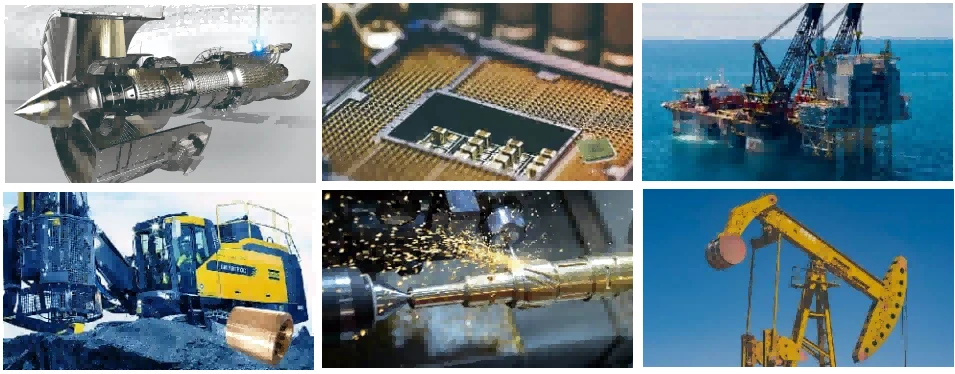
Incoloy alloys are used in industries requiring materials that can withstand extreme conditions, such as:
- Chemical Processing: Reactors, heat exchangers, and piping systems exposed to corrosive chemicals.
- Oil and Gas:Downhole and offshore equipment, valves, and pumps.
- Power Generation:Gas turbines, boilers, and heat exchangers.
- Aerospace:Engine components, exhaust systems, and structural parts.
- Marine Engineering:Components exposed to seawater and marine atmospheres.
- Pollution Control:Flue gas desulfurization systems and scrubbers.
FAQ
Q1:What is Incoloy?
A:Incoloy is a family of iron-nickel-chromium superalloys developed as a "nickel-saving" alternative to Inconel alloys . Unlike Inconel where nickel is the predominant element (>50%), Incoloy alloys have higher iron content (typically >30%), with nickel ranging from 9% to 55% depending on the specific grade . This composition gives Incoloy a more competitive price point while maintaining excellent high-temperature corrosion resistance.
Q2:What is the difference between Incoloy and Inconel?
A:Choose Incoloy when your application involves flue gases, sulfuric acid, or chloride salts at elevated temperatures. Choose Inconel when you need extreme high-temperature strength or the most severe corrosive environments
Q3:Can Incoloy be welded?
A:Yes, Incoloy alloys can be welded using standard methods
Q4:How does Incoloy 800HT perform in long-term high-temperature service?
A:Incoloy 800HT is designed for high-temperature applications, but long-term service (e.g., 13+ years at 913°C) can lead to microstructural changes.
Q5:Is Incoloy difficult to machine?
A:Like many nickel-based superalloys, Incoloy presents machining challenges
Q6:What is the price Lever of Incoloy?
A:Incoloy is less expensive than Inconel due to its higher iron content (which replaces costly nickel), but still significantly more expensive than stainless steel
Hot Tags: incoloy alloy, China incoloy alloy manufacturers