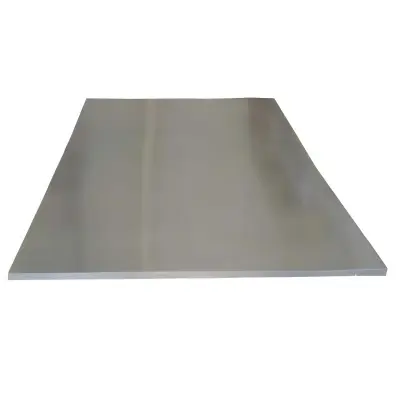
Monel 400 alloy, commonly referred to as a nickel-copper alloy, is composed of over 90% nickel and copper combined. It exhibits outstanding corrosion resistance and high strength, making it widely utilized in industries such as aerospace, marine engineering, and chemical processing.The hardness of Monel alloy varies based on its heat treatment state and operating conditions. Its hardness and strength can be improved through heat treatment and cold working processes.Monel alloy demonstrates exceptional resistance to corrosion, capable of withstanding exposure to various strong acids and bases. Additionally, it offers excellent machinability and weldability.
Standards
- ASTM B127: Standard specification for nickel-copper alloy plate, sheet, and strip.
- ASTM B164: Standard specification for nickel-copper alloy rod, bar, and wire.
- ASME SB127: ASME boiler and pressure vessel code specification.
Chemical Composition
| Item | Ni | Cu | Fe | Mn | C | Si | S |
| Monel 400 | ≥63 | 28-34 | ≤2.5 | ≤2 | ≤0.3 | ≤0.5 | ≤0.025 |
SPECIFICATIONS
| Form | ASTM |
| Rod,bar and wire | B 164 |
| Plate,sheet and strip | B 127, B 906 |
| Seamless pipe and tube | B 165, B 829 |
| Welded pipe | B 725, B775 |
| Welded tube | B 730, B 751 |
| Fitting | B 366 |
| Forging | B 564 |
Product Processing Flow

Properties of Monel 400
- Corrosion Resistance
Resists corrosion in seawater, acidic, and alkaline environments.
Performs well in hydrofluoric acid and sulfuric acid.
- Mechanical Properties
High tensile strength and toughness.
Maintains strength and ductility at both high and low temperatures.
- Thermal Properties
Good thermal conductivity.
Suitable for cryogenic applications.
- Magnetic Properties
Essentially non-magnetic at room temperature.
Fabrication and Machining
- Machining
Can be machined using standard techniques, though it work-hardens quickly.
- Welding
Easily welded using gas tungsten arc welding (GTAW) and gas metal arc welding (GMAW).
- Forming
Can be formed using standard methods, but requires annealing to relieve stress.
Comparison of Monel 400 with Similar Alloys
- Vs. 316 Stainless Steel: Monel 400 is far superior to 316 stainless steel in seawater, hydrofluoric acid, and hot alkalis. However, 316 stainless steel offers better resistance to pitting and crevice corrosion in chloride-containing environments and is more cost-effective.
- Vs. Inconel 600: Inconel 600 is a nickel-chromium-iron alloy and performs better in high-temperature oxidizing environments and strong oxidizing acids (e.g., nitric acid). Monel 400 excels in reducing acids (e.g., sulfuric acid, hydrochloric acid) and hydrofluoric acid.
- Vs. Hastelloy C-276: C-276 is a more advanced nickel-based alloy with excellent resistance to hot concentrated hydrochloric acid, wet chlorine gas, and contaminated strong oxidizing media, but it is significantly more expensive than Monel 400.
Test Equipment

Applications
- Marine Engineering: Seawater pump shafts, propeller shafts, valves, fasteners, heat exchanger tubes, marine hardware.
- Chemical & Petrochemical:Reaction vessels, distillation columns, piping, heat exchangers, pumps and valves handling fluorine- or chlorine-containing media (e.g., HF, chlorine gas).
- Energy:Power plant feedwater heater tubes, nuclear fuel reprocessing equipment, desalination plant evaporators.
- Aerospace:Aircraft flap tracks, fuel tanks, fasteners, vintage airframe structures (e.g., Mustang fighters).

FAQ
Q1: What is Monel 400?
A:A nickel-copper alloy (about 67% Ni, 33% Cu) known for excellent corrosion resistance, especially in seawater and chemical environments.
Q2: What corrodes Monel 400?
A:Avoid strong oxidizing acids like nitric acid. Also avoid aerated hydrochloric acid. It does not resist oxidation well because it has no chromium.
Q3: Is it easy to machine?
A:No – it work‑hardens quickly. Use sharp carbide tools, slow speeds, heavy feeds, and lots of coolant.
Q4: Can it be welded?
A:Yes. Clean the surface well, use ENiCu‑7 or ERNiCu‑7 filler. TIG and MIG work fine.
Q5:How strong is it compared to steel?
A:In annealed state: ~480-550 MPa tensile strength (similar to mild steel). But it is much more corrosion resistant, especially in marine environments.
Q6: What standard numbers refer to Monel 400?
A: UNS N04400,W.Nr.2.4360. Common specs: ASTM B127 (plate), B164 (bar), B165 (tube).
Q7:How strong is Monel 400, and how does it differ from Monel K-500?
A:Monel 400 is a solid-solution strengthened alloy – strengthened only by cold work, not by heat treatment. In contrast, Monel K-500 contains aluminum and titanium and can be precipitation hardened (aged), achieving much higher strength. For example, the yield strength of aged Monel K-500 exceeds 690 MPa, versus approximately 172 MPa for Monel 400.
Q8: How does Monel 400 perform at low temperatures?
A:It performs excellently at cryogenic temperatures, retaining high strength and toughness without a ductile-to-brittle transition.
Q9:What should be noted during cold working or forming?
A:Due to severe work hardening, strength and hardness increase while ductility decreases. When deformation is large, intermediate annealing (approx. 750-825°C) is necessary to restore ductility and avoid cracking.
Hot Tags: monel 400 alloy, China monel 400 alloy manufacturers