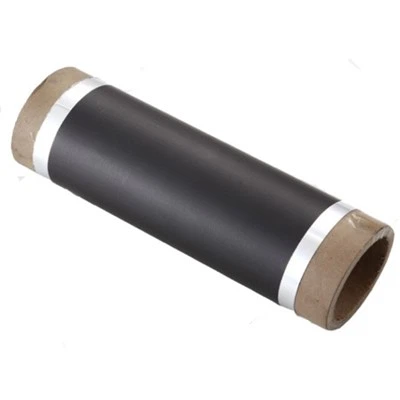
What this product solves - in one sentence: high peel carbon coated aluminum foil is the conductive interlayer between your cathode active material and the aluminum current collector. If your LFP or fast-charge battery suffers from high interfacial resistance, active material delamination, or capacity fade during cycling, the problem is often the bare foil interface - not the active material itself.
Standard bare aluminum foil creates a limited contact area with cathode active material. The result: higher interfacial resistance, weaker adhesion, and progressive delamination during charge-discharge cycling. High peel carbon coated aluminum foil solves this by applying a thin conductive carbon layer (typically 1–2 μm) to the foil surface. This layer provides a high-surface-area conductive interface that:
- Lowers contact resistance between the active material and current collector, reducing cell internal resistance
- Improves adhesion of the cathode coating to the foil, preventing delamination during cycling and handling
- Reduces binder usage - the carbon layer provides additional anchoring, allowing you to reduce binder content and increase active material loading
- Improves rate performance - critical for LFP cathodes, which have inherently low electronic conductivity
Why LFP batteries especially need carbon coated foil: Lithium iron phosphate (LFP) cathode material has poor intrinsic electronic conductivity. Bare aluminum foil cannot compensate for this. Carbon coated foil provides the conductive bridge that LFP needs to achieve acceptable rate capability and cycle life.
As a China supplier, we provide custom coating widths, custom substrate thicknesses, and fast delivery for battery manufacturers worldwide.
General Product Classification For Lithium Battery Cathode Current Collector

Specifications Of High Peel Carbon Coated Aluminum Foil
| Item | Specification range | Test method | Remark |
| Appearance | Uniform and delicate appearance,no obvious leakage | Visual | |
| Gray value | Light grey~black | Chroma card | Can be customized |
| Foil thickness | 9~20μm | Test with myriameter | Can be customized |
| Coating thickness on one single side |
0.3~2 μm | Test with myriameter | Can be customized |
| Coating width | 100~1550 mm | Test with film ruler | Can be customized |
| Coating area density | 0.2~2.0g/m² | Analytical balance weight loss method test | Can be customized |
| Peel strength of coating and substrate |
>2 N/cm | Reverse 180°peel | |
| Diaphragm resistance | ≤10mΩ | Φ14mm,pressure 0.3T | |
| Coating dyne value | ≥64 | Test with a 64 Dyne pen | |
| Resistant to NMP wiping | ≥200 times | Wipe 200 times with NMP with a dust-free cloth,and the coating does not peel off |
|
| Electrolyte soaking | No coating drop | @60℃24hours | |
| Stripping strength of pole sheet before rolling |
/ | Reverse 180°peel | Can be customized |
| Peel strength of pole sheet after rolling |
/ | Reverse 180°peel | Can be customized |
Coating of High Peel Carbon Coated Aluminum Foil


Effect of Low Peel Strength For The Carbon Coated Aluminum Foil


How do I avoid procurement pitfalls when buying carbon coated foil?
Key checks:
- Verify peel strength - request measured peel strength data, not just "high peel" claims.
- Check coating thickness uniformity - inconsistent coating means inconsistent cell performance.
- Confirm substrate thickness - 12 μm vs 15 μm affects energy density and handling.
- Request surface resistance data - critical for interfacial resistance performance.
- Check wetting tension - low wetting tension causes coating defects.
- Confirm custom width capability - does the supplier slit to your specification?
- Request samples for your specific cathode formulation and coating process.
About Us
We are a professional manufacturer and exporter specializing in high-performance battery raw materials, focusing on the R&D, production and customized processing of high peel carbon coated aluminum foil for lithium battery cathode current collector. With advanced roll-to-roll coating production lines and strict battery-grade quality control standards, we provide ultra-stable, high-adhesion and low-resistance carbon coated aluminum foil for global lithium battery manufacturers, new energy enterprises and battery research institutions.
Our core product lineup covers high peel strength carbon coated aluminum foil, single-sided & double-sided conductive carbon coated aluminum foil, ultra-thin battery aluminum foil, and customized carbon coating thickness products. Different from ordinary carbon coated foil, our high peel carbon coated aluminum foil features excellent interfacial adhesion, uniform nano-carbon coating, stable electrical conductivity and outstanding electrolyte corrosion resistance, perfectly serving as the ideal cathode current collector for LFP batteries, ternary lithium batteries and energy storage batteries.


Custom Services - Built Around Your Battery Design
| Service | Details |
|---|---|
| Custom coating width | Slit to your electrode width, with uncoated tab zone as required |
| Selective coating zones | Coated electrode area + uncoated tab area in one roll |
| Custom substrate thickness | 10 μm, 12 μm, 13 μm, 15 μm, or custom |
| Single or double-sided coating | Match your cell design |
| Custom carbon formulation | Optimized for LFP, NMC, or fast-charge applications |
| Custom roll length | Up to 20,000 m |
| Sample supply | 7–14 days for qualification trial |
Delivery & Commercial Terms
|
Items |
Details |
|---|---|
|
MOQ |
50kg, Bulk production orders support customized requirements, mixed loading available. |
|
Lead Time |
Stock products: 3–7 working days. Custom carbon coated aluminum foil for lithium battery cathode current collector: 7–15 working days according to order quantity and coating requirements. |
|
Shipping Term |
FOB Qingdao / Shanghai / Tianjin. CFR and CIF terms are available upon request. Support sea freight, air freight and express delivery for small trial orders. |
|
Payment Terms |
T/T 30% deposit, 70% before shipment; L/C at sight for large orders; negotiable for long-term partners |
|
Packaging Standard |
Battery-grade dust-free packaging, moisture-proof, anti-oxidation and shockproof. Standard industrial roll packaging with export wooden pallet, suitable for long-distance ocean transportation. |
|
Quality & Certificates |
All high peel carbon coated aluminum foil strictly complies with new energy battery industry standards. Provide complete factory test reports, size, resistance and peel strength inspection data. Support third-party testing. |
|
Custom Service |
Support custom thickness, width, single-sided/double-sided carbon coating and roll size for lithium battery cathode current collector applications. |
Customer Case From University of Southampton
Background
The University of Southampton, a world‑renowned institution with a strong research focus on electrochemistry, energy storage, and next‑generation battery technologies, reached out to us with an inquiry for carbon coated aluminum foil intended for their lithium battery research projects.
Challenge
The research team specified their requirements for aluminum foil thickness and coating thickness, but did not provide detailed parameters for the slurry formulation or the intended application scenario. This is a common challenge when working with academic research institutions-they often have clear performance targets but need technical guidance to translate those targets into specific material specifications.
Our Solution
Our dedicated technical team leveraged extensive experience in supplying carbon coated aluminum foil for lithium battery current collectors to proactively present our complete product catalog. Rather than waiting for the customer to define every parameter, we offered multiple options based on our past project experience, including:
- Various aluminum foil thicknesses (12–30 μm available)
- Coating thickness options (1–2 μm, single‑ or double‑sided)
- Different coating materials and densities
This approach gave the University of Southampton researchers a broader range of choices, enabling them to select the most suitable specification for their specific research needs without the back‑and‑forth of multiple clarification rounds.
Customer Released Order and Shipment


What This Product Solves for Your Battery
Problem 1: High interfacial resistance limiting rate performance.
Bare aluminum foil has limited contact area with the cathode coating. Carbon coated foil provides a high-surface-area conductive layer that increases the effective contact area. Result: lower interfacial resistance, better rate capability, and less polarization during fast charging.
Problem 2: Active material delamination during cycling.
During charge-discharge cycling, the cathode coating expands and contracts. With bare foil, the adhesive bond can weaken over time, causing the active material to detach. High peel carbon coated foil provides mechanical anchoring - the carbon layer's surface morphology grips the coating, maintaining adhesion through thousands of cycles.
Problem 3: Need to reduce binder content and increase energy density.
Binder is electrochemically inactive - it adds weight without contributing capacity. Carbon coated foil provides sufficient adhesion that you can reduce binder content in the cathode formulation. This means more active material per unit volume, which translates directly to higher energy density.
Problem 4: LFP cathode performance limitations.
LFP material has low electronic conductivity. Carbon coated foil compensates by providing a conductive path from the active material particles to the current collector. LFP batteries without carbon coated foil often struggle to achieve acceptable rate performance.
Selection Guide: Which Carbon Coated Foil Do You Need?
| Your Priority | Recommended Specification |
|---|---|
| Standard LFP cathode | Single or double-sided, 12–15 μm substrate, standard peel |
| Fast-charge application | Double-sided coating, optimized carbon formulation for low resistance |
| High-energy density | Thin substrate (10–12 μm), low coating weight, reduced binder formulation |
| High-reliability / long cycle life | High peel grade - increased carbon loading and optimized surface treatment |
| Custom width slitting | Specify coating zone width and uncoated tab zone |
| R&D / pilot line | Small rolls available for evaluation |
Why Buyers Choose Us as Their China Supplier
- Custom coating width is standard. We slit to your specification, including selective coating zones. No minimum width penalty.
- Fast delivery. Standard specifications ship in 15–25 days. Samples in 7–14 days.
- High peel grade available. Specify your peel strength requirement and we match it.
- Consistent batch-to-batch quality. Critical for battery manufacturers.
- Full documentation. Mill Test Certificate with coating thickness, surface resistance, wetting tension, and peel strength data.
- Competitive pricing from China. Direct factory supply with flexible MOQ for trial orders.
Need High Peel Carbon Coated Aluminum Foil?
Tell us your substrate thickness, coating type (single/double), required peel strength, coating width, roll length, and application (LFP, NMC, fast-charge). We will recommend the right specification and provide samples for your qualification trial.
FAQ
Q1: What is high peel carbon coated aluminum foil used for?
A: High peel carbon coated aluminum foil is used as the cathode current collector in lithium-ion batteries, especially for LFP (lithium iron phosphate) and fast-charge applications. It provides a conductive interface between the cathode active material and the aluminum foil, reducing interfacial resistance and improving adhesion.
Q2: Why is aluminum foil used as the cathode current collector?
Aluminum foil is widely used as a cathode current collector due to its excellent electrical conductivity, lightweight properties, and corrosion resistance. It forms a stable oxide layer that prevents further oxidation, ensuring long-term performance. Aluminum offers a cost-effective solution without compromising efficiency, and its thin yet strong structure (typically 8–20 μm) maximizes energy density. Importantly, aluminum foil is not suitable for anodes because it reacts with lithium, forming alloys that degrade performance-copper foil is used for anodes instead.
Q3: What does "high peel" mean in high peel carbon coated aluminum foil?
A:"High peel" refers to the enhanced adhesion strength between the carbon coating layer and the aluminum foil substrate, as well as between the active electrode material and the carbon-coated layer. Standard carbon coated aluminum foil improves peel strength from approximately 10 gf to 60 gf (tested via 3M tape or cross-hatch methods). High peel variants achieve even greater bonding force-some专利 designs report peel strengths of ≥500 N/m. This superior adhesion prevents coating delamination during charge-discharge cycles and electrode calendaring, significantly extending battery cycle life.
Q4. What battery types use it most?
A:LiFePO₄ (LFP) batteries almost require it. Also used in NMC, NCA, lithium‑sulfur, and sodium‑ion batteries.
Q5: How does it specifically benefit LFP batteries?
A:Compared with ternary lithium batteries, LFP batteries have lower electrical conductivity and energy density. Carbon coating can significantly improve the cycling performance of LFP batteries; therefore, aluminum foil used for LFP batteries generally requires carbon coating. Carbon coated aluminum foil can significantly reduce the internal resistance of LFP batteries, enhance rate capability, low-temperature performance, cycling performance, and storage performance.
Q6: How is the coating applied?
A:The coating is typically applied using a roll-to-roll coating process that forms a conductive carbon layer (approximately 2 μm thick) on the aluminum foil surface. The process involves: preparing a conductive slurry by mixing conductive carbon materials with binders and solvents, coating the slurry onto the aluminum foil using techniques like gravure coating, and then vacuum drying.
Q7: What makes high‑peel carbon coated aluminum foil suitable for LFP and fast‑charge lithium batteries?
A: High‑peel carbon coating delivers strong adhesion with cathode slurry, lowers interfacial contact resistance. It reduces polarization under fast‑charge conditions, avoids carbon shedding during calendaring, improves cycle life and yield rate for LFP and high‑rate battery manufacturing.
Q8:Can carbon coated aluminum foil be used for both anodes and cathodes?
A:No. Aluminum foil is unsuitable for anodes because it reacts with lithium, forming alloys that degrade performance. Copper foil is preferred for anodes due to its lithium stability. Aluminum's oxidation resistance makes it ideal for cathodes, where high-potential reactions occur. Using aluminum for anodes would lead to rapid capacity fade and safety hazards.
Q9: Does the carbon coating affect weldability?
A:Yes, the carbon coating can affect welding. Type B carbon coated aluminum foil features a lighter coating (2–3 μm total) that retains relatively small welding zones and supports intermittent coating gaps recognizable by coating equipment. For applications requiring welding, intermittent coating patterns or Type B products are recommended.
Q10: How does surface roughness impact performance?
A:Controlled roughness (Ra 0.1–0.5 μm) enhances slurry adhesion by 40% compared to mirror-finish foils. However, excessive roughness (>1 μm) increases localized current density, accelerating lithium plating at >1C rates. Optimal Ra values differ by chemistry-0.2 μm for LFP vs. 0.4 μm for NMC811 due to binder system variations.
Q11: How does high peel carbon coated aluminum foil protect against corrosion?
A:The carbon coating acts as a protective layer that mitigates corrosion caused by electrolytes. This is particularly important because LFP slurries can run at pH 11 or higher, which can corrode bare aluminum. The coating prevents aluminum dissolution, especially in high-voltage (>4.2V) applications.
Q12: Why does LFP battery especially need carbon coated foil?
A: LFP cathode material has poor intrinsic electronic conductivity. Bare aluminum foil cannot compensate for this. Carbon coated foil provides the conductive bridge that LFP needs to achieve acceptable rate capability and cycle life.
Q13: What is the difference between single-sided and double-sided coating?
A: Single-sided coating applies carbon to one side only - used when only one side contacts the active material. Double-sided coating applies carbon to both sides - used for double-sided electrode coating or when both surfaces require conductivity. Double-sided is standard for most LFP applications.
Q14: Can you provide samples for qualification?
A: Yes. We provide samples in 7–14 days for your qualification trial. Tell us your substrate thickness, coating type, peel strength requirement, and coating width, and we will prepare the sample to your specification.
Q15: What is the one-line rule for choosing high peel carbon coated foil?
A: Choose high peel carbon coated aluminum foil when your LFP or fast-charge battery suffers from high interfacial resistance, active material delamination, or poor rate performance. The carbon layer provides the conductive bridge and mechanical anchoring that bare foil cannot. Custom widths and fast delivery available from China supplier.
Hot Tags: high peel carbon coated aluminum foil, cathode current collector, LFP lithium battery, fast charge lithium battery, custom carbon coated aluminum foil China supplier, fast delivery carbon coated aluminum foil, battery carbon coated foil