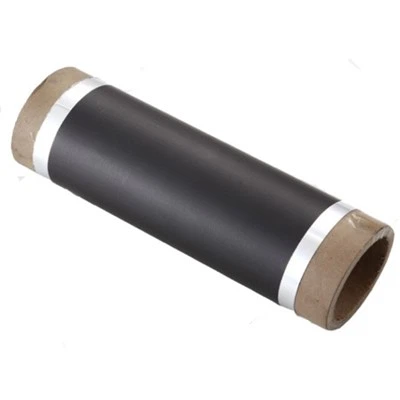
Carbon‑coated aluminum foil technology works by applying a layer of carbon material onto the aluminum foil, thereby improving the battery's conductivity and durability. As a key component in batteries, aluminum foil serves primarily as a current collector, facilitating the flow of electric current inside the cell. Although traditional aluminum foil offers good electrical conductivity, it often suffers from issues such as short battery life and low efficiency in practical applications.
The introduction of carbon‑coated aluminum foil technology effectively addresses these problems. The addition of the carbon layer significantly enhances the foil's electrical conductivity while also improving its corrosion resistance. The implementation of this technology not only boosts the overall performance of the battery but also delivers a longer service life during repeated charge‑discharge cycles.
Products Specification
A representative specification (double‑side coating) is:
| Parameter | Typical Value |
|---|---|
| Aluminum substrate thickness | 15–20 μm |
| Coating thickness (each side) | 1–2 μm (total 2–4 μm) |
| Total thickness after coating | 16–22 μm |
| Carbon coating density | 0.5–1.0 g/m² (per side) |
| Surface resistivity | <30 Ω per 25 μm² (or <0.5 Ω/sq) |
| Adhesion strength (peel test) | >1.5 N/cm after electrolyte soak |
| Surface wetting tension | ≥50 dyne/cm |
| Tensile strength | ≥150 MPa |
Double‑sided coating is preferred for automotive/energy‑storage applications because it provides symmetrical performance.
Products Parameters
|
ITEM |
Lithium ion battery |
Polymer battery |
Aluminum strip |
|
|
Temper |
H18 |
0 H22 H18 |
0 H18 |
|
|
Thickness (mm) |
0.01-0.02 |
0.012-0.06 |
0.08-0.15 |
|
|
Mechanical Performance |
U.T.S(Mpa) |
≥40Mpa |
≥40-150 |
≥75 |
|
Elongation(%) |
≥1 |
≥1 |
≥20 |
|
|
Core (mm) |
76.2 |
76.2 |
76.2 |
|
|
Wettability |
≥B grade |
|||
Product Structure and Working Method
1.Product Structure
The primer layer technology for carbon-coated Al foil appears to address critical challenges in lithium-ion battery (LIB), particularly in improving interfacial contact, reducing stress from active material expansion, and protecting current collectors.

2.Working Method
Primer layer plays a critical role in enhancing the performance of carbon-coated Al foil for lithium-ion battery(LIB). The primer acts as an interfacial bridge between the Al current collector and the anode active material (e.g., graphite, silicon).

Advantages
- Improving battery conductivity: By coating the surface of aluminum foil with a carbon layer, carbon‑coated aluminum foil technology significantly enhances the electrical conductivity of batteries. This improvement leads to higher charge‑discharge efficiency, allowing the battery to release and store energy more quickly.
- Extending battery life: The carbon coating effectively reduces corrosion of the aluminum foil caused by internal chemical reactions, thereby prolonging the service life of the battery. This characteristic is especially important for applications that require long‑term stable operation, such as electric vehicles and energy storage systems.
- Enhancing stability: The application of carbon‑coated aluminum foil technology also improves the overall stability of the battery, reducing the risk of failure under extreme conditions. This enables the battery to operate reliably even at high or low temperatures.
- Environmental benefits: Compared to conventional battery materials, the use of carbon materials is more environmentally friendly. It not only reduces harmful emissions during production but also improves the recyclability of the battery.
Related Products
Besides the carbon coated aluminum foil for battery cathode electrode substrate using material we can also supply below products:
1.) A full set of lithium battery materials, including:
LiMn2O4, LTO, LiNiMnCoO2 (NMC), LiCoO2, graphite (MCMB) and other positive and negative battery materials; aluminum foil, copper foil, battery separator, etc.
2.) A full set of lithium battery equipment, such as:
Mixer oating machine, oven rolling machine,welding machine, slitting/cutting machine,winding machine, sealing machine, etc.
Test Equipment

Certificate

Customer Feedback
Carbon Coated Copper Foil Feedback from Customer
We are committed to meeting the different needs of our customers. After testing different samples, Thailand customers chose carbon coated foil that is suitable for their batteries.

Tips:
Application in Customer side: Used for semi-solid systems without using any adhesive in both the anode and cathode. Electrolyte is a typical carbonate based electrolyte, just like traditional electrolytes. LFP/Pure Graphite System. Silicon free.
Our customer's using conditions: Semi-solid is just a mixture of active material (LFP or Graphite) with carbon black and electrolyte, coated on the foils. then assemble the cathode side and anode side into a cell just like normal Li-ion cell but without adding extra electrolyte. (It's already in the slurry mixing process)
Our carbon coated foil depend on their compatibility with the negative electrode system, as they have differences in improving the electrode stripping force.The specific performance differences depend on the combination of carbon coating, negative electrode, and the entire battery system.
Noramlly we need to know the specific electrode formula, Such as voltage platform, negative electrode material system (silicon carbon or graphite, etc.), negative electrode binder (SBR+CMC or PAA or PVDF). What electrolyte for a semi-solid state battery.base on above information then we can suggest suitable products
Applications
- Power & energy storage lithium-ion batteries (LFP, LMFP, LMO, NCM, NCA, LNM, LTO)
- 3C lithium-ion batteries (LCO, LMO)
- Supercapacitors
- Lithium-ion capacitors
- Aqueous lithium-ion batteries
- Alkaline batteries

Company Profile
HSMetal focuses on the R&D and production of conductive and thermally conductive interface materials for new energy power battery cells, modules, and battery housings. HSMetal has invested significant human and material resources in the independent research and development of conductive materials. Our core business, the conductive series products for lithium-ion batteries, has gained widespread acceptance in the new energy and 5G fields.
We utilize primer technology to enhance electrode materials and unlock their full potential in practical applications. Our primer is an ultra-thin coating based on carbon, graphite, or carbon nanotubes, compatible with virtually any substrate. By applying this coating to electrodes, we effectively mitigate material degradation, enhancing both battery performance and safety. While pre-coating is an established method, our decade of research has refined its use to significantly boost the effectiveness of diverse battery formulations.
HSMetal's conductive coated foil is recognized as a leading solution in the global lithium-ion battery sector. We have become a strategic partner to numerous internationally renowned manufacturers of new energy vehicles and energy storage systems. The product has gained widespread market acceptance and has enabled the formation of an integrated industrial ecosystem centered around our conductive foil technology.
We are planning a development strategic growth path to create significant value in the clean energy industry.

Equipment

Carbon Coated Aluminum Foil

Carbon Coated Copper Foil

Quality Control

R&D Capability

Product Packag
FAQ
Q1:What is carbon coated aluminum foil for cathode substrates?
A:Carbon coated aluminum foil (CCAF) is a high‑performance current collector material specifically designed for the positive electrode (cathode) of lithium‑ion and other advanced batteries. It consists of a high‑purity electronic aluminum foil base with a thin, uniform layer of conductive carbon material (e.g., carbon black, graphene, carbon nanotubes) applied via precision coating. This carbon layer acts as an interface between the aluminum substrate and the cathode active material slurry, improving conductivity, adhesion, and corrosion resistance.
Q2:What is the difference between single‑sided and double‑sided coating?
A: See the difference as below:
- Single‑sided – Carbon layer on only one side of the foil. Lower cost, suitable for simpler cell designs where one side of the current collector faces an inactive region.
- Double‑sided – Carbon coating on both sides. Provides symmetrical electrochemical performance, better adhesion for both electrodes in a wound or stacked cell, and is increasingly standard for automotive and high‑power batteries. In 2025–2026, double‑sided products hold about 53% of the market.
Q3: Which battery chemistries can use carbon coated aluminum foil as a cathode substrate?
A:CCAF is compatible with virtually all lithium‑ion cathode chemistries, including:
LFP (Lithium Iron Phosphate); LMFP (Lithium Manganese Iron Phosphate); NCM / NCA (Nickel‑Cobalt‑Manganese / Nickel‑Cobalt‑Aluminum);LCO (Lithium Cobalt Oxide);LMO (Lithium Manganese Oxide);LTO (Lithium Titanate – used as anode but can also use carbon‑coated foil);High‑voltage spinel (LNM, LiNi₀.₅Mn₁.₅O₄)
Q4:Can stainless steel mesh, nickel mesh, etc. replace aluminum foil as the cathode current collector?
A:In theory, yes, but in practice they are rarely used. Aluminum foil offers the best overall combination of electrical conductivity, cost, flexibility, and adhesion to the electrode coating. Stainless steel or nickel meshes are often heavier, more expensive, or incompatible with existing manufacturing processes.
Q5: What are the advantages of carbon‑coated aluminum foil compared to traditional aluminum foil?
A: First, it reduces the interfacial resistance of the current collector and minimizes polarization, thereby improving the battery's cycle life and rate capability. Second, it enhances the adhesion between the active material and the current collector, reduces the amount of binder needed, and lowers electrode manufacturing costs. Finally, carbon‑coated aluminum foil also prevents corrosion and oxidation of the current collector, extending the battery's service life.
Hot Tags: carbon coated aluminum foil for battery cathode electrode substrate, China carbon coated aluminum foil for battery cathode electrode substrate manufacturers