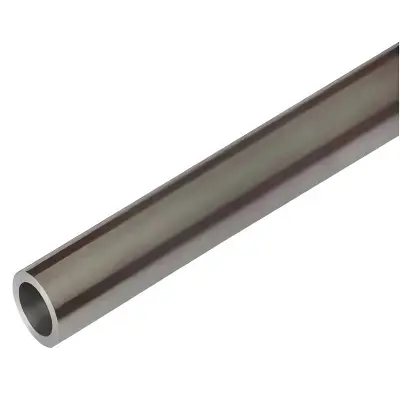
What Hastelloy C-276 cold rolled plate is used for - in one sentence: Hastelloy C-276 cold rolled plate (UNS N10276, 2.4819) is the nickel-chromium-molybdenum alloy sheet you choose when your equipment faces harsh corrosive environments that stainless steel and duplex steel cannot survive - wet chlorine, hypochlorite, chloride salts, mixed acids, and high-temperature corrosive media. If you need in-stock plate in 0.5–3.0 mm thickness for chemical, pharmaceutical, or pollution control equipment, C-276 cold rolled plate is the answer.
Hastelloy C-276 (UNS N10276, DIN 2.4819, NS334) is a Ni-Cr-Mo-W super-low-carbon nickel-based corrosion-resistant alloy containing approximately 57% nickel, 16% chromium, and 16% molybdenum, with additions of iron, tungsten, and cobalt . The low carbon and silicon content, combined with tungsten addition, gives C-276 exceptional resistance to oxidizing and reducing media, pitting, crevice corrosion, and stress corrosion cracking .
That is why Hastelloy C-276 cold rolled plate is widely used in chemical reactors, distillation towers, storage tanks, piping, heat exchangers, flue gas desulfurization systems, pickling equipment, pharmaceutical reactor liners, and nuclear power ancillary equipment - anywhere other alloys cannot survive.
Product Basic Specifications
| Item | Details |
|---|---|
| Product Name | Hastelloy C‑276 Cold Rolled Plate / Alloy Sheet |
| Grade | Hastelloy C‑276 |
| Material Designation | UNS N10276, W.Nr. 2.4819 |
| Execution Standard | ASTM B575 / ASME SB575 |
| Stock Thickness Range | 0.5mm‑3.0mm cold‑rolled plate, custom thickness available on request |
| Surface Condition | Solution‑annealed & pickled; flat surface, free from oxidation, scratches and warpage |
| Available Processing | Laser cutting, drawing‑based custom zero‑cutting, flattening, polishing, bending, drilling |
| Document & Inspection | Original Mill Test Certificate, mechanical performance report, corrosion test document; on‑site PMI spectral inspection supported |
Key Parameters of Hastelloy C276 Plate
Chemical Composition (wt.%)
| Element | Min | Max |
|---|---|---|
| Ni | Balance (~57%) | - |
| Cr | 15.0 | 16.5 |
| Fe | 4.0 | 7.0 |
| C | - | 0.011 |
| Mn | - | 1.0 |
| Si | - | 0.08 |
| Mo | 15.0 | 17.0 |
| W | 3.0 | 4.5 |
| Co | - | 2.5 |
| V | - | 0.30 |
| P | - | 0.015 |
| S | - | 0.01 |
Mechanical Properties
| Property | Value |
|---|---|
| Tensile Strength | ≥690 MPa |
| Yield Strength (0.2%) | ≥283 MPa |
| Elongation | ≥40% |
| Density | 8.9 g/cm³ |
| Melting Range | 1325–1370°C |
International Grade Equivalents
| Standard | Grade |
|---|---|
| USA | UNS N10276 |
| Germany | DIN 2.4819, NiMo16Cr15W |
| China | NS334, H01276 |
| Other | Inconel 276 |
Key Properties of Hastelloy C‑276 Cold Rolled Plate
- Outstanding corrosion resistance for harsh corrosive environments
This nickel‑chromium‑molybdenum alloy sheet offers good corrosion resistance under both oxidizing and reducing conditions. High chromium, molybdenum and tungsten contents grant superior performance against pitting corrosion, crevice corrosion and stress‑corrosion cracking. It ranks among few alloys that withstand wet chlorine gas, hypochlorite, chlorine dioxide solution and high‑concentration chloride salt solutions, including ferric chloride and cupric chloride oxidizing salt solutions
Note: Not recommended for extreme oxidizing service like hot concentrated nitric acid.
- Good high‑temperature stability Hastelloy C‑276 cold rolled plate retains stable microstructure and mechanical properties up to 1038°C (1900°F), suitable for high‑temperature corrosive process conditions.
- Superior weldability & fabricability Ultra‑low carbon composition minimizes carbide precipitation during welding. No post‑weld solution heat treatment is required after fabrication. The UNS N10276 2.4819 alloy sheet supports cold working including sheet metal forming and cutting, as well as hot working such as hot pressing and forging, and can be welded with other dissimilar metals.
- Extended service life & low operational cost When deployed in harsh corrosive environments, Hastelloy C‑276 cold rolled plate features service life several times longer than conventional stainless steel grades. It lowers equipment maintenance frequency, replacement expense and production downtime for end‑users.
Typical Service & Harsh Corrosive Environments
Our in‑stock Hastelloy C‑276 cold rolled plate UNS N10276 2.4819 nickel‑chromium‑molybdenum alloy sheet is engineered for below harsh corrosive environments:
- Mixed strong acid, alkali and salt circulating media
- Chloride‑rich brine, wet chlorine gas, hypochlorite and chlorine‑dioxide surroundings
- Oxidizing salt solutions: ferric chloride, cupric chloride
- Alternating wet‑dry corrosive atmosphere for waste gas scrubbing
- Working conditions combining mechanical stress and chemical corrosion
- Avoid application in extreme hot concentrated nitric acid heavy oxidation environments.
How Buyers Choose Hastelloy C-276 Cold Rolled Plate
Choose C-276 cold rolled plate when:
- Your equipment faces chloride-containing, wet chlorine, hypochlorite, or mixed acid environments
- Stainless steel 316L or 904L has failed or is expected to fail
- You need weldability without post-weld heat treatment
- Your application requires resistance to pitting, crevice corrosion, and stress corrosion cracking
- You need a plate thickness between 0.5 mm and 3.0 mm for thin-wall or precision components
- You need in-stock material for urgent orders or same-day pickup
Consider alternatives when:
- Your environment is extremely oxidizing (e.g., hot concentrated nitric acid) - C-276 is not recommended
- You need higher strength - consider C22 or other nickel alloys
- Your corrosion environment is mild - 316L or 904L may be sufficient and more cost-effective
Material Selection Reference
Hastelloy C276 stands out for superior resistance to chloride‑induced pitting, crevice corrosion and mixed oxidizing‑reducing media, widely used in FGD systems, chloride‑containing pickling equipment and wet chlorine processing devices.
If you are evaluating whether Hastelloy C276 is the most cost‑effective option versus Hastelloy C22, C4, B2 or B3 for your process medium, please read our Hastelloy alloy grade‑to‑application selection guide. This buying guide clarifies medium limits, welding constraints and typical misapplication risks to help you avoid costly material‑selection mistakes.
We supply Hastelloy C276 plate, sheet, bar, seamless pipe, welded pipe and custom forgings with complete MTR and PMI inspection reports. Custom cutting and processing services are available for project‑specific requirements.
Customer Case: Hastelloy C‑276 Cold Rolled Plate UNS N10276 2.4819 for US Chemical Processing Client
Client Background
This US‑based chemical processing enterprise specializes in manufacturing mixed‑acid reaction equipment and flue‑gas desulfurization scrubber components. Their production environment features harsh corrosive conditions: wet chlorine gas, high‑concentration chloride brine and alternating wet‑dry corrosive atmosphere.
Previously, the client adopted ordinary duplex stainless steel plates for their reactor inner lining. Short service life, frequent pitting & crevice corrosion caused unplanned equipment shutdowns, high maintenance cost and heavy production loss. The client had strict requirements: precise thickness tolerance, full material traceability, PMI test verification, mill test certificates, and fast delivery for their urgent equipment‑revamp project. They needed genuine Hastelloy C‑276 cold rolled plate to replace the failed stainless‑steel liners.
Project Challenges
Working medium contains wet chlorine and chloride‑rich mixed corrosive media; common stainless steel grades cannot withstand long‑term service.
High tolerance requirement for plate thickness; dimensional deviation must be strictly controlled for on‑site welding & lining installation (as shown in thickness‑inspection photos).
Urgent project timeline, short lead‑time requirement, third‑party material verification needed to eliminate counterfeit alloy risk.
Require custom cutting to specified dimensions to reduce client's secondary machining workload.
Our Solution
After evaluating the client's operating conditions and drawing requirements, we recommended Hastelloy C‑276 Cold Rolled Plate UNS N10276 (W.Nr.2.4819 nickel‑chromium‑molybdenum alloy sheet).
- Material selection: Supplied solution‑annealed & pickled C‑276 cold‑rolled plates from our warehouse stock. Every piece passed digital micrometer thickness inspection to guarantee thickness tolerance (refer to attached onsite measuring photos). Strict dimensional control ensured good fitting during customer's lining fabrication and welding.
- Full quality documentation: Provided complete original Mill Test Certificate(MTC). Supported PMI spectral inspection before shipment, 100% confirm chemical composition matches UNS N10276 standard, effectively avoid inferior mixed‑material risk.
- Custom processing service: Performed custom‑size cutting according to client drawings, delivered finished‑size plates, greatly saved the customer's laser‑cutting and flattening workload.
- Logistics & trade arrangement: Adopted FOB Shanghai trade term. We applied seaworthy export wooden‑crate packaging for alloy plates. Stock goods were shipped within short lead‑time to satisfy the urgent equipment‑revamp schedule of this US chemical plant.


Project Outcome & Customer Feedback
After installation, the Hastelloy C‑276 plate lining runs stably under harsh corrosive environments of wet chlorine and chloride brine. Pitting‑corrosion‑related failures disappeared. Equipment service life is greatly extended, downtime and maintenance expenditure are significantly reduced.
The US customer highly recognized our strict dimensional inspection, reliable material authenticity, custom‑cutting capability and responsive delivery.

Why Choose HSMetal Hastelloy C‑276 Cold Rolled Sheet?
- Genuine in‑stock supply for urgent projects We maintain full warehouse stock of 0.5‑3.0 mm Hastelloy C‑276 cold rolled plate. Same‑day warehouse self‑pickup is accessible. Effectively resolve rush orders, material shortage and project schedule delay caused by out‑of‑stock or cross‑region goods transfer.
- 100% material authenticity guaranteed Each batch of UNS N10276 2.4819 nickel‑chromium‑molybdenum alloy sheet is accompanied by complete original certification documents. On‑site PMI spectral re‑inspection is supported. Non‑standard and inferior materials are strictly rejected.
- One‑stop custom machining service We accept small‑batch sample orders and large‑scale engineering orders. Custom zero‑cutting, flattening and polishing can be processed per customer drawings to match diverse deep‑processing demands.
- Broad product portfolio for one‑stop procurement Beyond Hastelloy C‑276 cold rolled plate, we also supply Hastelloy C‑22, other corrosion‑resistant nickel alloys and superalloys, helping buyers consolidate their special metal sourcing.
- Direct warehouse supply without middle‑man markup, shorten overall procurement cycle.
Commercial and Delivery Term
| Item | Details |
|---|---|
| Trade Terms | EXW, FOB(Shanghai,Qingdao or Any Of China Ports), CFR, CIF, DAP |
| Payment Terms | T/T 30% deposit, 70% before shipment; L/C at sight for large orders; negotiable for long-term partners |
| MOQ | Small sample orders & bulk project orders acceptable, subject to sales confirmation |
| Lead‑time |
Stock items: 1‑3 working days; Custom‑processed parts: subject to processing complexity |
| Packaging | Export seaworthy wooden crate / steel frame for alloy plates |
| Inspection | Mill Test Certificate provided; Third‑party inspection e.g. SGS available upon buyer's request |
| Quotation Validity | 30 days unless otherwise agreed in written form |
Comparison with Key Alternatives
vs. 316L/317L Stainless Steel: C276 is vastly superior in chloride-containing and reducing acid environments. It is used when stainless steels fail due to pitting or SCC. Cost is ~5-10x higher.
vs. Alloy 20 (Carpenter 20): C276 offers broader resistance, especially to hot hydrochloric acid and oxidizing chloride solutions. Alloy 20 is more cost-effective for specific sulfuric acid applications.
vs. Hastelloy C22: C22 is a more recent, enhanced version with slightly better overall corrosion resistance (especially in oxidizing acids) and improved thermal stability. It is often preferred for the most critical new constructions.
vs. Titanium (Gr.2): Titanium excels in oxidizing environments (e.g., wet chlorine, chlorites) and seawater but is severely attacked by reducing acids (e.g., HCl, H₂SO₄) which C276 handles well
Need Hastelloy C-276 Cold Rolled Plate for Your Application?
Tell us your required thickness, size, quantity, and application environment. We will confirm availability, provide a quotation, and ship with full documentation. Same-day pickup available for stock sizes.
FAQ
Q1: What is Hastelloy C276 Plate?
A: Hastelloy C276 plate is a premium nickel-molybdenum-chromium wrought alloy with the addition of tungsten, designed to provide outstanding corrosion resistance across a wide range of severe environments. It is classified under UNS N10276 and is often described as a "universal" corrosion-resistant alloy due to its exceptional versatility.
Q2: Is Hastelloy C276 the same as Inconel C276?
A: Yes, these are different brand names for the same alloy. Inconel C-276 is the same as Hastelloy C276 - they are both nickel-molybdenum-chromium superalloys with the UNS number N10276 and WNR number 2.4819. The difference is simply the trademark holder (Inconel is a trademark of Special Metals Corporation, while Hastelloy is a trademark of Haynes International)
Q3: Is Hastelloy C276 weldable?
A: Yes, Hastelloy C276 has good weldability using conventional methods. Due to its ultra-low carbon content (≤0.01%), it is resistant to weld decay (intergranular corrosion) even in the as-welded condition, and welded joints retain corrosion resistance without post-weld heat treatment.
Q4: What is the recommended welding process and filler metal for C276?
A: The most common welding methods are GTAW (TIG) and GMAW (MIG). Use matching filler metal: ERNiCrMo-4 for GTAW/GMAW, or ENiCrMo-4 for SMAW (stick welding).
Q5: What is the solution annealing temperature for C276?
A: The typical solution annealing temperature range is 1040 – 1150°C (1900 – 2100°F). The material must be rapidly cooled - typically water quenched within 2 minutes to below 400°C (752°F) - to prevent the precipitation of carbides or harmful intermetallic phases (such as μ-phase or σ-phase) that would compromise corrosion resistance.
Q6: What is the recommended hot forming temperature range?
A: The hot forming temperature should be strictly controlled between 1200°C and 950°C (2192°F – 1742°F). Temperatures above 1200°C risk grain coarsening (reducing toughness), while temperatures below 950°C lead to insufficient plasticity and risk cracking.
Q7: Why is C276 considered "universal" in corrosion resistance?
A: The unique triple-defense chemistry - high nickel content, high molybdenum (15–17%) for reducing acid resistance, chromium (14.5–16.5%) for oxidizing environments, plus tungsten addition - makes C-276 capable of handling both oxidizing and reducing media simultaneously. It is often specified when no single corrosion mechanism dominates and the process fluid combines multiple aggressive species.
Q8: Can I get a sample to check quality?
A: Yes, most suppliers can provide samples. For small-value products, samples may be available free of charge.
Q9: Do you provide OEM/customized services?
A: Yes, customized design and cutting-to-size services are available from most manufacturers and suppliers.
Q10: What is Hastelloy C-276 cold rolled plate used for?
A: C-276 cold rolled plate is used for chemical reactors, distillation towers, storage tanks, piping, heat exchangers, flue gas desulfurization systems, waste gas scrubbers, pickling equipment, pharmaceutical reactor liners, and nuclear power ancillary equipment . It is chosen when equipment faces harsh corrosive environments that stainless steel and duplex steel cannot handle .
Q11: What thicknesses of C-276 cold rolled plate are available?
A: Standard stock thicknesses range from 0.5 mm to 3.0 mm . Custom thicknesses and cut-to-length sizes available upon request. All plate is supplied in solution annealed and pickled condition, flat, free from oxidation, scratches, and warping.
Q12: Why can C-276 be welded without post-weld heat treatment?
A: C-276 has a super-low carbon content (≤0.011%) and controlled silicon content, which suppresses carbide precipitation during welding. This means the welded joint maintains excellent intergranular corrosion resistance without requiring solution treatment again . This reduces fabrication cost and shortens production cycles.
Q13: What fabrication services are available for C-276 cold rolled plate?
A: We support drawing-based precision cutting, cut-to-length, and polishing . C-276 plate can be bent, rolled, laser cut, and precision drilled . Small batch trials and large engineering orders are both accepted.
Q14: What quality documentation is provided?
A: Every shipment includes original mill test certificate, mechanical property report, and corrosion test report . On-site PMI spectral verification is supported. Material is 100% genuine - no substandard or non-conforming material.
Q15: What is the one-line rule for choosing Hastelloy C-276 cold rolled plate?
A: Choose Hastelloy C-276 cold rolled plate (UNS N10276, 2.4819) when your equipment faces harsh corrosive environments - wet chlorine, hypochlorite, chloride salts, mixed acids - that stainless steel cannot handle, and you need in-stock plate in 0.5–3.0 mm thickness with same-day pickup.
Hot Tags: Hastelloy C‑276 cold rolled plate, UNS N10276 sheet, 2.4819 nickel‑chromium‑molybdenum alloy sheet, Hastelloy C276 alloy plate, corrosion resistant nickel alloy sheet, Hastelloy C‑276 sheet in stock