2.4819 (UNS N10276 / Hastelloy C-276) is a nickel-chromium-molybdenum-tungsten corrosion-resistant alloy belonging to the Hastelloy family. As a nickel-molybdenum-chromium solid-solution strengthened superalloy, it is widely regarded as the "last line of defense" in industrial anti-corrosion applications, occupying an irreplaceable position in extremely harsh chemical environments. Its outstanding resistance to corrosion-especially at high temperatures and in aggressive acidic media-comes from its carefully balanced composition of nickel, chromium, and molybdenum. This makes it particularly well-suited for demanding industries such as chemical processing, pharmaceuticals, pulp and paper, and pollution control.
Standards & Supply Conditions (Plate)
When ordering 2.4819 plate, you will encounter these standards:
- UNS N10276: Unified Numbering System designation for Hastelloy C276.
- DIN 2.4819: European material designation for Hastelloy C276.
- European: EN 10095 (Heat resisting steels and nickel alloys) or specific manufacturer standards referencing W.Nr. 2.4819.
- ASTM Equivalent: ASTM B575 (Standard Specification for Low-Carbon Nickel-Molybdenum-Chromium Alloy Plate, Sheet, and Strip).
- Condition: Typically supplied as Solution Annealed and Pickled.
Product Processing Flow

Chemical Composition
What makes 2.4819 so powerful is its precise trace element composition. It contains a high percentage of nickel, along with significant amounts of molybdenum, chromium, and tungsten, while strictly limiting harmful impurities such as carbon and silicon.
- Nickel (Ni): Balance (typically >52%) – provides the matrix for stability and toughness.
- Molybdenum (Mo): 15.0–17.0% – the key element for corrosion resistance, greatly improving resistance to reducing acids and chloride pitting.
- Chromium (Cr): 14.5–16.5% – offers protection against oxidizing media.
- Tungsten (W): 3.0–4.5% – works together with molybdenum to further enhance resistance to localized corrosion and high-temperature performance.
- Iron (Fe): 4.0–7.0% – added in moderation to balance mechanical properties and manufacturing costs.
- Extra-low carbon (C): ≤0.01% – this strict limit effectively prevents intergranular corrosion caused by carbide precipitation during welding or high-temperature use, making it one of the alloy's key strengths.
Physical Properties
- Density: ρ = 8.9 g/cm³
- Melting Temperature Range: 1325–1370°C
- ISO-V Notch Test (Impact Toughness):Average value ≥ 120 J/cm² at room temperature; ≥ 120 J/cm² at –196°C
- Metallographic Structure:Hastelloy C-276 has a face-centered cubic (FCC) lattice structure. Its chemical composition ensures metallurgical stability and resistance to sensitization.
- Corrosion Resistance:The high molybdenum and chromium content allows Hastelloy C-276 to resist a wide range of chemical media, including reducing media such as phosphoric acid, hydrochloric acid, sulfuric acid, chlorine gas, and organic or inorganic chlorine-containing media. Thanks to its high nickel content, the alloy effectively resists chloride-induced stress corrosion cracking (SCC), even in hot chloride solutions.
- Time-Temperature Sensitization Curve:(Reference: carbon content 0.008%, based on ASTM G28 Method A)
Corrosion Resistance (Core Strength – Industry-Leading Performance)
The corrosion resistance of this alloy is among the best in the nickel-based alloy family. Its pitting resistance equivalent number (PREN ≈ 48) is far higher than that of 316L stainless steel and 2205 duplex steel. This allows it to handle most aggressive corrosive media, especially complex mixed oxidizing-reducing environments. This capability is also the foundation for reliably achieving an 8,000-hour warranty.
- Pitting and Crevice Corrosion Resistance
In halide media containing Cl⁻ and F⁻ (such as seawater, wet flue gas desulfurization liquids, and hydrochloric acid), the alloy shows no pitting failure. It passes the ASTM G48 ferric chloride pitting test (35°C, 72 hours) with no visible corrosion marks. The critical pitting temperature (CPT) is ≥60°C.
- General Corrosion Resistance
The alloy performs excellently in non-oxidizing acids such as sulfuric acid, hydrochloric acid, phosphoric acid, formic acid, and acetic acid. It also shows no significant corrosion in mixed oxidizing-reducing media such as hypochlorite and chlorine water. The corrosion rate is ≤0.01 mm/year (in 50% sulfuric acid at room temperature).
- Intergranular Corrosion Resistance
The low carbon content prevents carbide precipitation at grain boundaries. No stabilization heat treatment is required after solution annealing. The alloy passes the ASTM G28 intergranular corrosion test (boiling 65% nitric acid, 48 hours) with no sign of intergranular corrosion, meeting American standard acceptance requirements.
- Stress Corrosion Resistance
There is no risk of stress corrosion cracking (SCC) in high-temperature chloride-containing aqueous solutions (up to 600°C), making it suitable for high-temperature corrosion conditions in chemical equipment.
- Erosion-Corrosion Resistance:
The alloy provides moderate resistance to erosion-corrosion under mild abrasive conditions. For severe abrasive conditions, a wear-resistant coating is recommended to avoid accelerated failure.
Process Performance
The alloy offers good process performance, supporting various forming methods such as hot working, cold working, welding, and machining. It is suitable for manufacturing a wide range of industrial products. ASTM standards provide clear specifications for each process, with the core requirements summarized below:
- Hot Working:The hot working temperature range is 870–1150°C. During forging, rolling, or extrusion, heating rate and holding time must be controlled to avoid structural segregation. After hot working, rapid water cooling or air cooling is required to prevent carbide precipitation and restore corrosion resistance.
- Cold Working:The alloy can be cold worked through stamping, bending, drawing, shearing, and other methods. Cold working leads to work hardening, requiring solution treatment (1150–1175°C, rapid cooling) to restore corrosion resistance and toughness.
- Welding;The alloy is suitable for TIG (GTAW) and MIG (GMAW) welding processes. Preheating is not required before welding, and post-weld heat treatment is unnecessary (no risk of intergranular corrosion). Recommended matching filler metals are ERNiCrMo-4 (wire) and ENiCrMo-4 (electrode). During welding, current and travel speed must be controlled to avoid hot cracking and porosity. The weld metal offers corrosion resistance equivalent to the base metal.
- Machining:Due to the alloy's high toughness and tendency to work harden, carbide tools (e.g., YG8, YW2) should be used. Machining parameters should follow a low-speed, high-feed, fully-cooled approach to prevent tool sticking and surface scratching.
- Heat Treatment:Only solution treatment is required; stabilization treatment is unnecessary. Solution treatment is a critical step for ensuring corrosion resistance and mechanical properties, and both temperature and cooling rate must be strictly controlled.
Typical Product Forms
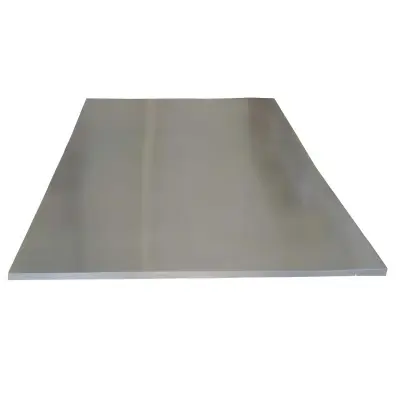
- Sheet/Plate:Thickness 0.5–100 mm, width 1000–2000 mm. Complies with ASTM B575. Suitable for equipment heads, shells, and liners.
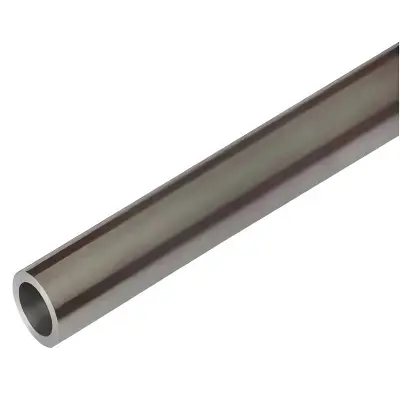
- Seamless Pipe/Welded Pipe:Seamless pipe: OD 10–610 mm, wall thickness 1–50 mm (ASTM B622). Welded pipe: OD 15–1200 mm, wall thickness 2–30 mm (ASTM B626). Suitable for corrosive media transfer.
- Bar/Wire:Bar: diameter 5–500 mm (ASTM B574). Wire: diameter 0.8–5.0 mm. Suitable for machined parts and welding wire.
- Forgings:Flanges, valve bodies, impellers, pump bodies, and fittings. Complies with ASTM B564. Suitable for core components in high-pressure, highly corrosive equipment.
- Welding Consumables:Welding wire (ERNiCrMo-4) and welding electrode (ENiCrMo-4). Comply with AWS A5.11/A5.14. Suitable for matching welding applications of the alloy itself.
Quality Control
Composition Analysis
Performed using ASTM E1086 Optical Emission Spectrometry (OES) to ensure all elements comply with ASTM specifications and match your specified composition requirements.
Mechanical Property Testing
- Tensile test per ASTM E8 (to verify tensile strength, yield strength, and elongation)
- Hardness test per ASTM E10
- All results must meet required standards.
Corrosion Resistance Testing
- ASTM G48 ferric chloride pitting test
- ASTM G28 intergranular corrosion test
- Passing criteria: no pitting and no intergranular corrosion.
Metallographic Examination
Performed per ASTM E3 to confirm a single-phase austenitic structure after solution treatment, free from carbides, inclusions, cracks, or other defects.
Visual Inspection
The surface must be free from scratches, porosity, cracks, inclusions, and other defects. Dimensional tolerances must comply with ASTM standards (e.g., thickness tolerance for plates, outer diameter tolerance for pipes).
Test Equipment

Applications of Hastelloy C276 (2.4819)
Chemical Industry
Sulfuric acid, hydrochloric acid, and phosphoric acid production equipment, reactors, heat exchangers, distillation columns, corrosive media transfer pipelines, pump and valve components. Suitable for highly corrosive reaction conditions.
Environmental Protection Industry
Wet flue gas desulfurization (FGD) equipment (absorber towers, spray pipes, slurry circulation pumps), waste incineration flue gas treatment equipment. Suitable for corrosive media containing high concentrations of Cl⁻ and SO₄²⁻.
Marine Engineering
Seawater desalination equipment, seawater cooling pipes for offshore platforms, offshore oil and gas extraction equipment. Resists seawater and marine atmospheric corrosion.
Metallurgical & Pharmaceutical Industries
Leaching tanks and electrolytic cells in hydrometallurgy, reaction equipment for highly corrosive media in the pharmaceutical industry. Prevents medium contamination of products.
Oil & Gas Industry
Wellhead assemblies and pipelines for oil and gas containing H₂S and CO₂. Complies with NACE MR0175 standard.

FAQ
Q1What is 2.4819 / Hastelloy C-276?
A:2.4819 (also known as Hastelloy C-276 or UNS N10276) is a nickel-chromium-molybdenum-tungsten corrosion-resistant alloy. It is a solid-solution strengthened nickel-based superalloy, widely regarded as the "last line of defense" against corrosion in extremely harsh chemical environments.
Q2:Is Hastelloy C-276 resistant to stress corrosion cracking (SCC)?
A:Yes. Due to its high nickel content (>57%), the alloy is virtually immune to chloride-induced stress corrosion cracking, even in hot chloride solutions (up to 600°C).
Q3: Can this alloy be used for cold forming?
A:Yes. The alloy supports stamping, bending, drawing, and shearing. However, cold working causes work hardening, so a solution treatment (1150–1175°C, rapid cooling) is required afterward to restore corrosion resistance and toughness.
Q4: What filler metals should be used for welding?
A:Welding wire: ERNiCrMo-4 (per AWS A5.14);Welding electrode: ENiCrMo-4 (per AWS A5.11)
These provide weld metal corrosion resistance equivalent to the base metal.
Q5:What are the recommended heat treatment parameters?
A:Only solution treatment is needed (stabilization treatment is unnecessary).
- Temperature: 1150–1175°C
- Cooling: Rapid (water or air)
This step is critical to restore corrosion resistance and toughness after cold working.
Q6: What is the density and melting point?
A:Density: 8.9 g/cm³; Melting temperature range: 1325–1370°C
Q7: What filler metals should be used for welding?
A:Below weld metal corrosion resistance equivalent to the base metal.
- Welding wire: ERNiCrMo-4 (per AWS A5.14)
- Welding electrode: ENiCrMo-4 (per AWS A5.11)
Hot Tags: 2.4819 hastelloy c276 nickel alloy, China 2.4819 hastelloy c276 nickel alloy manufacturers