


The pulp and paper industry is a complex and demanding sector that requires materials capable of withstanding harsh operating conditions. One material that has gained attention in recent years for its potential use in this industry is titanium alloy pipes. As a supplier of high - quality titanium alloy pipes, I am often asked whether these pipes can be effectively used in the pulp and paper industry. In this blog, I will explore the properties of titanium alloy pipes and their suitability for applications within the pulp and paper manufacturing process.
Properties of Titanium Alloy Pipes
Titanium alloy pipes possess several remarkable properties that make them attractive for industrial applications. First and foremost, titanium alloys are known for their excellent corrosion resistance. In the pulp and paper industry, the manufacturing process involves the use of various chemicals, including acids, alkalis, and bleaching agents. These chemicals can be highly corrosive to many common metals. For example, the pulping process may use sulfuric acid or sodium hydroxide solutions, which can quickly erode steel pipes. Titanium alloy pipes, on the other hand, form a stable oxide layer on their surface, which provides a high level of protection against corrosion. This property ensures that the pipes have a long service life, reducing the need for frequent replacements and minimizing downtime in the production process.
Another important property of titanium alloy pipes is their high strength - to - weight ratio. Titanium alloys are stronger than many other metals while being relatively lightweight. This characteristic is beneficial in the pulp and paper industry, where large - scale piping systems are required. The lightweight nature of titanium alloy pipes makes them easier to install and handle compared to heavier materials like steel. Additionally, their high strength allows them to withstand the pressure and mechanical stresses associated with the flow of pulp and paper products through the pipes.

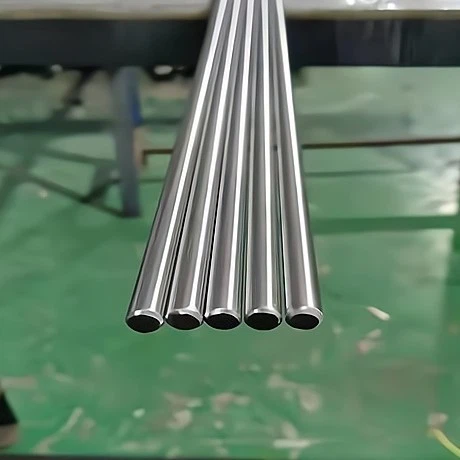
Titanium alloy pipes also have good heat transfer properties. In the pulp and paper manufacturing process, there are often requirements for heating and cooling operations. For instance, during the drying stage, heat needs to be efficiently transferred to remove moisture from the paper. Titanium alloy pipes can effectively transfer heat, which helps in improving the energy efficiency of the production process.
Applications in the Pulp and Paper Industry
Chemical Handling
As mentioned earlier, the pulp and paper industry uses a variety of chemicals. Titanium alloy pipes can be used to transport these corrosive chemicals safely. For example, in the chemical recovery section of a pulp mill, where spent cooking liquor is processed to recover chemicals for reuse, titanium alloy pipes can handle the highly alkaline and corrosive environment. The pipes can prevent chemical leaks, which not only protects the environment but also ensures the safety of the workers.
Pulp Transport
The pulp, which is a mixture of wood fibers and water, needs to be transported through the manufacturing process. Titanium alloy pipes can be used to convey the pulp from one stage to another. Their smooth inner surface reduces friction, allowing for a more efficient flow of the pulp. This helps in maintaining a consistent production rate and reducing energy consumption associated with pumping the pulp.
Bleaching Processes
Bleaching is an important step in the paper - making process to improve the brightness of the paper. The bleaching agents, such as chlorine dioxide or hydrogen peroxide, are highly reactive and corrosive. Titanium alloy pipes are well - suited for use in the bleaching section as they can resist the corrosion caused by these chemicals. This ensures the integrity of the piping system and the quality of the bleached pulp.
Comparison with Other Materials
When considering materials for use in the pulp and paper industry, titanium alloy pipes are often compared with other common materials such as stainless steel and carbon steel. Stainless steel is a popular choice due to its corrosion resistance, but in highly aggressive chemical environments, it may still experience some degree of corrosion over time. Titanium alloy pipes, on the other hand, offer superior corrosion resistance, especially in the presence of strong acids and alkalis.
Carbon steel is a widely used material in many industries, but it is highly susceptible to corrosion in the pulp and paper manufacturing environment. The use of carbon steel pipes would require extensive coating or lining to protect them from corrosion, which adds to the cost and maintenance requirements. Titanium alloy pipes eliminate the need for such additional protection, providing a more cost - effective long - term solution.
Challenges and Considerations
While titanium alloy pipes offer many advantages, there are also some challenges and considerations. One of the main challenges is the initial cost. Titanium alloy pipes are generally more expensive than traditional materials like carbon steel. However, when considering the long - term benefits, such as reduced maintenance costs and longer service life, the overall cost - effectiveness of titanium alloy pipes can be quite favorable.
Another consideration is the availability of skilled labor for installation. Titanium alloy pipes require special welding techniques and installation procedures. It is essential to have trained professionals to ensure proper installation, which may limit the accessibility in some regions.
Conclusion
In conclusion, titanium alloy pipes have significant potential for use in the pulp and paper industry. Their excellent corrosion resistance, high strength - to - weight ratio, and good heat transfer properties make them suitable for various applications within the manufacturing process. Although there are some challenges, such as the initial cost and the need for skilled installation, the long - term benefits outweigh these drawbacks.
If you are in the pulp and paper industry and are looking for a reliable and high - performance piping solution, I encourage you to consider our titanium alloy pipes. We also offer Titanium Seamless Pipe, Medical Titanium Wire, and Pure Titanium Pipe to meet different industrial needs. Feel free to contact us to discuss your specific requirements and start a procurement negotiation. We are committed to providing you with the best products and services.
References
- ASM Handbook Committee. ASM Handbook, Volume 2: Properties and Selection: Nonferrous Alloys and Special - Purpose Materials. ASM International, 1990.
- Schweitzer, Philip A. Corrosion Resistance Tables. McGraw - Hill, 2004.
- Kirk - Othmer Encyclopedia of Chemical Technology. Wiley, various editions.
