

Is oxygen free copper magnetic? This is a question that often arises in various industries, especially those dealing with electrical and electronic applications. As a supplier of oxygen free copper, I am frequently asked about the magnetic properties of this material. In this blog post, I will delve into the science behind the magnetism of oxygen free copper and provide some insights into its practical implications.
Understanding Oxygen Free Copper
Oxygen free copper, as the name suggests, is a type of copper that has a very low oxygen content. This is achieved through a special refining process that removes most of the oxygen from the copper. The result is a high - purity copper with excellent electrical and thermal conductivity. It is commonly used in applications where high conductivity and low signal loss are critical, such as in electrical wiring, electronic components, and high - end audio equipment.
The Basics of Magnetism
Before we discuss whether oxygen free copper is magnetic, it's important to understand the basics of magnetism. There are three main types of magnetic materials: ferromagnetic, paramagnetic, and diamagnetic.
Ferromagnetic materials, such as iron, nickel, and cobalt, are strongly attracted to magnets and can be magnetized themselves. They have a large, positive magnetic susceptibility.
Paramagnetic materials are weakly attracted to magnets. Their magnetic susceptibility is small and positive. These materials contain unpaired electrons, which are responsible for their weak magnetic response.
Diamagnetic materials, on the other hand, are weakly repelled by magnets. Their magnetic susceptibility is negative. In diamagnetic materials, all the electrons are paired, and the induced magnetic moment is opposite to the applied magnetic field.
The Magnetic Properties of Oxygen Free Copper
Copper, including oxygen free copper, is a diamagnetic material. This means that it is weakly repelled by a magnetic field. The reason for this lies in the electronic structure of copper atoms. Copper has a filled 3d sub - shell and one electron in the 4s sub - shell. The paired electrons in the 3d sub - shell contribute to the diamagnetic behavior.
When a magnetic field is applied to oxygen free copper, the paired electrons in the copper atoms create an induced magnetic field that opposes the applied field. This results in a very weak repulsive force between the copper and the magnet. However, this repulsive force is so small that it is often imperceptible in everyday situations.
Practical Implications of the Diamagnetic Property of Oxygen Free Copper
The diamagnetic property of oxygen free copper has several practical implications in various industries.
In the electrical and electronics industry, the non - magnetic nature of oxygen free copper is highly desirable. In applications such as transformers, inductors, and printed circuit boards, the absence of magnetic interference ensures the proper functioning of the devices. Magnetic materials can cause eddy currents and magnetic coupling, which can lead to energy losses and signal distortion. Oxygen free copper, being diamagnetic, does not contribute to these problems, making it an ideal choice for high - performance electrical and electronic components.
In the field of high - end audio, the non - magnetic property of oxygen free copper is also crucial. Audio cables made from oxygen free copper can transmit signals without being affected by external magnetic fields. This results in a cleaner, more accurate sound reproduction, which is highly valued by audiophiles.
Our Oxygen Free Copper Products
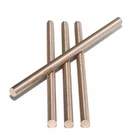
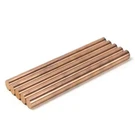
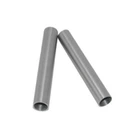
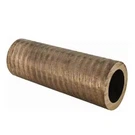
As a supplier of oxygen free copper, we offer a wide range of products to meet the diverse needs of our customers. Our C10100 Copper Bar is made from high - purity oxygen free copper and is suitable for applications requiring high conductivity and excellent mechanical properties. It is commonly used in electrical connectors, bus bars, and heat exchangers.
Our Small Size Copper Capillary Tube is another popular product. These tubes are used in refrigeration systems, medical devices, and electronic cooling applications. The small size and high purity of the oxygen free copper ensure efficient heat transfer and reliable performance.
We also offer C1020 Conductive Copper, which is widely used in electrical wiring and electrical contact applications. Its high conductivity and good formability make it a preferred choice for many electrical engineers.
Conclusion
In conclusion, oxygen free copper is diamagnetic, which means it is weakly repelled by magnetic fields. This non - magnetic property makes it an excellent choice for a wide range of applications in the electrical, electronics, and audio industries. At our company, we are committed to providing high - quality oxygen free copper products that meet the strictest industry standards.
If you are interested in purchasing oxygen free copper products or have any questions about our offerings, please feel free to contact us. We look forward to discussing your requirements and providing you with the best solutions for your projects.


References
- "Introduction to Solid State Physics" by Charles Kittel
- "Handbook of Copper and Copper Alloys" by ASM International
- "Electrical Engineering: Principles and Applications" by Allan R. Hambley