

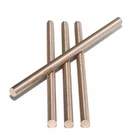
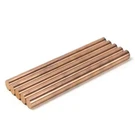
Copper strip is a versatile material widely used in various industries due to its excellent electrical conductivity, thermal conductivity, and mechanical properties. In addition to these well - known characteristics, the acoustic properties of copper strip also play an important role in certain applications. As a reliable copper strip supplier, I am here to share some insights into the acoustic properties of copper strip.
1. Sound Transmission and Absorption of Copper Strip
When it comes to sound, copper strip has unique behaviors in terms of transmission and absorption. Sound is a mechanical wave that propagates through a medium. In the case of copper strip, its dense atomic structure and high elasticity influence how sound waves interact with it.
The speed of sound in copper is relatively high compared to some other common materials. The speed of sound in a solid medium is determined by the material's density and its elastic modulus. Copper has a relatively high elastic modulus (about 110 - 128 GPa), and a density of around 8.96 g/cm³. The relationship between the speed of sound (v), the elastic modulus (E), and the density (\rho) is given by the formula (v=\sqrt{\frac{E}{\rho}}) (for longitudinal waves in a thin rod - like approximation). Due to its high elastic modulus and moderate density, copper strip allows sound to travel quickly through it.
In terms of sound absorption, copper strip is not a highly efficient sound - absorbing material. Its smooth and dense surface reflects a significant portion of the incident sound waves. The reflection coefficient of copper strip is relatively high, which means that most of the sound energy hitting the surface of the copper strip will bounce back. This property can be both advantageous and disadvantageous. In applications where sound reflection is desired, such as in some acoustic reflectors or in certain audio enclosures where sound needs to be redirected, copper strip can be a good choice. However, in situations where sound absorption is required, additional treatments or combination with other sound - absorbing materials may be necessary.
2. Acoustic Resonance in Copper Strip
Resonance is a phenomenon that occurs when an object vibrates at its natural frequency or a multiple of it when exposed to an external periodic force. Copper strip can exhibit acoustic resonance under certain conditions.


The natural frequency of a copper strip is determined by its physical dimensions (length, width, and thickness), its material properties (such as density and elastic modulus), and its boundary conditions. For a simple case of a rectangular copper strip fixed at both ends, the fundamental frequency of vibration can be approximated using the formula for the vibration of a beam. The vibration of the copper strip at its resonant frequency can produce a distinct sound.
In some musical instruments, copper strips or components made of copper are used to take advantage of their resonant properties. For example, in some percussion instruments, copper parts can contribute to the unique timbre and tonal quality. The resonance of the copper strip can enhance the sound produced by the instrument, adding richness and complexity to the musical note.
3. Applications Based on Acoustic Properties
3.1 Audio Equipment
In audio equipment, copper strip is used in various ways related to its acoustic properties. In speaker systems, copper strip can be used as conductors for audio signals. Its high electrical conductivity ensures that the audio signal is transmitted with minimal loss. Moreover, the mechanical properties of copper strip can also influence the vibration characteristics of speaker components. For example, in some high - end speaker designs, copper strips may be used in the suspension or support structures of the speaker cone. The resonance and damping properties of the copper strip can affect the overall sound quality, such as the clarity and accuracy of the reproduced sound.
3.2 Acoustic Enclosures
Copper strip can be incorporated into acoustic enclosures. As mentioned earlier, its sound reflection property can be used to direct sound waves inside the enclosure. By carefully designing the placement and shape of the copper strip, the sound can be distributed more evenly within the enclosure, reducing standing waves and improving the overall acoustic performance. For example, in a recording studio enclosure, copper strips can be used as part of the internal bracing structure to control the sound reflection and absorption characteristics.
3.3 Musical Instruments
As mentioned before, copper strip plays an important role in musical instruments. In addition to percussion instruments, copper is also used in wind instruments. For example, in some brass instruments, copper is an important component of the alloy. The acoustic properties of the copper in the instrument body contribute to the instrument's tone production, projection, and intonation. The resonance of the copper - based material helps to amplify the sound produced by the player's embouchure and the vibration of the air column inside the instrument.
4. Our Product Offerings
As a professional copper strip supplier, we offer a wide range of copper strip products to meet different customer needs. Our Tinned Copper Strip is coated with a layer of tin, which not only improves its corrosion resistance but also maintains good electrical and acoustic properties. It is suitable for applications where both these aspects are crucial, such as in some electronic audio devices.
Our High Precision Copper Strip is manufactured with strict quality control to ensure accurate dimensions and consistent material properties. This high - precision product is ideal for applications that require precise acoustic performance, such as in high - end musical instruments or advanced audio equipment.
In addition, we also provide Pure Nickel Strip For Battery. Although it is mainly used in battery applications, its acoustic properties can also be considered in some special cases where the battery is part of a device with acoustic requirements.
5. Conclusion and Call to Action
The acoustic properties of copper strip, including its sound transmission, absorption, and resonance characteristics, make it a valuable material in a wide range of applications, from audio equipment to musical instruments. Our company, as a reliable copper strip supplier, is committed to providing high - quality copper strip products to meet the diverse needs of our customers.
If you are looking for copper strip products for your specific application, whether it is related to acoustics or other fields, we are here to help. We can offer professional advice on product selection based on your requirements. If you are interested in starting a procurement negotiation, please feel free to reach out to us. We look forward to the opportunity to work with you and provide you with the best copper strip solutions.
References
- Kinsler, L. E., Frey, A. R., Coppens, A. B., & Sanders, J. V. (2000). Fundamentals of Acoustics. Wiley.
- Timoshenko, S. (1955). The Theory of Plates and Shells. McGraw - Hill.
- ASM Handbook Volume 2: Properties and Selection: Nonferrous Alloys and Special - Purpose Materials. ASM International.