

What is the shear strength of Gr5 Titanium Plate?


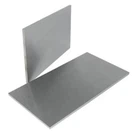
As a supplier of Gr5 titanium plates, I often encounter inquiries from customers about the shear strength of these plates. Shear strength is a critical mechanical property that plays a significant role in determining the suitability of Gr5 titanium plates for various applications. In this blog post, I will delve into the concept of shear strength, explore the factors affecting the shear strength of Gr5 titanium plates, and discuss its importance in different industries.
Understanding Shear Strength
Shear strength refers to the maximum amount of shear stress that a material can withstand before it fails in shear. Shear stress occurs when two parallel forces act in opposite directions, causing one part of the material to slide relative to another. In the case of a Gr5 titanium plate, shear strength is a measure of its ability to resist forces that tend to cause the plate to deform or break along a plane parallel to the applied forces.
The shear strength of a material is typically determined through standardized testing methods, such as the shear test. In a shear test, a specimen of the material is subjected to a shear force until it fails. The shear strength is then calculated by dividing the maximum shear force by the cross - sectional area of the specimen in the shear plane.
Factors Affecting the Shear Strength of Gr5 Titanium Plates
1. Chemical Composition
Gr5 titanium, also known as Ti - 6Al - 4V, is an alloy composed primarily of titanium, with 6% aluminum and 4% vanadium. These alloying elements have a significant impact on the shear strength of the plate. Aluminum increases the strength and hardness of the titanium alloy by forming stable intermetallic compounds. Vanadium improves the ductility and toughness of the alloy, which also contributes to its shear strength. Any deviation in the chemical composition from the standard can affect the shear strength of the Gr5 titanium plate.
2. Heat Treatment
Heat treatment is a crucial process that can significantly alter the microstructure and mechanical properties of Gr5 titanium plates, including their shear strength. Annealing, for example, can relieve internal stresses and improve the ductility of the plate, but it may slightly reduce its shear strength. On the other hand, solution treatment and aging can increase the strength and hardness of the plate, thereby enhancing its shear strength. The specific heat treatment parameters, such as temperature, time, and cooling rate, need to be carefully controlled to achieve the desired shear strength.
3. Microstructure
The microstructure of Gr5 titanium plates, such as the grain size and phase distribution, has a direct impact on their shear strength. Fine - grained microstructures generally exhibit higher shear strength compared to coarse - grained microstructures. This is because fine grains impede the movement of dislocations, which are responsible for plastic deformation. The presence of different phases, such as alpha and beta phases in Gr5 titanium, also affects the shear strength. A well - balanced phase distribution can optimize the mechanical properties of the plate, including its shear strength.
4. Manufacturing Process
The manufacturing process of Gr5 titanium plates, such as rolling, forging, or machining, can influence their shear strength. During rolling, the plate is subjected to compressive and shear forces, which can refine the microstructure and improve its mechanical properties. Forging can also enhance the density and uniformity of the plate, leading to higher shear strength. Machining operations, if not properly controlled, can introduce surface defects and residual stresses, which may reduce the shear strength of the plate.
Typical Shear Strength Values of Gr5 Titanium Plates
The shear strength of Gr5 titanium plates can vary depending on the factors mentioned above. Generally, the shear strength of Gr5 titanium plates ranges from approximately 450 MPa to 650 MPa. However, these values are approximate and can be influenced by the specific manufacturing process, heat treatment, and testing conditions.
Importance of Shear Strength in Different Industries
1. Aerospace Industry
In the aerospace industry, Gr5 titanium plates are widely used due to their high strength - to - weight ratio, corrosion resistance, and excellent fatigue properties. Shear strength is of utmost importance in aerospace applications, such as aircraft wings, fuselages, and engine components. These components are subjected to complex loading conditions, including shear forces during flight. A high shear strength ensures the structural integrity and safety of the aircraft, especially during maneuvers and in adverse flight conditions.
2. Medical Industry
Gr5 titanium plates are also commonly used in the medical industry for orthopedic implants, such as bone plates and screws. In medical applications, shear strength is crucial for ensuring the long - term stability and functionality of the implants. The implants need to withstand the shear forces generated during normal body movements, such as walking, running, and lifting. A sufficient shear strength prevents the implants from failing or loosening, reducing the risk of complications and the need for revision surgeries.
3. Marine Industry
In the marine industry, Gr5 titanium plates are used for various applications, including shipbuilding, offshore platforms, and underwater equipment. These structures are exposed to harsh environmental conditions, such as saltwater corrosion and dynamic loading. Shear strength is essential for ensuring the structural integrity of the marine structures, especially in areas where they are subjected to shear forces, such as the joints and connections. A high shear strength helps to prevent the plates from failing under the combined effects of corrosion and mechanical loading.
Related Products in Our Catalog
In addition to Gr5 titanium plates, we also offer a wide range of other titanium products, such as Titanium Hex Bar, Pure Titanium Pipe, and ASTM B338 Titanium Pipe. These products are also manufactured with high - quality materials and advanced manufacturing processes to ensure excellent mechanical properties, including shear strength.
Contact Us for Procurement
If you are interested in purchasing Gr5 titanium plates or any of our other titanium products, we invite you to contact us for further information and procurement discussions. Our team of experts is ready to assist you in selecting the right products that meet your specific requirements. Whether you need custom - sized plates or have specific mechanical property requirements, we can provide you with the best solutions.
References
- ASM Handbook, Volume 2: Properties and Selection: Nonferrous Alloys and Special - Purpose Materials.
- Titanium: A Technical Guide, Second Edition by John C. Williams.
- ASTM Standards related to titanium materials, such as ASTM B265 for titanium and titanium alloy rolled plate, sheet, and strip.