



Lead free brass generally includes elements such as copper, zinc, nickel, tin, etc., with different composition ratios and properties. The lead content is generally less than 0.5%. And lead-free environmentally friendly copper does not mean completely lead-free, but rather refers to a very low lead content in it. According to international environmental protection requirements, lead-free copper is gradually replacing lead containing brass with better forging and cutting properties. Lead free environmentally friendly copper is widely used in industries such as electronics, automotive parts, sanitary ware, valves, watches, appliances, locks, medical equipment, children's toys, etc.
Comparison of common standard grades of lead-free brass
Lead free brass has the advantage of environmental protection, and choosing the right material is crucial. The comparison of standard grades in various countries is as follows:
- In the national standard GB/T 5231, C2600 (CuZn30, copper 70%, zinc 30%, lead-free or very low lead (<0.1%), internationally known as CuZn30 or 70/30 Barss
HBi59-1.5: contains approximately 1.5% bismuth and ≤ 0.01% lead. Corresponding to American standard C49100, European standard CW712R, and Japanese standard C6782
- ASTM B134 C42500: Copper 86-89%, tin 1-2%, bismuth 0.5-1.5%, lead ≤ 0.09% Corresponding to Japanese Standard C4251
C89510/C89520: American standard lead-free brass series, specific composition not specified. But the lead content is extremely low.
- European standard EN CW712R: corresponding to HBi59-1.5, mainly composed of copper and bismuth, with lead ≤ 0.01%. Used for precision terminals in Germany.
- In the Japanese standard JIS, C6782 corresponds to the national standard HBi59-1.5, high bismuth brass with extremely low lead content; C4251 corresponds to American standard C42500, lead-free brass containing tin and bismuth
chemical composition
|
Alloy Grade |
Cu |
Pb |
AI |
Fe(max) |
Sn |
Zn |
Impurities |
|
HBi60-2 |
59.0-62.0 |
0.1 |
Bi2.0-3.5 |
0.2 |
0.3 |
REM |
0.5 |
|
Cd 0.01 |
|||||||
|
HBi60-1.3 |
58.0-62.0 |
0.2 |
Bi0.3-2.3 |
0.1 |
0.05-1.2 |
REM |
0.3 |
|
Cd 0.01 |
|||||||
|
HBi59-1 |
58.0-60.0 |
0.1 |
Bi 0.8-2.0 |
0.2 |
0.2 |
REM |
0.5 |
|
Cd 0.01 |
|||||||
|
HSn62-1 |
61.0-63.0 |
0.1 |
– |
0.1 |
0.7-1.1 |
REM |
0.3 |
|
HSn60-1 |
59.0-61.0 |
0.3 |
– |
0.1 |
1.0-1.5 |
REM |
1 |
Mechanical properties and physical parameters
According to the typical values of drawn Lead Free Brass Rods (there may be fluctuations depending on the specifications):
- Tensile strength σ b: 340~450 MPa (soft state O60 of wire can reach ≥ 345, cold drawn Y state can reach 490~735, varying with diameter and state)
- Yield strength σ s: 110~200 MPa
- Elongation rate δ 10 ≥ 24%, δ 5 ≥ 28% (good plasticity, suitable for cold riveting)
- Hardness: 70-175 HV (low in soft state, high in cold drawn state), approximately 120-170 HRB
- Density: ≈ 8.5 g/cm ³
- Conductivity: ≈ 27% IACS
- Thermal conductivity: ≈ 105 W/(m · K)
- Magnetic: non-magnetic
Processing and heat treatment characteristics
- Hot processing: temperature window of 550~650 ℃, good hot forging performance; But it is forbidden to heat for a long time beyond 680 ℃, otherwise bismuth will accumulate severely at grain boundaries and crack after cooling - this is the "dead hole" of bismuth brass, which is more delicate than lead brass.
- Stress relief annealing: It is recommended to use a temperature range of 200~220 ℃, as excessive temperature can also induce bismuth embrittlement.
- Cold processing: Excellent cold formability, capable of drawing, cold heading, and riveting ("micro riveting" is one of the selling points of this material, cold riveting does not crack or rebound).
- Welding: The brazing performance is average, and fusion welding is not recommended; Silver or tin brazing is commonly used in situations where welding is required.
- Cutting fluid: No sulfur-containing extreme pressure fluid is required, otherwise bismuth phase is prone to blackening; Ordinary emulsion is sufficient.
Supply form and size
Supply Condition of Roda
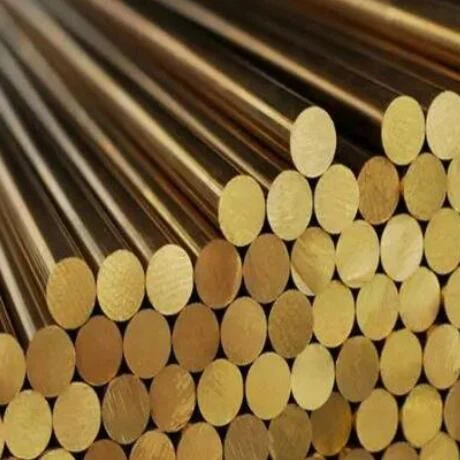
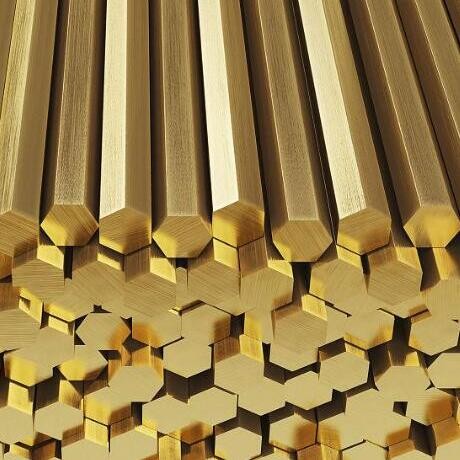
It is the main form, including round rod, hexagonal rod, and square rod. Diameter coverage is between 1.0 and 200 mm, with mainstream stock ranging from 3 to 50 mm; The length can be customized from 2000 to 6000 mm; The delivery status is divided into three types: drawn (Y), semi hard (Y2), and soft (M). The automatic lathe core machine is mostly in Y state, and cold heading riveting is mostly in Y2/M state; Tolerance h9/h11, precision level can achieve ± 0.02 mm; surface options include polishing, grinding, pickling, and brightening.
Other Form
- Wire: specifications ranging from 0.1 to 6.0 mm, available in soft O/semi hard Y2/hard Y states, mainly used for cold heading screws, rivets, terminal blocks, and electronic pins - this is the second largest application scenario for HBi59-1.
- Plate/strip: thickness T0.05-100mm, thin strip (0.05-1.2mm) is used for connector spring, conductive gasket, sensor housing, medium thick plate is used for cutting valve body blanks.
- Pipe material: Small diameter water heating pipes, valve stems, and water purifier joints are commonly used, and C3604 pipes are replaced in situations where lead-free regulations are mandatory.
Delivery status and packaging
Multiple wooden boxes/pallets for rod/wire shipment, cut to length or coiled (wire) as needed; It is recommended to apply anti rust oil for long inventory periods. In humid environments, the surface of bismuth brass is more prone to slight oxidation and darkening compared to ordinary brass.
Test Equipments

applications
- Water purification and bathroom: faucet valve core, water separator, water purifier connector, drinking water pipeline accessories (mandatory by lead-free regulations in Europe, America, and California, this is the largest increment).
- Electronics and 5G: connectors, connectors, charging gun contacts, RF components, sensor housings (non-magnetic+highly conductive+environmentally friendly triple fit).
- Precision hardware fasteners: automatic lathe screws, nuts, bolts, lock cores, clock gears, instrument shafts.
- Medical: Small dental instruments, medical instrument accessories (without heavy metal precipitation).

FAQ of Lead Free Brass Rod
Q1:What information should i confirm you when i send inquiry
A:Sometimes we need product specification like material standard or Grade, size, Qty, shipping port, Terms like FOB or CIF etc.
Q2: How long of the delivery time?
A: Usually, the shipment can be delivery within 15-30days after the order confirmed.
Q3: How about the payment items?
A: LC, T/T, PayPal, Western Union etc.
Q4: Which country have you exported to?
A: Our main market is South America, Middle East, Africa and Europe. And have built long time relationship with Pakistan, US, Norway, Germany, Korea, Russia,Taiwan customers.And got continue orders from them every month.
Q5: How about the MOQ?
A: Normally MOQ is 200kg, We always expect more opportunities with you. But for some special material or special size let's communicate the actual status.
Q6: What is a lead free brass rod?
A: The lead‑free brass rod is a modern copper alloy designed to replace traditional lead‑containing brass. It consists mainly of copper (Cu) and zinc (Zn), with optional additions of bismuth (Bi), tin (Sn), silicon (Si) or other elements to improve performance. Its key feature is an extremely low lead (Pb) content, meeting increasingly strict environmental and health regulations.
Q7: How is the machinability of lead free brass rods?
A:Traditionally, leaded brass offered better machinability, but modern lead‑free alloys have significantly improved their processing performance through composition optimisation and heat treatment. For the vast majority of engineering applications, their machinability is perfectly adequate. In some high‑end applications, certain lead‑free brasses can even offer superior overall performance compared to conventional materials.
Hot Tags: lead free brass rod, China lead free brass rod manufacturers


