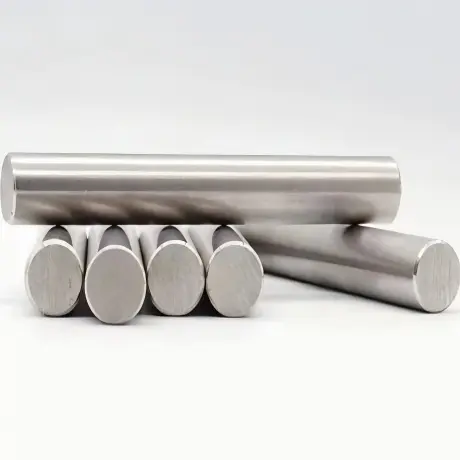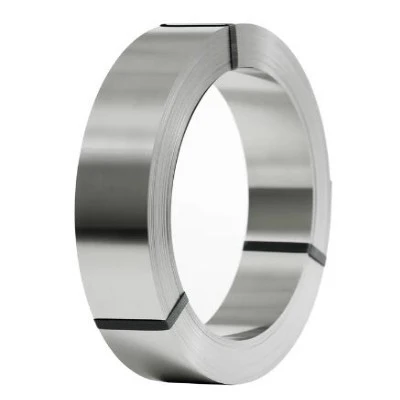


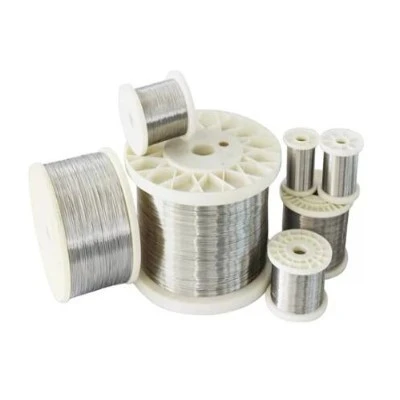
Inconel 600 is a nickel chromium alloy used in applications that require corrosion resistance and high temperature resistance. This nickel alloy is designed for high operating temperatures ranging from low temperatures to 2000 ° F. It is non-magnetic and has excellent mechanical properties, making it an ideal combination of high strength and good weldability over a wide temperature range.
The high nickel content in Inconel 600 allows it to maintain a considerable resistance under reducing conditions, enabling it to resist corrosion from various organic and inorganic compounds, giving it excellent resistance to chloride ion stress corrosion cracking, as well as excellent alkali solution resistance. Typical applications of this nickel alloy include the chemical, pulp and paper, aerospace, nuclear engineering, and heat treatment industries.
Chemical composition and performance analysis
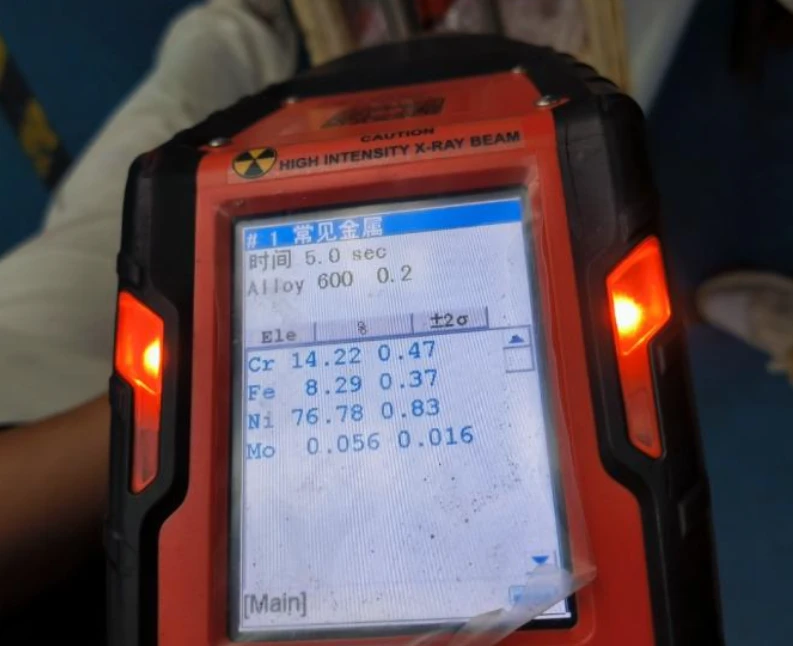
2.4816 nickel alloy (also known as Inconel600) is mainly composed of elements such as nickel (Ni) 72%, chromium (Cr) 14%, iron (Fe) 6%, manganese (Mn) ≤ 1%, etc. It also contains silicon (Si) ≤ 0.5%, carbon (C) ≤ 0.15%, sulfur (S) ≤ 0.015%, and the balance is impurities.
- The outstanding performance of Inconel600 is rooted in its classic nickel chromium iron ternary system. Nickel (Ni), as a matrix element with a content of not less than 72%, provides excellent resistance to reducing medium corrosion, good high-temperature stability, and inherent resistance to chloride ion stress corrosion cracking for the material. The high nickel content makes the alloy stand out in alkaline environments and reducing acids, while maintaining a stable austenite structure at high temperatures.
- The chromium (Cr) content is controlled between 14% and 17%, which endows the alloy with excellent oxidation resistance and corrosion resistance. Chromium forms a dense chromium oxide passivation film on the surface of the material, making Alloy 600 stable in oxidizing media and enhancing its resistance to carburizing and nitriding.
- Iron (Fe) content is 6% -10%, which exists as a balancing element, reducing material costs and having a positive impact on processing performance. Compared with pure nickel, the addition of an appropriate amount of iron improves the strength of the alloy while maintaining good plasticity.
- In addition, the alloy also contains trace amounts of aluminum (≤ 0.3%) and titanium (≤ 0.3%), which form stable oxides and carbides at high temperatures, further enhancing the material's oxidation resistance and high-temperature strength.
Physical and mechanical properties
- From the perspective of physical properties, Alloy 600 has a density of 8.47 g/cm ³ and a melting point between 1354-1413 ℃, belonging to the typical category of nickel based high-temperature alloys. Its thermal expansion coefficient is 13.3 × 10 ⁻⁶/℃ in the range of 20-100 ℃, and increases to 16.2 × 10 ⁻⁶/℃ in the range of 20-1000 ℃, showing a typical characteristic of increasing thermal expansion coefficient with increasing temperature.
- In terms of magnetic properties, Alloy 600 has extremely low magnetism (magnetic permeability of about 1.01), maintaining a non-magnetic state under a magnetic field of 200 Oersted, and a Curie temperature as low as -194 ℃. This characteristic makes it valuable in precision instruments and electronic devices that require a non-magnetic environment.
- In terms of mechanical properties, the tensile strength of annealed Alloy 600 is 550-690 MPa, the yield strength (0.2% offset) is 205-345 MPa, and the elongation rate is as high as 35% -55%, demonstrating excellent strength toughness matching. More noteworthy is its cold processing strengthening ability: through cold deformation, the tensile strength can reach up to 1517 MPa, providing the possibility for high-strength applications.
- High temperature performance is another highlight of Alloy 600. At 600 ℃, the tensile strength remains above 450 MPa; Maintain good creep fracture strength above 700 ℃. In a continuous air oxidation environment at 1100 ℃, the material can still maintain structural integrity. This high-temperature energy is due to the combined effect of solid solution strengthening mechanism and carbide dispersion strengthening.
Processing Technology
Hot processing is the main method for forming Alloy 600, including forging, hot rolling, extrusion, and other methods. This alloy has good hot working performance and a wide forging and rolling process window.
Forging process: The heating temperature for forging steel ingots is 1110-1140 ℃, and the final forging temperature should be maintained above 950 ℃ to avoid the precipitation of brittle phases at grain boundaries. The forging ratio is usually required to be no less than 4:1 to ensure sufficient fragmentation and recrystallization of the as cast structure. For large forgings, multi-directional forging technology is used to refine grain size and ensure uniformity of isotropic properties.
Hot rolling process: The heating temperature for slab rolling is 1130-1170 ℃, and hot rolling processing is relatively easy, making it easier to form than austenitic stainless steel. The production of hot-rolled thin plates requires strict control of heating temperature and rolling passes, and the final rolling temperature should avoid falling into the sensitive temperature range (usually requiring ≥ 900 ℃). Rapid cooling after rolling helps maintain a solid solution state and prevent carbides from precipitating along grain boundaries.
Cold processing techniques include various methods such as cold drawing, cold rolling, and cold spinning. For bar and wire materials, cold drawing is the most important processing method. The reduction rate of each pass should be controlled within a reasonable range (usually 15% -25%) to avoid the occurrence of machining cracks.
Intermediate annealing is an indispensable step in cold processing technology. When the cumulative deformation exceeds a certain limit (usually 30% -50%), intermediate annealing is required to eliminate work hardening and restore plasticity. The annealing temperature is usually 800-1050 ℃, with natural cooling or water cooling. The annealed material can continue to undergo cold processing.
Products Supply forms
- Plate and Thin Plate: The Main Materials for Chemical Equipment
Alloy 600 sheet is produced and supplied in accordance with ASTM B168/ASME SB-168 standards. The thickness range of the board is from 0.5mm thin plate to 80mm medium thick plate, with a width of up to 3 meters and a length of up to 6 meters.
The board is usually delivered in a solution treated state and supplied after acid washing, straightening, and trimming. The solid solution treatment temperature is 1010-1050 ℃. After air cooling, a uniform single-phase austenite structure is obtained, ensuring optimal corrosion resistance and processing performance.
- Bars and forgings: key components of load-bearing structures
Alloy 600 rods and forgings are an indispensable form of material. According to ASTM B166/ASME SB-166 standards, the bars are supplied in a forged and rolled state, surface polished or polished, with diameters ranging from 6mm to 500mm and lengths up to 30 meters.
The forging products cover large shafts and flanges with a thickness of 100-600mm, as well as ring and cake components with a diameter of 200-1500mm, supplied in accordance with ASTM B564/ASME SB-564 standards. Round cakes and ring blanks are supplied in a forged state, while ring components are delivered in a solid solution state.
The manufacturing process requirements for forgings are extremely high. The heating temperature for forging steel ingots is 1110-1140 ℃, and the final forging temperature is not less than 950 ℃; The heating temperature for slab rolling is 1130-1170 ℃. Multi directional forging technology is used to refine grains and ensure the uniformity of the internal structure of forgings.
- Pipes and Seamless Pipes: Ensuring Fluid Transport Systems
Alloy 600 pipes are produced in accordance with ASTM B163/ASME SB-163 (pipes for condensers and heat exchangers), ASTM B167/ASME SB-167 (seamless pipes for general use), and ASTM B516/B517 (welded pipes) standards.
The outer diameter range of seamless pipes is from 6mm to 530mm, and the wall thickness ranges from 0.5mm to 50mm. The outer diameter of welded pipes can reach 88.9mm, and the wall thickness can reach 3.7mm. The pipes are usually delivered in a solution pickling state, with smooth inner and outer surfaces to ensure fluid flow and corrosion resistance.
- Silk and strip: precision and miniaturization applications
With the development of precision manufacturing technology, the demand for Alloy 600 wire and strip is increasing day by day. Silk materials are delivered in the form of solid solution acid washed discs or straight strips, or in the state of solid solution straight strips finely polished. The diameter specifications range from 0.05mm to 8mm, which can meet diverse needs from microelectronic packaging to thermocouple sheaths.
The strip is delivered after cold rolling, solid solution treatment, and removal of oxide skin. The thickness can be as thin as 0.1mm and the width can reach 500mm. It is suitable for manufacturing precision springs, corrugated tubes, seals, and electronic components.
- Other product forms
In addition to the mainstream product forms mentioned above, Alloy 600 can also be supplied in various forms such as billets, round cakes, ring forgings, welding wires, etc. The size of the billet ranges from 75mm to 450mm, and the length can reach up to 10 meters. The welding wire is produced according to AWS A5.14 ERNiCr-3 standard and is used for welding connections of the same or different materials.
Standards and Specifications
Inconel 600 complies with international standards, such as:
ASTM B168: Standard specification for nickel-chromium-iron alloy plates, sheets, and strips.
ASTM B166: Covers nickel-chromium-iron alloy rods, bars, and wires.
AMS 5540: Aerospace material specification for Inconel 600.
EN, DIN, and JIS: Compliant with European, German, and Japanese standards.
|
Form |
ASTM |
|
Rod,bar and wire |
B 166 |
|
Plate,sheet and strip |
B 168, B 906 |
|
Seamless pipe and tube |
B 167, B 829 |
|
Welded pipe |
B 517, B775 |
|
Fitting |
B 366 |
|
Billet and bar for reforging |
B 472 |
|
Forging |
B 564 |
Test Equipment

Applications
Inconel 600 is used in a wide range of industries due to its versatile properties:
- Aerospace
Turbine blades, engine components, and exhaust systems.
- Chemical Processing
Reactors, heat exchangers, and piping systems exposed to corrosive chemicals.
- Nuclear Power
Steam generator tubing and other components in nuclear reactors.
- Heat Treatment
Furnace components, such as muffles, retorts, and baskets.
- Electronics
Heating elements and thermocouple sheaths.
- Marine Engineering
Components exposed to seawater and marine atmospheres.

FAQ
Q1:What is German Standard (DIN): 2.4816 Nickel Chromium Iron Heat Resistant Alloy? What is its basic identity?
A: This is an austenitic heat-resistant alloy named according to the German Industrial Standards (DIN), with nickel (Ni) as the matrix and a large amount of chromium (Cr), iron (Fe), and other strengthening elements added. The corresponding internationally recognized grade is Inconel 600 (US UNS N06600).
Q2: What are the mysteries of the chemical composition and microstructure of this alloy?
A:The root of its performance is deeply rooted in precise chemical composition design. In addition to nickel (≥ 72%) providing a stable austenitic matrix and corrosion-resistant foundation, chromium (14-17%) contributes to high-temperature oxidation resistance, and iron (6-10%) is used to adjust costs and some properties. It also contains small amounts of elements such as carbon, manganese, silicon, copper, etc. This composition combination ensures that the alloy is not prone to harmful phase transformation at high temperatures and has a stable microstructure.
Q3: What are its outstanding advantages compared to other similar alloys?
A:Firstly, its high-temperature oxidation resistance is extremely outstanding, especially stable under cyclic oxidation conditions. Secondly, it has excellent resistance in carburizing and nitriding atmospheres, which is crucial in the chemical and heat treatment industries. Furthermore, it has excellent cold and hot processing and welding performance, making it easy to manufacture complex components.
Q4: What should be paid attention to when processing and manufacturing this alloy?
A:Hot processing: Heating should be uniform, avoiding prolonged residence in the low melting point phase precipitation temperature range (about 700-900 ° C).
Cold working: The work hardening rate is relatively high, and intermediate annealing may be required to restore plasticity.
Welding: It is recommended to use methods such as tungsten inert gas welding (GTAW) and use matching welding materials.
Heat treatment: Solid solution treatment (rapid cooling after about 1100-1150 ° C) is usually used to obtain the best corrosion resistance and softened structure.
Q5: What is the future development prospect of this material?
A:With the development of cutting-edge technologies such as clean energy, efficient power generation, and deep space exploration, the performance requirements for materials in more extreme environments will only continue to increase.
Hot Tags: 2.4816 inconel 600 alloy, China 2.4816 inconel 600 alloy manufacturers