


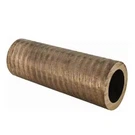
Hey there! I'm a supplier of sulfur copper, and today I wanna chat about how pressure affects the properties of sulfur copper. It's a super interesting topic that's relevant not just for us suppliers but also for all you folks out there using sulfur copper in different industries.
First off, let's quickly understand what sulfur copper is. Sulfur copper is a type of copper alloy that contains sulfur as an alloying element. It has some unique properties that make it useful in various applications, like electrical components and corrosion - resistant parts. Now, when it comes to pressure, it can have a significant impact on these properties.
1. Density Changes
One of the most straightforward effects of pressure on sulfur copper is on its density. When you apply pressure to sulfur copper, the atoms in the alloy get pushed closer together. This reduction in the distance between atoms leads to an increase in density. For example, in a high - pressure environment, say in a deep - sea application where the hydrostatic pressure is extremely high, the sulfur copper used in equipment might experience a notable increase in density.
This change in density can have practical implications. In precision engineering, even a slight change in density can affect the balance and performance of components. If you're using C14700 High Corrosion Resistance Copper Alloy in a high - pressure environment, you need to account for this density change to ensure the proper functioning of the equipment.
2. Mechanical Properties
Pressure also has a big influence on the mechanical properties of sulfur copper. When pressure is applied, the alloy's hardness and strength can change. Under high pressure, the dislocations in the crystal structure of sulfur copper are restricted in their movement. Dislocations are like defects in the crystal lattice that allow the material to deform. When pressure limits their movement, the material becomes harder and stronger.
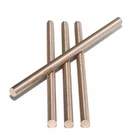
Let's say you're using C14700 Copper Bar in a manufacturing process where it's subjected to high - pressure forming operations. The bar will become more resistant to deformation, which can be both an advantage and a challenge. On one hand, it means that the final product will be more durable and less likely to break under stress. On the other hand, it might require more energy and specialized equipment to shape the bar during manufacturing.
However, if the pressure is too high, it can also lead to brittle fracture. The excessive pressure can cause cracks to form in the material, especially if there are pre - existing defects. So, finding the right balance of pressure is crucial when working with sulfur copper.
3. Electrical Conductivity
The electrical conductivity of sulfur copper can be affected by pressure as well. The movement of electrons in a conductor is related to the crystal structure and the interactions between atoms. When pressure is applied, the crystal structure of sulfur copper changes, which in turn can influence the flow of electrons.
In some cases, a moderate increase in pressure can improve the electrical conductivity. The closer packing of atoms can provide a more efficient path for electrons to move through the material. But if the pressure is too extreme, it can disrupt the crystal structure to such an extent that the electrical conductivity decreases.
For applications where electrical conductivity is critical, like in electrical wiring or electronic components made from C14700 Copper Alloy, understanding how pressure affects conductivity is essential. You need to ensure that the pressure conditions during manufacturing and use don't negatively impact the electrical performance of the product.
4. Corrosion Resistance
Pressure can also play a role in the corrosion resistance of sulfur copper. In a high - pressure environment, the diffusion of corrosive agents into the material can be affected. High pressure can sometimes compress the surface of the sulfur copper, making it more difficult for corrosive substances to penetrate.
For example, in a chemical processing plant where sulfur copper components are exposed to corrosive chemicals under high pressure, the increased pressure might act as a protective barrier to some extent. However, if the pressure causes mechanical stress on the material, it can also create micro - cracks. These cracks can provide pathways for corrosive agents to enter the material, accelerating the corrosion process.
So, when using sulfur copper in high - pressure and corrosive environments, you need to carefully consider the combined effects of pressure and corrosion to ensure the long - term durability of the components.
5. Phase Changes
Under extreme pressure, sulfur copper can undergo phase changes. The normal crystal structure of the alloy can transform into a different phase with distinct properties. These phase changes can be reversible or irreversible depending on the pressure and temperature conditions.
For instance, at very high pressures, sulfur copper might transform from a face - centered cubic (FCC) structure to a body - centered cubic (BCC) structure. This change in crystal structure can lead to significant changes in all the properties we've discussed so far, such as density, mechanical properties, electrical conductivity, and corrosion resistance.
Phase changes are not always easy to predict or control. But for industries that rely on the consistent properties of sulfur copper, like the aerospace and automotive industries, understanding and managing these phase changes is crucial.


Why It Matters to You
As a sulfur copper supplier, I know how important it is for you to understand these effects of pressure. Whether you're in the manufacturing, electronics, or any other industry that uses sulfur copper, these property changes can impact your product quality, performance, and cost.
If you're involved in a project where sulfur copper will be exposed to high pressure, you need to choose the right grade of alloy. Our C14700 High Corrosion Resistance Copper Alloy is designed to withstand a certain range of pressures while maintaining its excellent corrosion resistance. And our C14700 Copper Bar is a great choice for high - pressure forming applications where strength and durability are key.
Let's Talk Business
If you're interested in purchasing sulfur copper for your projects, I'd love to have a chat with you. We can discuss your specific requirements, the pressure conditions your components will face, and find the best sulfur copper solution for you. Whether you need a small quantity for a prototype or a large - scale order for mass production, we've got you covered.
So, don't hesitate to reach out and start a conversation about your sulfur copper needs. Let's work together to ensure your projects are a success with the right sulfur copper products.
References
- Smith, J. (2018). "The Effects of Pressure on Metal Alloys". Metallurgy Journal.
- Johnson, R. (2020). "Corrosion Resistance of Copper Alloys under High Pressure". Corrosion Science Review.
- Brown, A. (2019). "Electrical Properties of Copper Alloys in Extreme Conditions". Electrical Engineering Research.