

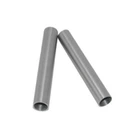
Hey there! As a supplier of Gr5 Titanium Bar, I've been getting a lot of questions lately about how to improve its machinability. Gr5 titanium, also known as Ti-6Al-4V, is a popular alloy due to its high strength, low density, and excellent corrosion resistance. However, it can be a bit of a challenge to machine compared to other metals. In this blog post, I'll share some tips and tricks that can help you get the most out of your Gr5 Titanium Bar machining projects.
Understanding the Challenges of Machining Gr5 Titanium Bar
Before we dive into the solutions, let's take a quick look at why machining Gr5 titanium can be tricky. One of the main issues is its high chemical reactivity. Titanium has a strong affinity for oxygen, nitrogen, and carbon, which can cause it to form hard and brittle compounds on the surface during machining. These compounds can increase tool wear, reduce surface finish quality, and even lead to tool breakage.
Another challenge is its low thermal conductivity. This means that heat generated during machining tends to stay in the cutting zone, which can cause the tool to overheat and wear out quickly. Additionally, the high strength and toughness of Gr5 titanium require more cutting force, which can also contribute to tool wear and breakage.
Choosing the Right Tools
The first step in improving the machinability of Gr5 Titanium Bar is to choose the right tools. Carbide tools are generally the best choice for machining titanium because they are hard, wear-resistant, and can withstand high cutting temperatures. Look for carbide tools with a sharp edge and a positive rake angle to reduce cutting forces and improve chip formation.
Coated carbide tools can also be a good option. Coatings such as titanium nitride (TiN), titanium carbonitride (TiCN), and aluminum titanium nitride (AlTiN) can provide additional wear resistance and reduce friction between the tool and the workpiece. This can help to extend tool life and improve surface finish quality.
When selecting tools, make sure to choose the right geometry for the specific machining operation. For example, for turning operations, use a tool with a round or square insert and a large nose radius to reduce cutting forces and improve surface finish. For milling operations, use a tool with a high helix angle and a large number of flutes to improve chip evacuation and reduce cutting forces.
Optimizing Cutting Parameters
In addition to choosing the right tools, optimizing cutting parameters is also crucial for improving the machinability of Gr5 Titanium Bar. Cutting parameters include cutting speed, feed rate, and depth of cut. Here are some general guidelines to follow:
- Cutting Speed: The cutting speed for Gr5 titanium should be relatively low compared to other metals. A good starting point is around 30-60 surface feet per minute (SFM) for roughing operations and 60-120 SFM for finishing operations. However, the optimal cutting speed will depend on the specific tool, workpiece material, and machining operation.
- Feed Rate: The feed rate should be adjusted based on the cutting speed and the tool geometry. A general rule of thumb is to use a feed rate of 0.002-0.005 inches per revolution (IPR) for roughing operations and 0.001-0.003 IPR for finishing operations. However, again, the optimal feed rate will depend on the specific circumstances.
- Depth of Cut: The depth of cut should be kept relatively small to reduce cutting forces and prevent tool breakage. A good starting point is around 0.020-0.060 inches for roughing operations and 0.005-0.015 inches for finishing operations.
It's important to note that these are just general guidelines, and the optimal cutting parameters may vary depending on the specific tool, workpiece material, and machining operation. It's always a good idea to conduct some test cuts to determine the best cutting parameters for your particular application.
Using Coolant
Using coolant is another important factor in improving the machinability of Gr5 Titanium Bar. Coolant helps to reduce heat and friction in the cutting zone, which can extend tool life and improve surface finish quality. It also helps to flush away chips and prevent them from clogging the cutting tool.
There are several types of coolant available, including water-based coolants, oil-based coolants, and synthetic coolants. Water-based coolants are the most commonly used type of coolant for machining titanium because they are relatively inexpensive, easy to use, and environmentally friendly. However, oil-based coolants can provide better lubrication and cooling, which can be beneficial for high-speed machining operations.
When using coolant, make sure to apply it directly to the cutting zone at a high pressure to ensure that it reaches the tool-chip interface. This will help to reduce heat and friction and improve chip evacuation.
Proper Workholding
Proper workholding is also essential for improving the machinability of Gr5 Titanium Bar. The workpiece should be securely clamped to prevent it from moving or vibrating during machining. This will help to ensure accurate machining and prevent tool breakage.
When clamping the workpiece, make sure to use soft jaws or other non-marring clamping devices to prevent damage to the surface of the titanium bar. Additionally, make sure to apply the clamping force evenly to prevent distortion of the workpiece.
Post-Machining Treatment
After machining, it's important to perform some post-machining treatment to improve the surface finish and corrosion resistance of the Gr5 Titanium Bar. One common post-machining treatment is to perform a chemical passivation process. This involves immersing the workpiece in a solution of nitric acid and hydrofluoric acid to remove any surface contaminants and create a passive oxide layer on the surface of the titanium.
Another post-machining treatment option is to perform a heat treatment process. Heat treatment can help to improve the strength and toughness of the titanium bar and reduce residual stresses. However, it's important to note that heat treatment can also affect the machinability of the titanium bar, so it should be carefully considered before performing.
Conclusion
Improving the machinability of Gr5 Titanium Bar requires a combination of the right tools, cutting parameters, coolant, workholding, and post-machining treatment. By following the tips and tricks outlined in this blog post, you can reduce tool wear, improve surface finish quality, and increase productivity in your machining operations.


If you're in the market for high-quality Gr5 Titanium Bar, look no further! As a leading supplier of titanium products, we offer a wide range of Gr5 Titanium Bar in various sizes and specifications. We also offer ASTM B338 Titanium Pipe, Titanium Welding Tube, and Titanium Hex Bar to meet all your titanium needs.
If you have any questions or would like to discuss your specific requirements, please don't hesitate to contact us. We're here to help you find the best solutions for your machining projects.
References
- "Machining of Titanium Alloys: An Overview" by John A. Schey
- "Titanium: A Technical Guide" by Don Eylon