

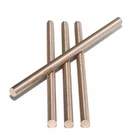
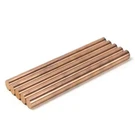
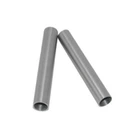
Titanium hex bars are widely used in various industries due to their excellent properties such as high strength, low density, and good corrosion resistance. As a reliable titanium hex bar supplier, I understand the importance of a polished finish for these bars, not only for aesthetic reasons but also for functional purposes. In this blog post, I will share with you a comprehensive guide on how to polish a titanium hex bar.


Understanding Titanium Hex Bars
Before we dive into the polishing process, let's first understand what titanium hex bars are. Titanium hex bars are bars with a hexagonal cross - section made from titanium or titanium alloys. They are commonly used in aerospace, medical, automotive, and marine industries. For example, in the medical field, Medical Titanium Wire is often used in combination with titanium hex bars for various surgical applications. In the automotive industry, titanium hex bars can be used for high - performance engine components, and Titanium Round Rod may also be used in similar applications. Additionally, Titanium Alloy Pipe is another titanium product that is often used in conjunction with hex bars in industrial piping systems.
Pre - Polishing Preparation
- Safety First
- Wear appropriate personal protective equipment (PPE) such as safety glasses, gloves, and a dust mask. Polishing titanium can generate fine dust particles, which can be harmful if inhaled.
- Ensure that the work area is well - ventilated. You can use a local exhaust ventilation system to remove the dust generated during the polishing process.
- Inspect the Titanium Hex Bar
- Check the bar for any surface defects such as scratches, dents, or oxidation. If there are minor scratches, you may be able to remove them during the polishing process. However, severe defects may require additional processing or may render the bar unsuitable for high - quality polishing.
- Measure the dimensions of the bar to ensure it meets the required specifications. Any deviation from the standard dimensions may affect the subsequent polishing process.
- Clean the Bar
- Use a degreaser or a mild detergent to clean the surface of the titanium hex bar. This will remove any oil, grease, or dirt that may be present on the surface.
- Rinse the bar thoroughly with clean water and dry it with a clean cloth. A clean surface is essential for a uniform and high - quality polish.
Polishing Process
- Coarse Grinding
- Select a coarse - grit abrasive such as 60 - 80 grit sandpaper or a grinding wheel. Coarse grinding is used to remove any large surface irregularities and to start the polishing process.
- Secure the titanium hex bar in a vice or a fixture to prevent it from moving during the grinding process.
- Move the abrasive in a consistent direction along the length of the bar. Apply moderate pressure to ensure that the grinding is uniform. Be careful not to over - grind, as this can cause excessive material removal and may affect the dimensions of the bar.
- After coarse grinding, inspect the surface of the bar. It should have a relatively smooth surface with the large scratches and defects removed.
- Medium Grinding
- Switch to a medium - grit abrasive, such as 120 - 180 grit sandpaper or a grinding wheel. This step is to further refine the surface and reduce the scratch marks left by the coarse grinding.
- Repeat the grinding process, moving the abrasive in the same direction as before. The medium - grinding step helps to create a more even surface finish.
- Fine Grinding
- Use a fine - grit abrasive, typically 220 - 320 grit sandpaper. Fine grinding is crucial for achieving a smooth surface that is ready for the final polishing.
- Continue the grinding process with a light touch. At this stage, the surface of the titanium hex bar should start to look shiny and have a much smoother appearance.
- Buffing
- Apply a buffing compound to a buffing wheel. There are different types of buffing compounds available, such as rouge or tripoli. Rouge is often used for a high - shine finish, while tripoli is used for a more general - purpose buffing.
- Mount the buffing wheel on a buffing machine. Start the machine and slowly bring the titanium hex bar into contact with the spinning buffing wheel.
- Move the bar back and forth across the buffing wheel, applying light pressure. The buffing process will remove the fine scratches left by the grinding steps and create a mirror - like finish on the surface of the bar.
- Keep the buffing wheel clean by periodically wiping it with a clean cloth to remove any accumulated debris.
- Final Inspection
- Once the buffing is complete, carefully inspect the surface of the titanium hex bar. Check for any remaining scratches, uneven areas, or dull spots.
- If there are any imperfections, you may need to repeat the appropriate grinding or buffing steps to correct them.
Post - Polishing Care
- Cleaning
- After polishing, clean the titanium hex bar again to remove any buffing compound residue. Use a mild detergent and warm water to clean the bar, then rinse it thoroughly and dry it with a clean cloth.
- Storage
- Store the polished titanium hex bar in a dry and clean environment. You can use a protective coating or a plastic sleeve to prevent the surface from getting scratched or oxidized during storage.
Benefits of a Well - Polished Titanium Hex Bar
- Aesthetic Appeal
- A polished titanium hex bar has a shiny and attractive appearance, which is often desired in applications where the bar is visible, such as in architectural or decorative uses.
- Improved Corrosion Resistance
- A smooth, polished surface is less likely to trap moisture and contaminants, which can improve the corrosion resistance of the titanium hex bar. This is particularly important in applications where the bar is exposed to harsh environments.
- Better Functionality
- In some applications, a polished surface can reduce friction, which is beneficial for components that are in contact with other parts. For example, in mechanical systems, a polished titanium hex bar can improve the efficiency of moving parts.
Conclusion
Polishing a titanium hex bar is a multi - step process that requires careful preparation, the right tools, and proper technique. As a titanium hex bar supplier, I am committed to providing high - quality products, and I hope this guide has been helpful to you in understanding how to achieve a beautiful and functional polish on your titanium hex bars.
If you are interested in purchasing high - quality titanium hex bars or have any questions about the polishing process, please feel free to contact us for a detailed discussion and to explore your procurement options. We look forward to serving you and meeting your titanium product needs.
References
- ASM Handbook, Volume 2: Properties and Selection: Nonferrous Alloys and Special - Purpose Materials. ASM International.
- Titanium: A Technical Guide. Second Edition. J. R. Davis (Ed.). ASM International.