


When purchasing carbon-coated copper foil or carbon-coated aluminum foil for lithium-ion batteries, one of the most common questions from battery manufacturers is:
Should I choose a water-based primer or an NMP-based primer for my battery system?
This is an important question because the primer is not simply a conductive layer between the metal current collector and the electrode material. It also plays a role in interfacial adhesion, electrical contact, chemical resistance, and manufacturing stability.
Choosing an unsuitable primer may result in poor adhesion, coating delamination, increased contact resistance, corrosion, or damage during subsequent electrode processing.However, there is no universal answer based on battery chemistry alone.
For example, LFP cathodes do not necessarily require the same primer formulation in every production line. The appropriate choice depends on whether the electrode slurry uses PVDF/NMP, CMC/SBR/water, or another binder and solvent system.
In this guide, we explain the differences between water-based and NMP-based primers, how to select the right primer for carbon-coated copper foil and carbon-coated aluminum foil, and what battery manufacturers should evaluate before placing an order.
👉 Need a refresher on the functional types of primers? Read our previous guide: Conductive vs. Adhesion Primers.
👉 Still deciding on your Binder? Read: How to Choose the Right Binder for Carbon-Coated Foils.
What Is the Difference Between Water-Based and NMP-Based Primer?
The fundamental difference between water-based and NMP-based primers lies in their liquid medium, which dictates binder selection, drying conditions, and substrate compatibility. Water-based primers use water as the dispersion medium with compatible binders (like acrylics or CMC/SBR), offering lower organic solvent costs and environmental benefits-but they require strict pH and moisture control, as alkaline aqueous environments can easily corrode the aluminum foil's passive layer. Conversely, NMP-based primers use N-methyl-2-pyrrolidone with PVDF binders, providing excellent chemical resistance and mature process compatibility for traditional cathodes, though they demand costly solvent recovery systems and strict occupational exposure controls. Ultimately, the most critical engineering rule is that the primer's solvent system and the subsequent electrode slurry's solvent system are two distinct variables; their interfacial compatibility (e.g., water resistance of the primer or NMP resistance) must be rigorously validated through actual processing tests, rather than assumed.
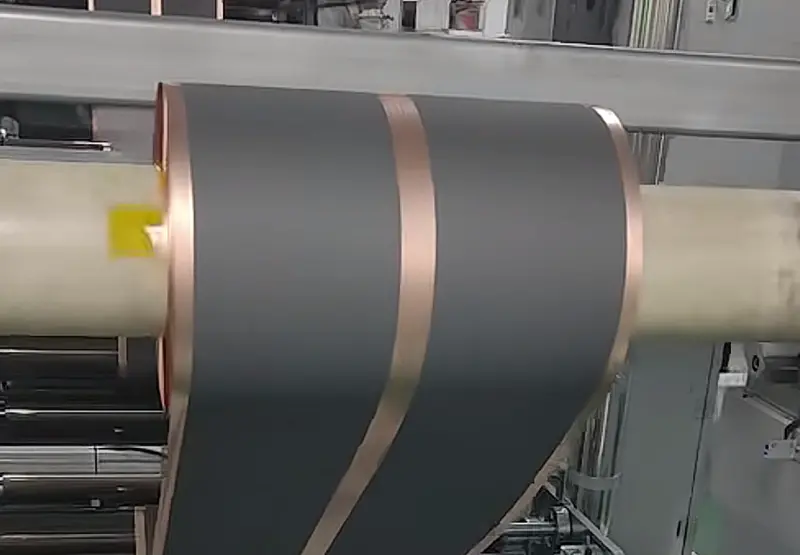
👉Explore our Carbon-Coated Copper Foil And Carbon-Coated Aluminum Foil
How to Choose Primer for Carbon-Coated Copper Foil?
Copper foil selection summary:
| Anode system | Typical slurry system | Primer direction |
|---|---|---|
| Conventional graphite | CMC/SBR + water | Water-based |
| Silicon-graphite | CMC/SBR + water | Water-based, with enhanced adhesion evaluation |
| High-silicon anode | Water-based or specialized solvent system | Formulation-dependent |
| PVDF-based anode | PVDF + NMP | NMP-compatible or verified solvent-resistant primer |
| LTO anode | Water-based or NMP-based | Match the actual binder and solvent system |
For most conventional graphite and aqueous silicon-carbon anodes, water-based carbon-coated copper foil is a practical starting point.
How to Choose Primer for Carbon-Coated Aluminum Foil?
Aluminum foil selection summary:
| Cathode system | Typical slurry system | Primer direction |
|---|---|---|
| LFP | PVDF + NMP | NMP-compatible |
| LFP | Aqueous binder | Corrosion-resistant water-based |
| NMC | PVDF + NMP | NMP-compatible |
| NMC | Aqueous binder | Specially validated water-based |
| NCA | PVDF + NMP | NMP-compatible |
| NCA | Aqueous binder | Specially validated water-based |
| LMFP | PVDF/NMP or aqueous | Match the actual slurry system |
👉Explore our Carbon-Coated Aluminum Foil
Water-Based vs. NMP-Based Primer: Quick Selection Guide
For buyers who already know their electrode chemistry and binder system, the following table provides a practical starting point.
| Current collector | Electrode application | Slurry/binder system | Recommended starting point |
|---|---|---|---|
| Copper foil | Graphite anode | CMC/SBR + water | Water-based primer |
| Copper foil | Silicon-carbon anode | CMC/SBR + water | Water-based primer with enhanced adhesion |
| Copper foil | Specialized anode | PVDF/NMP | NMP-compatible primer |
| Aluminum foil | LFP cathode | PVDF/NMP | NMP-compatible primer |
| Aluminum foil | LFP cathode | Aqueous binder | Corrosion-resistant water-based primer |
| Aluminum foil | NMC/NCA cathode | PVDF/NMP | NMP-compatible primer |
| Aluminum foil | Aqueous cathode | Water-based binder | Specially validated water-based primer |
| Aluminum foil | LMFP cathode | Depends on formulation | Match the actual slurry system |
👉Explore our Carbon-Coated Copper Foil
What Else Should You Check Before Choosing a Primer?
Do not commit to a primer without testing these four metrics simultaneously:
- Adhesion (Peel Strength): Does it survive calendering and winding without peeling?
- Sheet Resistance : Does the primer actually lower the interfacial resistance without adding too much bulk?
- Electrolyte Resistance: Does the primer dissolve or degrade after soaking in the electrolyte at 60°C for 7 days?
- Baking Crack Resistance: Does the primer layer crack or blister during the high-temperature drying process? (Critical for water-based primers on aluminum!).
Need the exact formulation data? We have compiled our complete primer portfolio, including resin types, solvent systems, and substrate compatibility.
👉 Download the HSMetal Primer Catalog
Quick Rule To Choose The Right Binder
- Copper foil + conventional aqueous graphite anode: Start with water-based primer.
- Copper foil + organic-solvent-based anode: Evaluate solvent-compatible primer.
- Aluminum foil + conventional PVDF/NMP cathode: Start with NMP-compatible primer.
- Aluminum foil + aqueous cathode: Prioritize corrosion-resistant water-based primer.
- These are starting recommendations, not universal specifications. Final selection should be confirmed through application testing.
For a more detailed explanation, read our related technical guide:
How to Choose the Right Binder for Carbon-Coated Battery Current Collectors
This guide explains how to select binders for carbon-coated copper foil and carbon-coated aluminum foil based on adhesion, conductivity, solvent compatibility, and application requirements.
Stop Guessing, Start Testing
Don't let a mismatched solvent system destroy your electrode interface. Whether you need a highly stable NMP-based primer for a high-nickel cathode, or a corrosion-resistant water-based primer for an aqueous LFP line, HSMetal has the exact specification and data you need.
Send us your battery system (LFP, NCM, Si-Anode), processing route (Aqueous/NMP), and slurry pH. Our engineers will recommend the precise primer formulation and foil specification to eliminate blistering and peeling.
👉 Explore our carbon‑coated copper‑foil grades for silicon‑carbon and graphite anode systems
👉 Browse carbon‑coated aluminum‑foil solutions for LFP & NCM/NCA cathode applications
📥 Download the Primer Catalog
FAQ
Q1: Is water-based primer better than NMP-based primer for lithium-ion batteries?
A: Neither system is universally better. Water-based primer is often suitable for aqueous electrode processes, particularly conventional graphite anodes using CMC/SBR. NMP-based primer is commonly selected for conventional PVDF/NMP cathode processing. The correct choice depends on the current collector, binder, solvent system, and required chemical resistance.
Q2: Which primer should I choose for carbon-coated copper foil used in graphite anodes?
A: For conventional graphite anodes using CMC/SBR and water-based slurry, water-based primer is generally the preferred starting point. Check adhesion, water resistance, surface resistance, and electrolyte compatibility before mass production.
Q3: Can I use water-based primer for carbon-coated aluminum foil?
A: Yes, but the formulation must be specifically designed and validated for aluminum foil. Aluminum is sensitive to certain aqueous and alkaline environments, which can damage its passive oxide layer and cause corrosion. Evaluate slurry pH, exposure time, drying temperature, and the primer's corrosion protection.
Q4: Which primer is suitable for LFP batteries?
A: It depends on the LFP cathode slurry system. For conventional LFP cathodes using PVDF/NMP, an NMP-compatible primer is a practical starting point. For LFP cathodes using aqueous binders, a corrosion-resistant water-based primer should be evaluated.
Q5: Does NMC battery manufacturing always require NMP-based primer?
A: No. Although conventional NMC cathode production commonly uses PVDF/NMP, some manufacturers investigate or use aqueous processing. If the slurry is water-based, a specially developed water-resistant and corrosion-resistant primer may be appropriate. The actual formulation must be tested.
Q6: Can water-based primer be used with PVDF/NMP electrode slurry?
A: Potentially, but compatibility must be verified. A water-based primer is not automatically resistant to NMP. Test whether the primer swells, dissolves, softens, or loses adhesion after exposure to the actual electrode slurry and drying conditions.
Q7: Can NMP-based primer be used with water-based electrode slurry?
A: Potentially, but the primer must have sufficient water resistance and interfacial stability. Test for swelling, delamination, and adhesion loss during aqueous slurry coating and drying.
Q8: Is primer the same as binder in carbon-coated foil?
A: No. Primer refers to the functional coating system applied to the current collector, while binder is the polymer component that holds conductive carbon particles together and helps the coating adhere to the substrate. Binder chemistry is one of the most important factors when formulating a suitable primer.
Q9: What tests should I request before purchasing carbon-coated copper or aluminum foil?
A: At minimum, evaluate coating adhesion, surface resistance, water or NMP resistance according to the actual slurry system, electrolyte resistance, coating uniformity, and thermal stability. For aluminum foil using aqueous cathode processing, corrosion testing is particularly important.
Q10: Can I use the same primer for both copper foil and aluminum foil?
A: Not necessarily. Copper and aluminum have different surface chemistries and corrosion behaviors. A formulation suitable for copper foil may not provide adequate corrosion protection or adhesion on aluminum foil. Substrate-specific validation is recommended.
Q11: Is water-based primer always more environmentally friendly?
A: Water-based formulations can reduce dependence on organic solvents and NMP recovery. However, the overall environmental impact also depends on additives, energy consumption, wastewater treatment, drying requirements, and production efficiency. Water-based does not automatically mean zero environmental impact.
Q12: How can I identify the correct primer when requesting a quotation?
A: Provide your current collector type, battery chemistry, electrode binder, slurry solvent, and main performance requirements. Our technical team can then help identify an appropriate carbon-coated foil specification. You can also download our Primer Catalog PDF from the Download section of our website to review available primer options.
Q13: I produce LFP cathodes. Can I directly switch from NMP‑based primer to water‑based primer for carbon‑coated aluminum foil?
A: Not for direct drop‑in replacement. Even though LFP has moderate chemical stability, ordinary water‑based primer brings aluminium‑foil corrosion risks under high‑pH aqueous‑cathode‑slurry conditions. You must select pH‑buffered anti‑corrosion modified water‑based primer, and complete validation including NMP‑wipe test, electrolyte‑immersion peeling test, high‑humidity ageing test before pilot production.
Q14: What risks will occur if I mismatch primer solvent and top‑coating slurry solvent?
A: Two typical failure modes. 1) Water‑based primer underneath NMP‑PVDF top‑coat: NMP partially dissolves primer polymer network, triggering coating blistering, delamination and sharp increase of sheet resistance. 2) NMP‑based PVDF primer underneath water‑borne top‑coat: Poor wetting and weak interfacial adhesion, causing partial peeling during calendaring or cell cycling. Cross‑solvent compatibility testing is mandatory.
Q15: Our production line uses water‑based primer for carbon‑coated copper foil. What hidden risk should I monitor for coil‑to‑coil storage?
A: Watch for copper‑foil surface oxidation during long‑term storage in high‑humidity warehouses. Even after oven drying, trace hydrophilic residues from water‑based primer may accelerate copper tarnishing. We recommend humidity‑controlled storage conditions and perform adhesion check after long‑term ageing test for qualification.
Q16: For high‑nickel NCM cathode carbon‑coated aluminium foil, is water‑based primer completely ruled‑out?
A: Standard unmodified water‑based primer is not recommended. Specially‑formulated anti‑corrosion water‑borne primer can work, but you need strict validation: pH stability, high‑voltage electrochemical ageing, aluminium‑foil corrosion inspection after electrolyte soaking. Most mass‑production high‑nickel lines still prefer NMP‑based primer for higher consistency.
Q17: Why does my aqueous LFP slurry cause the aluminum foil to blister or peel?
A: This is due to the reaction between water and aluminum (generating hydrogen gas), especially when the slurry pH is highly alkaline. If you must use an aqueous process on aluminum, you need a Corrosion-Resistant Water-Based Primer and strict pH control. Otherwise, switch to an NMP-based primer system.
Q18: Can I use an NMP-based primer for an anode (copper foil)?
A: Yes, it is technically possible, but it is usually unnecessary and expensive. Standard anodes use aqueous systems (CMC/SBR). NMP-based primers are primarily used for cathodes to provide maximum chemical resistance with PVDF binders.
Q19: What is the biggest risk of switching from NMP to Water-Based processing?
A: The biggest risk is aluminum substrate corrosion. In NMP systems, aluminum is safe. In aqueous systems, water can cause severe pitting and hydrogen gas generation if the primer lacks anti-corrosion properties or the pH is not controlled. For copper, the risk is lower, but you must verify water resistance.
Q20: Does the primer need to match the binder of the main slurry?
A: Absolutely. If your main slurry uses PVDF/NMP, a water-based primer might be dissolved by the NMP solvent during coating. Conversely, an NMP-based primer might repel an aqueous slurry, causing poor wetting. The solvent systems must be chemically compatible.


