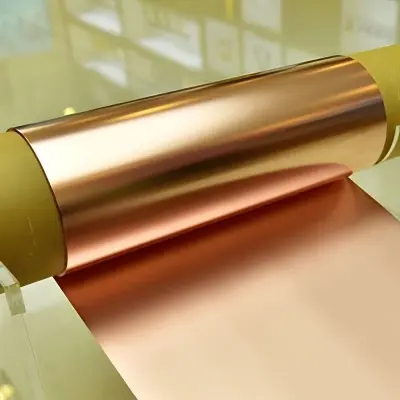
Our IPC‑4562‑B compliant copper foil includes both electrodeposited (ED) and rolled‑annealed (RA) grades for printed‑board manufacturingIPC Store. Manufactured to the latest IPC‑4562‑B "Metal Foil for Printed Board Applications" specification, our copper foil meets standardized requirements for thickness tolerance, tensile strength, elongation, surface profile, resistivity and surface treatment for rigid PCB, CCL, HDI, high‑speed RF board and flexible FPC production.
We supply full IPC‑4562 defined foil grades:
- Electrodeposited (ED‑Type E): STD, HD, HTE, HVLP / VLP low‑profile copper foil (Grade1‑4) for rigid PCB, multilayer inner layers, standard CCL and high‑speed substrates.
- Rolled‑Annealed (RA‑Type W): AR, LCR, ANN rolled copper foil (Grade5‑9) for dynamic‑bending FPC, foldable electronics and 5G/6G high‑frequency circuits.
All lots are traceable and delivered with full test reports covering unit weight, thickness deviation, elongation, surface roughness (Ra/Rz), peel‑strength and resistivity per IPC‑4562‑B test clauses
Need to clarify the difference between ED and RA copper foil and avoid procurement mistakes? Read our in‑depth comparison resource: [Article: Electrolytic vs Rolled Copper Foil: Quick Selection & Procurement Pitfall Guide]
What IPC-4562 Actually Specifies
The IPC-4562 designation system encodes critical foil properties into a single part number. For example, IPC-4562/03-CUSE32SXS3 tells you:
CU: Copper foil
E: Electrodeposited type
3: Foil grade (mechanical property class)
2: Foil thickness
S: Single-sided bond treatment (matte side)
XS: Foil profile class
3: Quality classification
This matters because two foils with the same thickness can perform completely differently depending on grade, bond treatment, and profile. IPC-4562 gives you the vocabulary to specify what you actually need.
Key Product Parameters (per IPC‑4562‑B)
| Item | Specification |
|---|---|
| Compliance | IPC‑4562‑B, RoHS, REACH |
| Foil Type | Electrodeposited(E) / Rolled‑Annealed(W) |
| Available Thickness | 5μm ~105μm (1/8oz‑3oz), custom slitting available |
| Surface Profile | STD, LP, HVLP, VLP as per IPC‑4562 designation |
| Surface Treatment | Roughening, passivation, anti‑tarnish for CCL/FCCL lamination |
| Quality Class | Class 1 / Class 2 / Class3 per IPC‑4562‑B requirement |
ED vs RA: Which IPC-4562 Foil Do You Need?
| Application | Recommended Foil | Why |
|---|---|---|
| Rigid PCB inner layers | ED (HTE, STD) | Cost-effective, good adhesion to resin |
| Multilayer PCB | ED (HTE) | Thermal stability, high elongation at temperature |
| Flexible PCB (static) | ED (LP, ANN) | Adequate for limited bending |
| Flexible PCB (dynamic) | RA (ANN-W) | Fibrous grain structure resists fatigue |
| 5G/6G high-frequency | ED (RTF, HVLP) or RA | Low profile reduces skin effect loss |
| AI server/high-speed | HVLP | Insertion loss critical at >10 GHz |
ED copper foil is electrodeposited, producing a columnar grain structure. It offers excellent thickness uniformity, strong adhesion to dielectric materials through its matte side, and cost-effective mass production. ED foils are the mainstream choice for rigid PCB and lithium battery applications.
RA (rolled-annealed) copper foil is produced by mechanical rolling, giving it a dense, fibrous grain structure. It delivers superior bend life - millions of folds without cracking - and smooth surfaces that reduce high-frequency signal loss. RA foil is essential for dynamic flexible circuits and high-frequency designs.
Learn how electrolytic copper foil compares with rolled copper foil in performance & procurement tips → [Article: Electrolytic vs Rolled Copper Foil: Quick Selection & Procurement Pitfall Guide]
Key IPC-4562 Parameters That Determine Performance
Bond Enhancement Treatment (S, D, R codes)
IPC-4562 defines treatment codes for foil-to-substrate adhesion:
S: Single-sided treatment (matte side roughened)
D: Double-sided treatment
R: Reverse treatment (smooth side treated for fine-line etching)
For fine-line PCB and high-frequency applications, RTF (Reverse Treated Foil) bonds its smooth side to the substrate, exposing the rough side for dry-film adhesion. This enables finer line widths with less undercut.
Foil Profile (STD, LP, VLP, HVLP)
Profile determines high-frequency performance. At 10 GHz, skin depth in copper is approximately 0.66 μm. When surface roughness exceeds skin depth, current follows the rough contour, increasing conductor loss. Switching from STD to HVLP foil can improve insertion loss by 5–8% at frequencies above 10 GHz.
Foil Grade (Mechanical Properties)
IPC-4562 grades range from standard electrodeposited (STD) to high-temperature elongation (HTE) and annealed wrought (ANN-W). Grade selection affects:
- Tensile strength and elongation at room and elevated temperatures
- Fatigue ductility for flex applications
- Thermal stability for multilayer lamination
What We Supply
We offer IPC-4562 compliant copper foil for:
PCB & CCL
- HTE foil (10–70 μm) for multilayer PCB thermal stability
- RTF foil for fine-line and FCCL applications
- Standard ED foil (12–210 μm) for general rigid PCB
High-Frequency & High-Speed
- HVLP foil (Rz ≤ 2 μm) for 5G/6G, AI server, 25G+ PAM4
- VLP foil for 10G Ethernet, PCIe Gen 4
- LP foil for flexible circuits and moderate frequency
Flexible & Dynamic
- RA (rolled-annealed) foil for foldable phones, wearables, dynamic automotive harnesses
- Annealed ED foil for static flex applications
Lithium Battery
4.5–8 μm ultra-thin ED foil for energy density
Why Choose Our IPC‑4562 Copper Foil
- Strictly follow IPC‑4562‑B physical & chemical requirement, batch‑to‑batch consistency
- Full range of ED & RA copper‑foil grades covering low‑cost mass‑production and high‑performance high‑frequency projects
- Complete incoming‑inspection data sheets for every shipment, simplify your QA procedure
- Custom width slitting and anti‑oxidation vacuum packaging per project demand
View individual product pages for [Electrolytic Copper Foil] and [Rolled Copper Foil] for detailed dimension and delivery information.
Typical Applications
- Rigid PCB & HDI inner / outer layers
- Standard & high‑speed CCL substrates for AI server, 5G hardware
- Flexible circuit FPC, foldable‑device hinge circuits
- Carrier‑supported ultra‑thin copper foil for advanced packaging
Note: IPC‑4562‑B defines ordering designation rules for copper foil. When placing an order, clearly specify foil metal, foil type, grade, thickness, surface treatment, profile and quality‑class to prevent mis‑delivery
If you are unsure which IPC‑4562 grade fits your stack‑up, our technical team supports material specification review and sample validation.
Company Profile
With years of deep focus on advanced copper foil materials for PCB, CCL, FPC, lithium‑ion battery and high‑frequency electronics industries, we are a trusted supplier of IPC‑4562‑B compliant electrolytic (ED) and rolled‑annealed (RA) copper foil.
Our core team consists of material R&D engineers, process specialists and quality experts who keep close track of IPC standards, global electronic material specifications and downstream manufacturing pain‑points. We do not merely supply standard‑spec stock materials. We work side‑by‑side with customers from sample evaluation, specification confirmation to mass‑production delivery, helping R&D and procurement teams avoid common material‑selection and procurement risks.
Our quality management system runs through the full workflow: raw‑material incoming inspection, production process monitoring, finished‑product lab testing and batch‑wise documentation. Every shipment comes with complete test reports in compliance with IPC‑4562‑B, RoHS and REACH requirements, covering thickness tolerance, elongation, surface roughness, resistivity and peel strength.
To help your team make better material decisions, explore our industry knowledge article: [Article: Electrolytic vs Rolled Copper Foil: Quick Selection & Procurement Pitfall Guide], where you can review performance comparison, application boundaries and real‑world procurement tips.
Whether your project requires high‑volume electrolytic copper foil for batteries & rigid PCBs or high‑performance rolled copper foil for foldable FPC and AI high‑speed boards, please visit our dedicated product pages: [Electrolytic Copper Foil] | [Rolled Copper Foil].
We support custom slitting, customized surface‑treatment and technical consulting. Feel free to reach out to our technical team for grade recommendation and sample support for your project.
Our Factory
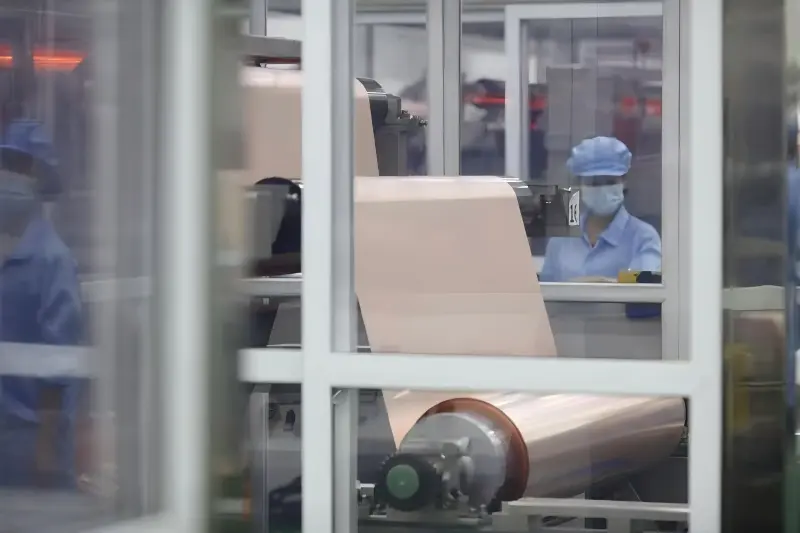
Automated continuous production line for Copper Foil
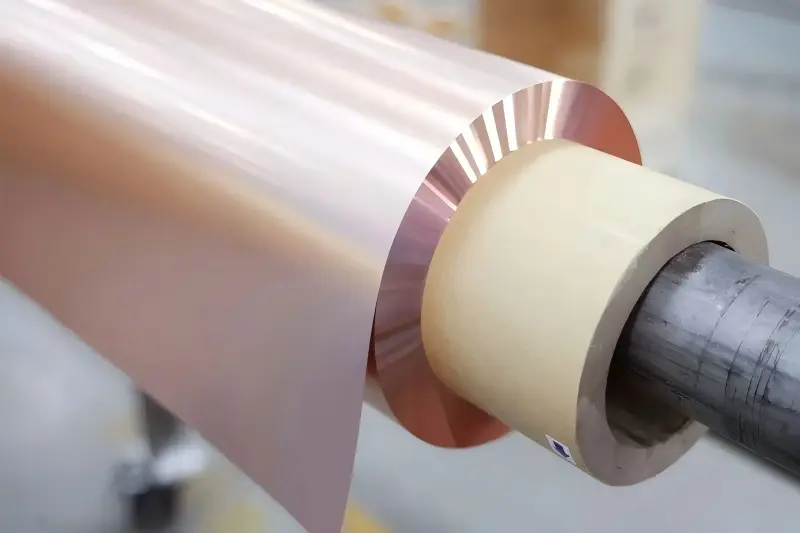
Finished Jumbo Roll of Copper Foil

Copper Foil Clean‑room Production Workshop

Comprehensive Real‑Time Monitoring of Electrolyte Additives

Quality Control Inspection For Electrodeposited Copper Foil On Production Line
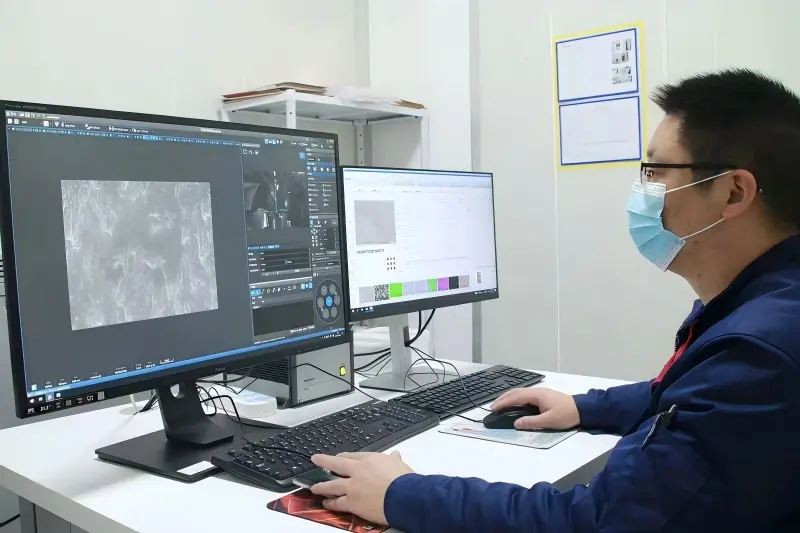
HighPrecision Analysis of Copper Foil Microstructue
FAQ
Q1: What is IPC-4562?
A: IPC-4562, titled "Metal Foil for Printed Board Applications," is the industry standard that defines requirements for metal foils used in printed wiring applications. It covers both unsupported foils and foils supported by carrier films, specifying designation systems, quality classes, thickness tolerances, and performance requirements.
Q2: What is the difference between IPC-4562A and IPC-4562B?
A: IPC-4562B is the current revision, published in October 2023, and supersedes IPC-4562A (which was released in 2013). Both cover metal foils for printed boards, but B addresses updated requirements for modern applications including high-speed digital and RF designs. When specifying, always state "IPC-4562B" to avoid ambiguity.
Q3: Does IPC‑4562‑B specify surface profile / roughness requirements?
A: Yes. IPC‑4562‑B clearly defines surface profile classifications including STD, LP, HVLP and VLP. Different profile grades directly impact peel strength with resin and high‑frequency signal loss. When placing orders, please specify your required surface profile grade instead of only naming foil thickness.
Q7: What is RTF (Reverse Treated Foil)?
A: RTF is a treatment configuration where the smooth (drum) side is treated for bonding to the substrate, exposing the rough side for dry-film adhesion. This enables finer line widths with less undercut during etching, making RTF ideal for fine-line PCB and high-density interconnect (HDI) applications.
Q8: Which foil should I use for high-frequency applications?
A: For frequencies above 10 GHz, use VLP or HVLP ED foil, or RA foil. Surface roughness directly impacts insertion loss. Switching from STD to HVLP can improve insertion loss by 5–8% at high frequencies.
For 5G FR2 (mmWave, >24 GHz), RA foil (0.5–1.5 µm Rz) is often the best choice for critical RF paths.
Q10: What lead time should I expect for IPC-4562 copper foil?
A: ED foil: Typically shorter (continuous production, large capacity). RA foil: Longer lead time - production involves 20+ rolling passes, yields are below 70%, and global capacity is limited. Plan RA foil procurement early and do not assume spot availability.
Q12: Does IPC-4562 cover RA (rolled) copper foil?
A: Yes. IPC-4562 designates RA foil as Type W (Wrought). It covers both unsupported and carrier-supported foils, including rolled/annealed grades such as AR (As Rolled), LCR (Light Cold Rolled), and ANN (Annealed Wrought).
Q7: What thickness range do your IPC‑4562‑B copper foils support?
A: Available thickness ranges from 5 μm up to 105 μm (1/8 oz‑3 oz). Custom slitting for different widths is supported. Contact our technical team for ultra‑thin or special‑size feasibility evaluation.
Q8: Is IPC‑4562‑B the same for both ED electrolytic and RA rolled copper foil?
A: Yes, both ED Type‑E and RA Type‑W copper foil follow the IPC‑4562‑B framework, but they have different baseline limit values for elongation, tensile strength and surface properties. RA rolled copper foil has much higher elongation index defined in the standard for flexible circuit use.
Q9: My design is high‑frequency high‑speed PCB, which IPC‑4562 grade should I pick?
A: For high‑speed / high‑frequency boards, choose HVLP or VLP low‑profile copper foil to reduce skin‑effect signal attenuation. For dynamic‑bending flexible circuits, select Type‑W rolled‑annealed copper foil. Our engineers can review your stack‑up and give grade suggestions.
Q10: Can I substitute ED copper foil for RA copper foil only based on IPC‑4562‑B parameters?
A: Not recommended. Although both meet IPC‑4562‑B, their internal grain structures differ fundamentally. Electrodeposited copper foil cannot sustain repeated folding cycles even if the static‑state test data meets standard limits. Application scenario must be considered besides standard parameters.
Refer to our procurement‑pitfall article for risk explanation: [Article: Electrolytic vs Rolled Copper Foil: Quick Selection & Procurement Pitfall Guide]
Still have technical questions about grade selection or ordering specification? Please contact our technical‑support team for free consultation and sample support.
Hot Tags: IPC‑4562 copper foil, IPC‑4562‑B copper foil, electrolytic copper foil ED, rolled copper foil RA, PCB copper foil, CCL copper foil, HTE copper foil, HVLP low profile copper foil