


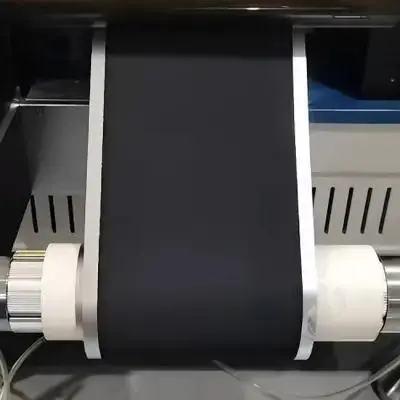


HSMetal Graphene Coated Aluminum Foil is an advanced conductive current collector designed for high-power lithium-ion batteries, fast-charging battery systems and high-performance energy storage applications.
By applying a functional graphene-based conductive coating to battery-grade aluminum foil, the product creates a more uniform and conductive interface between the aluminum current collector and cathode active materials. The coating helps improve interfacial contact, reduce contact resistance and enhance electrode adhesion, supporting more efficient electron transfer and current collection during high-current charging and discharging.With customizable coating formulations, single-sided or double-sided coating options, and flexible foil specifications, HSMetal provides tailored graphene coated aluminum foil solutions for LFP, NMC and other lithium-ion battery cathode systems.
Whether you are developing fast-charging EV batteries, power batteries or advanced energy storage systems, HSMetal helps you select the right conductive coating structure for your electrode manufacturing requirements.
Graphene‑coated aluminum foil is strictly for cathode application. Never use it for anode; anode projects should adopt copper‑based current collectors such as Ultra‑Thin Copper Foil for Lithium‑Ion Batteries within our Lithium Battery Current Collector portfolio.
Technical Specification
| Parameter | Unit | Graphene Coated Aluminum Foil |
|---|---|---|
| Coating Thickness | μm | 0.8‑1 |
| Coating Layer Dyne | mN/m | ≥56 |
| Electrolyte Immersion Test | - | No coating delamination after 30 min immersion |
| Base Aluminum Foil Thickness | μm | 12‑18 |
| Surface Density | g/㎡ | 0.6±0.1 |
| 3M Tape Adhesion Test | - | No substrate exposure (no base leakage) |
| Solvent & Water Resistance | - | No base leakage after 200 NMP cycles; no base leakage under water‑based processing |
👉 Request Graphene Coated Aluminum Foil Sample
Pure Graphene Coating vs. Graphene + carbon composite
The Pure graphene coating and Graphene + carbon composite are supplied in two configurations, matched to different performance priorities.
| Coating Type | Coating Thickness | Best For |
|---|---|---|
| Pure graphene coating | 0.8–1 μm | High-power / fast-charging cells where maximum conductivity and minimum coating thickness are required |
| Graphene + carbon composite | 0.8–1 μm | Applications balancing performance and cost; where a complementary conductive network is sufficient |
Selection tip: For LFP power batteries operating at sustained high rates (≥3C), Pure graphene coating is the starting point. For moderate-rate applications where the full graphene premium cannot be justified, Graphene + carbon composite offers a practical compromise.
Graphene Coated Aluminum Foil vs. Carbon Coated Aluminum Foil
| Comparison Item | Graphene Coated Aluminum Foil | Conventional Carbon‑Coated Aluminum Foil |
|---|---|---|
| Main conductive phase | Graphene‑rich hybrid conductive network | Carbon‑black / graphite composite |
| Core strength | Extreme high‑rate / high‑power performance; lower polarization under large current | Balanced rate performance, general‑purpose for LFP/NCM mass‑production |
| Interfacial contact texture | Micro‑concave‑convex structure for enlarged contact area | Relatively flat carbon layer |
| Dyne level | ≥56 (higher wettability threshold) | Typically 42‑52 dyne |
| Cost level | Higher, oriented for high‑power premium projects | Cost‑effective for volume general‑purpose batteries |
| Typical scenario | >2C‑5C high‑power fast‑charge cells, high‑loading thick cathodes | 0.5C‑2C conventional energy‑type & moderate‑power lithium‑ion batteries |
Which One Should You Choose?
- Choose graphene coated aluminum foil when your battery design prioritizes advanced interfacial engineering, high-rate charging and discharging, and potentially lower coating loading.
- Choose conventional carbon coated aluminum foil when you need a proven, cost-effective conductive coating for standard lithium-ion battery production.
- The actual performance depends on conductive material quality, dispersion, coating thickness, binder selection and electrode formulation. Graphene does not automatically outperform every carbon coating in every battery system.
Primer & Binder Selection for Graphene-Coated Foil
The performance of graphene coating heavily relies on matching primer layer and binder system, which directly decides adhesion, solvent‑resistance and electrolyte stability. For deeper systematic knowledge, visit our dedicated article: Battery Electrode Primer Selection Guide and Binder for Battery Current Collector Industry Knowledge.
Solvent‑based cathode slurry (NMP system, PVDF binder): Compatible with our standard GH2/H2 series. No extra primer modification is normally required.
Water‑based cathode slurry: Must verify matching between graphene‑coated layer and aqueous binder. We offer specially tuned coating grades for water‑processing to avoid coating swelling or peeling.
Primer reminder: Primer acts as intermediate bonding bridge between aluminum substrate and graphene conductive layer. Improper primer selection will cause coating delamination during calendaring or electrolyte soaking, even if graphene conductive material itself is high‑quality.
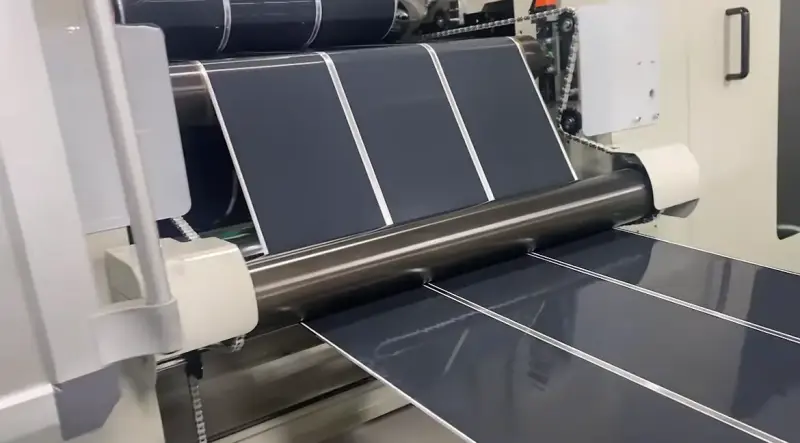
When you send inquiry, please specify your slurry system (solvent‑based / water‑based), binder type, calendaring pressure and electrolyte formula; we will recommend matching grade accordingly.
Applications of Graphene Coated Aluminum Foil
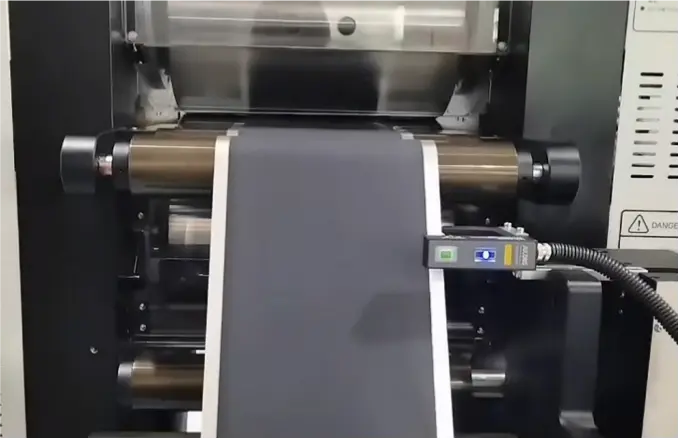
Graphene-coated aluminum foil is engineered as a high-performance cathode current collector. By providing a highly conductive 2D surface network, it solves the interfacial resistance bottlenecks of conventional foils. Key applications include:
- High-Power & Fast-Charging EVs: Reduces internal resistance (DCR) to enable ultra-fast charging and high current output for next-gen EV battery systems.
- LFP & NMC Cathode Systems: Drastically improves electron transport for low-conductivity LFP and high-energy NMC cathodes, especially in power batteries and high-rate ESS.
- Power Tools & Industrial Robotics: Supports massive instantaneous discharge rates required in heavy-duty industrial equipment and electric tools without localized overheating.
- Advanced Energy Storage & Supercapacitors: Provides the extreme high-rate capability and interface stability needed for next-gen ESS and supercapacitor electrode designs.
How to Choose the Right Graphene Coated Aluminum Foil?
Selecting the right graphene coated aluminum foil depends on battery chemistry, electrode design, coating process and target performance.
| Selection Factor | What to Check | Engineering Impact |
|---|---|---|
| Battery Chemistry & C-Rate | LFP, NMC, or LCO? Do you need 3C, 4C, or 6C fast charging? | Determines whether you need pure graphene (GH2) or graphene-carbon composite (H2) to handle the current load. |
| Coating Configuration | Single-sided or double-sided? | Single-sided leaves bare aluminum for tab welding; double-sided maximizes interfacial contact for high-power cells. |
| Coating Weight & Thickness | 0.8–1 μm ultra-thin vs. thicker composite coatings. | Thinner coating = higher energy density, but requires stricter process control to avoid pinholes. |
| Solvent & Binder Match | NMP/PVDF or Water/PAA? | The graphene layer must survive NMP wiping (200+ times) or aqueous processing without dissolving or swelling. |
| Processing & QC | Tensile strength, elongation, slitting burr, and surface resistance data. | Ensures the roll survives high-speed coating and calendering without web breakage. |
👉 Send your battery specs to our engineers for a custom material recommendation and test data.
Looking for a Reliable Graphene Coated Aluminum Foil Supplier?
Improve your lithium-ion battery electrode interface with customized graphene coated aluminum foil solutions from HSMetal.
Whether you are developing high-power EV batteries, fast-charging LFP systems or advanced energy storage technologies, our team can help you evaluate suitable coating structures and material specifications.
Send us your cathode chemistry, target C-rate, and coating thickness budget. Our team will confirm whether graphene coating is the minimum sufficient specification, and provide a sample for your own high-rate validation.
👉 Request Graphene Coated Aluminum Foil Sample
📥 Download Primer & Binder Selection Guide
📩 Contact HSMetal for Technical Consultation
FAQ
Q1: What is graphene coated aluminum foil for lithium-ion batteries?
A: Graphene coated aluminum foil is a functional aluminum current collector with a graphene-based conductive coating on its surface. It is mainly used in lithium-ion battery cathodes to improve interfacial conductivity, electrode adhesion and electron transfer between the active material and current collector.
Q2: What are the main advantages of graphene coated aluminum foil?
A: Its main advantages include improved interfacial electrical conductivity, reduced contact resistance, enhanced electrode adhesion and improved current collection. It is particularly attractive for high-power and fast-charging lithium-ion battery applications.
Q3: What is the difference between graphene coated aluminum foil and carbon coated aluminum foil?
A: Graphene coated aluminum foil uses graphene or graphene-based conductive materials, while conventional carbon coated aluminum foil generally uses carbon black, graphite or other carbon additives. Graphene-based coatings offer opportunities for thinner conductive interfaces and advanced conductive network designs, while conventional carbon coatings are widely used as cost-effective solutions for standard battery production.
Q4: Is graphene coated aluminum foil suitable for LFP and NMC batteries?
A: Yes. Graphene coated aluminum foil can be evaluated for LFP, NMC and other lithium-ion battery cathode systems. The final coating formulation should be selected according to active material compatibility, electrolyte chemistry, electrode processing conditions and required battery performance.
Q5: What is the difference between single-sided and double-sided graphene coated aluminum foil?
A: Single-sided graphene coated aluminum foil has a conductive coating on one side, while double-sided graphene coated aluminum foil is coated on both sides. Double-sided coating is commonly considered for electrodes with active material layers on both sides of the current collector. The appropriate structure depends on electrode design and manufacturing requirements.
Q6: Can graphene coated aluminum foil improve fast-charging performance?
A: Graphene-based conductive coatings can improve interfacial contact and facilitate electron transfer between the cathode material and current collector. These improvements can support high-rate charging and discharging, although actual battery performance also depends on electrode formulation, electrolyte, cell design and operating conditions.
Q7: What is the typical coating thickness of graphene coated aluminum foil?
A: Coating thickness varies according to graphene composition, coating formulation and application requirements. Ultra-thin coatings are available in the industry, and customized coating thicknesses can be developed according to customer specifications. Please contact HSMetal for available technical options.
Q8: What binder is used in graphene coated aluminum foil?
A: Common binder systems include PVDF, acrylic-based binders and specialized water-based binders. The appropriate choice depends on graphene dispersion, coating adhesion, solvent compatibility, drying conditions and the customer's electrode manufacturing process.
Q9: What is the function of primer in graphene coated aluminum foil?
A: Primer is an interfacial layer used to improve surface compatibility and adhesion between the aluminum substrate and subsequent functional coating or electrode layer. Conductive primer formulations may also help optimize electrical contact and interfacial resistance.
Q10: What applications use graphene coated aluminum foil?
A: Typical applications include high-power lithium-ion batteries, fast-charging EV batteries, LFP and NMC cathode systems, power tools, industrial energy storage and selected supercapacitor applications.
Q11: Can HSMetal customize graphene coated aluminum foil specifications?
A: Yes. HSMetal can discuss customized aluminum foil thickness, width, coating composition, single-sided or double-sided coating, coating thickness, coating weight and roll dimensions according to customer requirements.
Q12: Why choose HSMetal as your graphene coated aluminum foil supplier?
A: HSMetal focuses on customized battery current collector solutions, offering flexible coating configurations, material selection support and technical communication. We work with customers to identify suitable graphene-based conductive coating solutions for high-power lithium-ion battery applications.
Q13: What is the actual difference between graphene-coated foil and conventional carbon-coated foil?
A: The conductive mechanism and coating thickness. Conventional carbon coating relies on particle-to-particle contact and is typically several microns thick. Graphene coating forms a 2D in-plane conductive network, achieving comparable or better conductivity at 0.8–1 μm-roughly one-fifth to one-sixth the thickness. This reduces the coating's weight penalty and improves in-plane heat spreading, which matters at high C-rates.
Q14: Will the 0.8–1 μm graphene coating survive NMP and electrolyte exposure?
A: The GH2/H2 series is tested to withstand 200 NMP wipes and 30-minute electrolyte immersion without substrate exposure or delamination. This is a critical qualification point: a coating that fails under NMP will be dissolved during PVDF slurry coating, destroying the interface.
Q15: Should I use pure graphene or graphene + carbon?
A: Use pure graphene when maximum high-rate performance and minimum coating thickness are the design drivers-typically for LFP power batteries at sustained ≥3C. Use graphene + carbon when a complementary conductive network is sufficient and the full graphene premium cannot be justified by the rate requirement.
Q16: Does graphene-coated foil require a different primer or binder?
A: The graphene surface is chemically different from bare aluminum or conventional carbon. For aqueous LFP processing, PAA binder is a compatible starting point. If a primer is used, it must be compatible with the graphene surface and must not delaminate. Download our Primer & Binder Guide for the full compatibility matrix.
Q17: Can I get a sample for high-rate testing?
A: Yes. We provide samples for slurry coating, adhesion testing, and cell-level high-rate evaluation. Send us your cathode chemistry and target C-rate, and we will recommend the appropriate series.
Q18: Can graphene coated aluminum foil replace conventional carbon‑coated aluminum foil for all lithium‑ion‑batteries?
A: No. Graphene‑coated aluminum foil has higher material cost. It targets premium high‑power scenarios (high‑C‑rate, thick‑loading cathodes). For most 0.5C‑2C energy‑oriented batteries, conventional Carbon Coated Aluminum Foil delivers sufficient performance with better BOM cost.
Q19: Can graphene‑coated aluminum foil be used for battery anode?
A: No. Aluminum‑based current collectors are only suitable for cathode. Aluminum will produce irreversible lithium‑aluminum alloying reaction under anode potential. For anode please choose copper‑based current‑collector inside our Lithium Battery Current Collector series.
Hot Tags: Graphene coated aluminum foil, high-power lithium battery current collector, graphene vs carbon coated foil, aluminum foil for fast-charging battery,battery current collector primer, graphene coated foil supplier


