


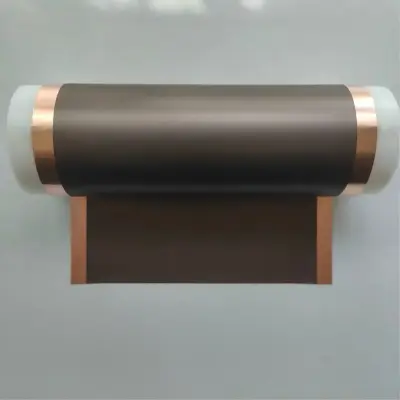
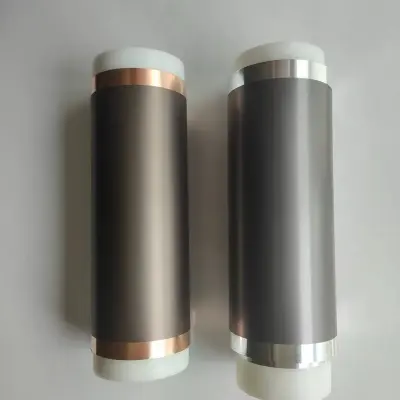

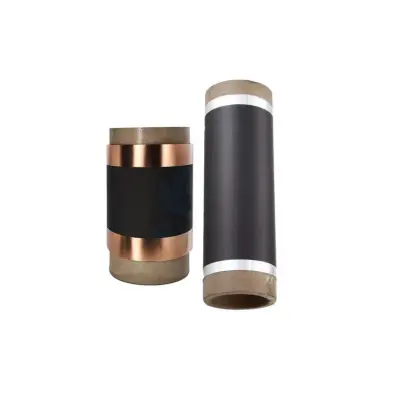
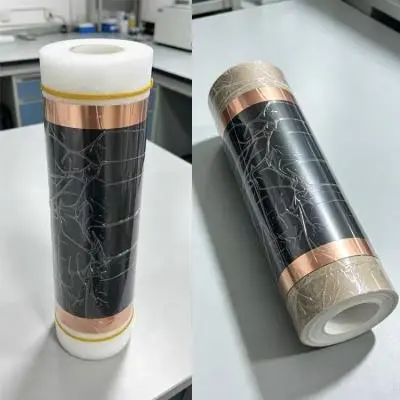
Looking for a reliable Graphene Coated Copper Foil Manufacturer for your next-generation battery projects?
Our Graphene Coated Copper Foil is an advanced conductive material designed for lithium-ion battery electrodes and energy storage applications. By applying a functional graphene-based coating to the surface of copper foil, this material combines the excellent electrical conductivity of copper with the unique structural and conductive properties of graphene.Compared with conventional bare copper foil, Graphene Coated Copper Foil offers an engineered electrode interface that can help improve electrode material adhesion, reduce interfacial resistance, and enhance electrode stability, depending on coating formulation and battery design.We provide customized single-sided and double-sided graphene coated copper foil solutions to meet different electrode structures, battery manufacturing processes, and performance requirements.
As an experienced graphene coated copper foil supplier, we support customized coating thickness, copper foil thickness, roll width, coating weight, and other technical specifications. Whether you need samples for laboratory testing or customized rolls for mass production, we offer flexible manufacturing solutions and responsive delivery services.
Technical Specifications
Material Specifications (Typical Reference)
| Test Item | Typical Reference Value | Remarks |
|---|---|---|
| Substrate | Copper foil (99.9% purity) | Electrodeposited (ED) |
| Substrate Thickness | 4.5 μm – 9 μm | Custom thickness available |
| Coating Type | Graphene nanosheet slurry | Aqueous or solvent-based |
| Coating Thickness (per side) | 0.5 – 1.5 μm | Ultra-thin, minimizes weight |
| Coating Areal Density | ~ 0.5 – 1.0 g/m² | Adjustable |
| Surface Resistance | ≤ 3 mΩ/square | Extremely low for fast charging |
| Peel Strength | ≥ 15 N/m (typical) | Enhanced by graphene flexibility |
| Surface Tension (Dyne) | ≥ 50 dyne/cm | Ensures excellent slurry wetting |
| Width | 150 – 1450 mm | Custom slitting available |
| Documentation | COA, MSDS, RoHS/REACH | Full traceability |
👉 Request a Graphene Coated Copper Foil Quotation
What Is Graphene Coated Copper Foil?
Graphene-coated copper foil is a functional battery current collector created by depositing a highly conductive graphene layer onto standard copper foil. While bare copper offers excellent baseline conductivity and mechanical properties, it often struggles with interfacial contact and adhesion when paired with active materials. The graphene coating solves this by creating an optimized functional interface between the copper substrate and the electrode. Depending on the formulation, this 2D layer delivers significant benefits: enhanced electrical pathways, stronger active-material adhesion, reduced interfacial resistance, and improved structural stability during cycling. Fully customizable to your specific battery chemistry and manufacturing requirements, our graphene-modified copper foil is ideal for manufacturers and research institutions developing next-generation, high-performance lithium-ion batteries and energy storage systems.
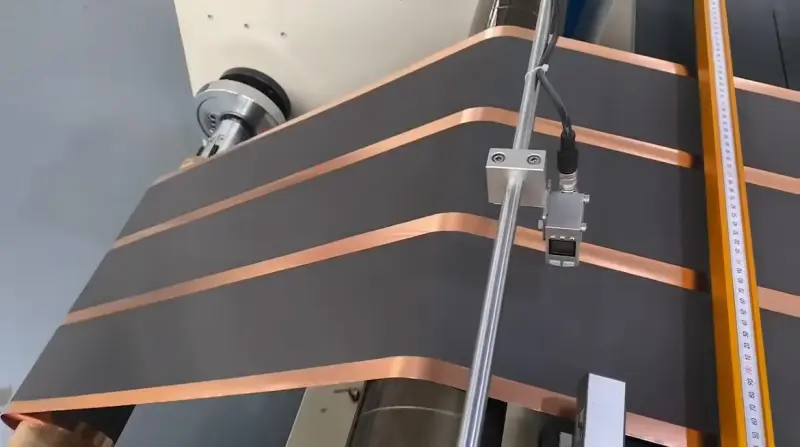
Product Classification: Single-Side vs. Double-Side Coated
We offer two configurations to match your specific electrode manufacturing process:
| Feature | Single-Side Graphene Coated Cu Foil | Double-Side Graphene Coated Cu Foil |
|---|---|---|
| Configuration | Graphene on one side; bare copper on the reverse. | Graphene coating on both sides. |
| Electrode Design | Ideal for single-sided anodes or designs requiring bare copper for ultrasonic welding (tab areas). | Standard for high-energy-density double-sided anodes in pouch and prismatic cells. |
| Key Advantage | Saves cost; allows direct welding to bare copper. | Maximizes electrical contact and heat dissipation on both faces. |
| Buyer Selection Tip | Choose single-side if your tab welding process requires an uncoated copper surface. | Choose double-side for mainstream EV and fast-charging cells to ensure uniform current distribution. |
(Complete Your Cell: Don't forget the cathode! Pair this with our Graphene Coated Aluminum Foil for a full 2D conductive network on both electrodes. For extreme silicon expansion, also evaluate our MicroPorous Copper Foil.)
Graphene vs. Standard Carbon vs. Bare Copper
Do not over-specify or under-specify your anode collector. The table below defines the engineering boundary for graphene-coated copper foil:
| Criterion | Graphene Coated Cu Foil (This Product) | Standard Carbon Coated Cu Foil | Bare Cu Foil |
|---|---|---|---|
| Conductive Network | 2D in-plane network (Highly efficient electron & heat transfer) | 0D particle network (Point-to-point contact) | None (Direct contact only) |
| Binder Dependency | Low (Graphene adheres naturally; less insulating binder needed) | High (More binder required to anchor carbon particles) | None |
| Silicon Expansion Buffer | Excellent (Flexible graphene sheets absorb mechanical stress) | Moderate (Particle network can crack under severe expansion) | Poor (Severe risk of delamination) |
| Interfacial Resistance (DCR) | Lowest | Moderate | Highest |
| Fast Charging Capability | Outstanding (High thermal and electrical conductivity) | Good | Limited (Risk of localized overheating) |
| Cost Position | Premium | Moderate | Lowest |
| Decision Rule | Use for Si-C anodes, 4C+ fast charging, and high-power EV cells. | Use for standard graphite anodes or moderate-rate applications. | Only for ultra-low-cost, low-rate cells where adhesion isn't critical. |
The Decision Rule, stated plainly:
- If you are using a Silicon-Carbon (Si-C) anode: Graphene-coated copper foil is highly recommended. Its mechanical flexibility prevents the electrode from cracking during expansion.
- If you are using standard Graphite at 1C-2C: Standard Carbon Coated Copper Foil is the most cost-effective choice.
- If your battery runs at 4C+ fast charging: Graphene's superior thermal conductivity is mandatory to prevent hot spots.
👉 Send Your Specification for a Quotation
Product Advantages: Why Buy from HSMetal?
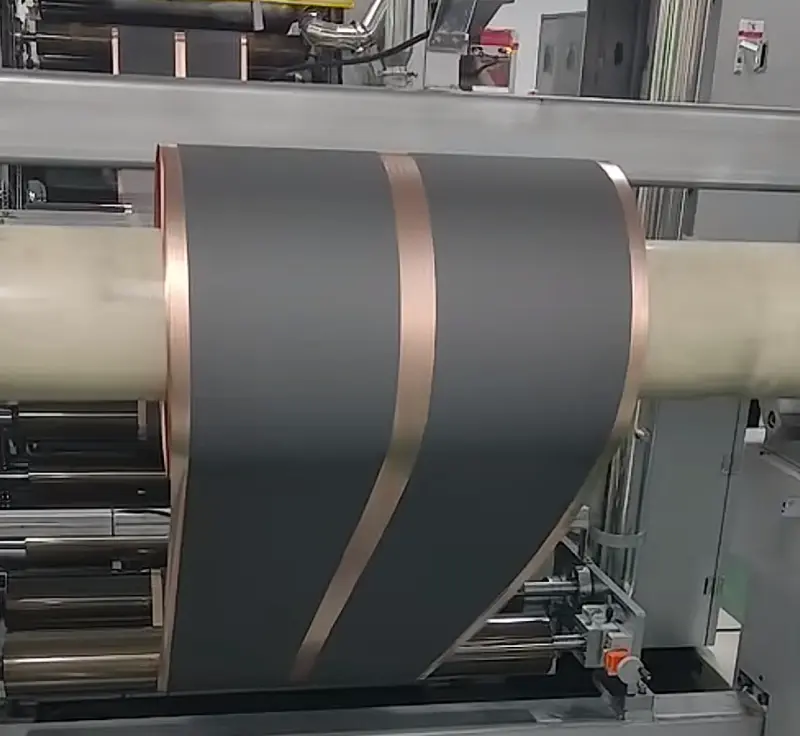
Superior Interfacial Conductivity
Our graphene coating eliminates the high contact resistance of bare copper. With less insulating binder required, electrons flow seamlessly between the active material and the current collector, drastically reducing DCR.
Mechanical Stress Buffer for Silicon Anodes
Graphene's 2D structure provides a flexible, elastic buffer. It absorbs the massive volume expansion of silicon particles, preventing active material shedding and extending cycle life.
Advanced Thermal Spreading
Fast charging generates heat. Graphene's exceptional in-plane thermal conductivity spreads heat rapidly across the electrode, preventing localized degradation and improving safety.
Customization & Fast Delivery
- Custom Coating Thickness: 0.5–1.5 μm to match your energy density targets.
- Fast Sampling: Receive sample rolls in 5–7 days for your pilot coating line.
- Mass Production Capacity: Scalable supply from trial orders to gigafactory volumes.
Commercial and Delivery Terms
| Term | Detail |
|---|---|
| MOQ | 50 kg (standard specifications); custom specifications negotiable by volume |
| Price term | FOB / CIF / CFR (Qingdao / Tianjin / Shanghai, etc.) |
| Payment | 30% T/T deposit, 70% balance before shipment; L/C negotiable |
| Lead time | Stocked items: 7–10 days; custom coating / slitting: 20–25 days |
| Samples | Standard-size samples available; freight collect |
| Packaging | Vacuum bag + export carton / pallet; customizable |
| Port / HS | As per the agreed trade terms |
| Documentation | COA, MSDS, RoHS/REACH |
👉 Reach Our Technical Team for a Quotation
Application Fields
Silicon-Carbon (Si-C) Anode Batteries
Buffers volume expansion and maintains electrical contact for high-capacity cells.
Fast-Charging EV Batteries (≥3C)
Ultra-low resistance and high thermal conductivity prevent overheating.
High-Power Power Tools
Supports massive instantaneous discharge rates without voltage drops.
High-Energy-Density Consumer Electronics
Ultra-thin coating saves weight and space for more active material.
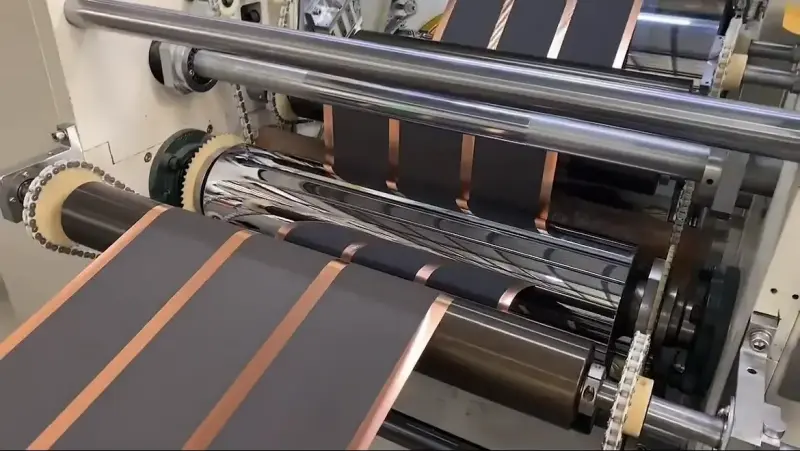
Upgrade Your Anode Interface with Graphene
Don't let silicon expansion and high internal resistance limit your battery's energy density and fast-charging capability. Whether you need single-side or double-side graphene-coated copper foil, HSMetal provides the precision engineering and mass-production scale you need.
Send us your anode chemistry (Si-C ratio), target C-rate, and coating requirements. Our team will recommend the optimal specification and provide samples for your validation.
👉 Request a Graphene Coated Copper Foil Quotation
👉 Explore Graphene Coated Aluminum Foil for Cathodes
📩 Contact HSMetal for Technical Consultation
FAQ
Q1: What is Graphene Coated Copper Foil?
A: Graphene Coated Copper Foil is a functional current collector material produced by applying a graphene-based coating to the surface of copper foil. It is mainly designed for lithium-ion battery anodes and advanced electrode interface applications.
Q2: What are the main advantages of Graphene Coated Copper Foil?
A: Its potential advantages include improved electrode interface characteristics, enhanced active material adhesion, conductive surface modification, and reduced interfacial resistance. Actual performance depends on coating formulation and electrode design.
Q3: What is the difference between single-sided and double-sided graphene coated copper foil?
A: Single-sided graphene coated copper foil has a coating on one surface, while double-sided graphene coated copper foil has coatings on both surfaces. Single-sided products are suitable for one-side interface modification, whereas double-sided products are designed for electrode structures requiring modification on both sides.
Q4: Which type of graphene coated copper foil should I choose for lithium-ion batteries?
A: The choice depends on your electrode structure. If only one surface requires graphene modification, single-sided coating may be suitable. If both sides require functional coating, double-sided graphene coated copper foil is a better option to evaluate.
Q5: What is the difference between graphene coated copper foil and carbon coated copper foil?
A: The main difference is the coating material. Graphene coated copper foil uses graphene-based materials, while carbon coated copper foil typically uses carbon black, graphite, or other carbon-based conductive materials. Both can be used for battery current collectors, but their coating structures and performance characteristics differ.
Q6: Is graphene coated copper foil suitable for lithium-ion battery anodes?
A: Yes. Copper foil is commonly used as the negative electrode current collector in lithium-ion batteries. Graphene coated copper foil can be used to investigate and optimize the interface between the current collector and anode active materials.
Q7: Can graphene coated copper foil be used for silicon-based anodes?
A: Yes. It can be evaluated in silicon-carbon and other silicon-containing anode systems where electrode adhesion and interface stability are important considerations. Actual suitability should be verified through electrode and battery testing.
Q8: What is the difference between graphene coated copper foil and graphene coated aluminum foil?
A: Graphene coated copper foil is the negative-electrode (anode) current collector, because copper is stable at low potential and does not alloy with lithium. Graphene coated aluminum foil is the positive-electrode (cathode) current collector, because aluminum forms a stable passive layer at high voltage. Use them as a matched pair in the same cell.
Q9: Can you customize graphene coating thickness and copper foil thickness?
A: Yes. We support customized copper foil thickness, graphene coating thickness, coating weight, roll width, roll length, and coating configuration according to your technical requirements.
Q10: Do you provide both single-sided and double-sided graphene coating?
A: Yes. We offer single-sided and double-sided graphene coated copper foil solutions. The final coating structure can be customized according to your electrode design.
Q11: Why is Graphene Coated Copper Foil highly recommended for Silicon-Carbon (Si-C) anodes?
A: Silicon expands up to 300% during lithiation. This mechanical stress often causes the active material to crack and peel off the copper foil. The flexible graphene layer acts as a mechanical buffer, absorbing the stress and ensuring the electrode remains intact over thousands of cycles.
Q12: What industries use graphene coated copper foil?
A: Major application areas include lithium-ion battery manufacturing, electric vehicle batteries, energy storage systems, advanced anode materials, and battery research and development.
Q13: Should I choose single-side or double-side coating?
A: Choose single-side if your design requires bare copper for tab welding, or if you are coating only one side of the electrode. Choose double-side for standard high-energy-density pouch and prismatic cells to ensure uniform current distribution and heat dissipation on both faces.
Q14: Should I choose single-side or double-side graphene coated copper foil?
A: Choose single-side if your process coats only one face of the current collector, or you are cost- and weight-sensitive or prototyping. Choose double-side for standard commercial cells that coat both faces, and for high-energy-density or fast-charging designs where both sides need uniform low resistance and adhesion. Double-side is the recommended default for commercial lithium-ion anodes.
Q15: Which batteries and applications is it used in?
A: EV and fast-charging power batteries, silicon-carbon and high-silicon anodes, high-power tools and e-mobility, premium 3C electronics, grid and residential energy storage, solid-state and semi-solid-state development, supercapacitors and hybrid lithium-ion capacitors, and battery R&D/pilot lines.
Q16: Can graphene coating improve fast-charging and rate performance?
A: The lower interface resistance and higher thermal conductivity reduce cell impedance and heat accumulation at high C-rate, which supports better rate capability and fast-charging behavior. Actual gains depend on the full electrode design, electrolyte and cell format and should be validated at cell level.
Hot Tags: Graphene Coated Copper Foil, graphene coated copper foil manufacturer, graphene vs carbon coated copper foil, anode current collector, copper foil for silicon anode, single side coated copper foil, double side coated copper foil, HSMetal


