


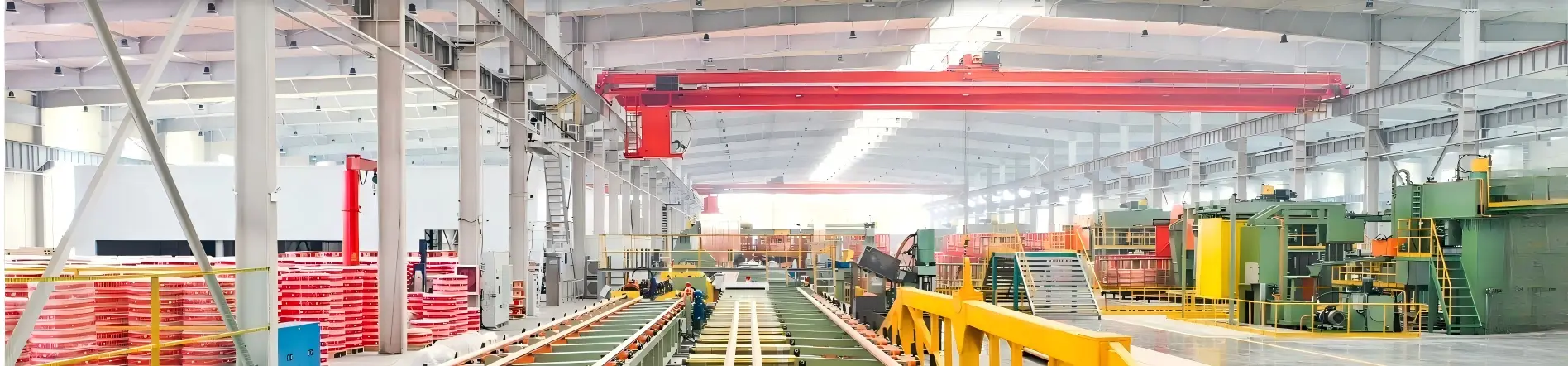
HVAC & Refrigeration Industry Applications
The HVAC and refrigeration industry demands materials with exceptional thermal conductivity, corrosion resistance, pressure tolerance, pressure resistance, formability and anti‑corrosion performance. Copper tubing has long been the irreplaceable preferred material for refrigerant conveyance across HVAC and refrigeration industries,widely used in air conditioner connecting pipes, central air conditioning multi-split units, refrigerators, freezers, and other refrigeration systems. As the industry evolves toward higher efficiency, higher pressure refrigerants (such as CO₂/R744), and more corrosive environments (marine and industrial applications), advanced copper alloys, titanium alloys, and even emerging solid-state refrigeration materials are playing increasingly important roles.
HSMetal supplies a comprehensive material portfolio including pure copper, high‑strength copper alloys, brass alloys, cupronickel and titanium alloys for household appliances, commercial air‑conditioning units, cold storage, industrial chillers and marine refrigeration systems. We also provide nickel‑titanium shape‑memory alloys for cutting‑edge solid‑state refrigeration research. Our materials cover evaporators, condensers, refrigerant pipelines, capillary throttling components and compressor winding parts.
Core Performance Requirements for Refrigeration Materials
- High Thermal Conductivity – Efficient heat transfer is essential for evaporators, condensers, and heat exchangers; copper offers thermal conductivity of approximately 401 W/m·K, making it the industry standard.
- Pressure Resistance – Modern refrigerants, particularly CO₂ (R744), operate at high pressures up to 130 bar (13,000 kPa), requiring tubing materials with enhanced strength.
- Corrosion Resistance – Refrigeration systems must withstand refrigerant corrosion, moisture ingress, and in marine applications, seawater attack.
- Fabricability & Weldability – Materials must be readily bendable, formable, and weldable for complex system layouts.
- Dimensional Precision – Capillary tubes and precision tubing require exacting dimensional control for accurate refrigerant flow metering.
Pure Copper Alloys – The Refrigeration Industry Workhorse
Copper‑base materials are the mainstream choice for refrigeration heat‑transfer and throttling components, Pure copper and phosphorus-deoxidized copper are the dominant materials for refrigerant piping, evaporators, condensers, and heat exchangers in HVAC and refrigeration systems. These materials offer exceptional thermal conductivity, corrosion resistance, and formability.widely deployed in residential & commercial air‑conditioners, refrigerators, freezers and cold‑storage facilities.
- TP2 (UNS C12200 / Cu-DHP) – Phosphorus-deoxidized high-residual phosphorus copper, the industry standard for air conditioner and refrigeration tubing. Meets GB/T 17791-2017 and ASTM B280 specifications. Applications include:
-Air conditioner connecting pipes and refrigerant lines
-Central air conditioning multi-split unit piping
-Refrigerator and freezer evaporator/condenser coils
-Fin-and-tube heat exchangers
-Cold storage refrigeration systems
- TP1 – Phosphorus-deoxidized copper with lower phosphorus content than TP2. Widely used in refrigeration and air conditioning pipelines for refrigerant transportation. Offers excellent thermal conductivity and corrosion resistance for heat exchange and cooling applications.
- T2 (Pure Copper) – High-purity copper for general refrigeration applications requiring maximum conductivity.
- TU1 / TU2 (Oxygen-Free Copper) – Ultra-high-purity copper with minimal oxygen content, used in specialized refrigeration systems where hydrogen embrittlement or high-purity requirements are critical.
- C11000 (Electrolytic Tough Pitch Copper) – Standard high-conductivity copper for electrical and thermal applications in refrigeration systems.
High-Strength Copper Alloys – For High-Pressure CO₂ Refrigerant Systems
As the refrigeration industry transitions to natural refrigerants with lower global warming potential (GWP), CO₂ (R744) has emerged as a leading candidate. However, CO₂ systems operate at significantly higher pressures – up to 130 bar – requiring tubing materials with enhanced strength without sacrificing formability or corrosion resistance.
- CuFe2P (UNS C19400 / CW107C) – A high-strength copper-iron alloy specifically developed for CO₂ refrigeration applications. Available as TALOS XS, TECTUBE cips hp 120, and Wieland K65. Key features include:
-Withstands operating pressures up to 130 bar (13,000 kPa)
-Cost-effective and lightweight compared to alternative high-pressure materials
-Ideal for commercial CO₂ refrigeration systems, supermarket refrigeration, cascade systems, transcritical systems, and secondary-loop systems
-Smaller diameter tubing can be used without increasing wall thickness
- CuFe2P (KME CL12) – Ensures total pressure stability for high-pressure CO₂ refrigeration tubing systems.
Brass Alloys – Finned Heat Exchangers & Valve Components
Brass alloys offer a balance of strength, corrosion resistance, and formability for specialized refrigeration components.
- H70 (CuZn30) – Used in finned heat exchangers, condenser fins, and evaporator tubing where corrosion resistance and formability are required.
- H65 (UNS C27000) – Standard brass for valve components and fittings in refrigeration systems.
- HAl60-1-1 – Aluminum brass offering improved corrosion resistance for marine and industrial refrigeration applications.
Cupronickel Alloys – Marine Refrigeration & Seawater-Cooled Systems
For marine air conditioning, shipboard refrigeration, and industrial chillers using seawater as the cooling medium, cupronickel alloys provide superior corrosion resistance and biofouling resistance.
- BFe10-1-1 (UNS C70600 / 90/10 Copper-Nickel) – The workhorse cupronickel for seawater-cooled condensers and heat exchangers. Offers excellent resistance to seawater corrosion and erosion. Used in:
-Marine refrigeration condensers
-Shipboard air conditioning heat exchangers
-Industrial chillers with seawater cooling
- BFe30-1-1 (UNS C71500 / 70/30 Copper-Nickel) – Higher-nickel cupronickel offering superior corrosion resistance in high-velocity seawater and more aggressive marine environments. Used in premium marine refrigeration systems and offshore HVAC applications.
Titanium Alloys – Extreme-Condition Heat Exchangers & Marine A/C
Titanium alloys are not mainstream materials for refrigeration due to their higher cost and lower thermal conductivity (~22 W/m·K, approximately 5% of copper). However, they are specifically specified for high-corrosion, high-cleanliness, and wide-temperature-range special refrigeration applications.
- Grade 2 (TA2 / Commercially Pure Titanium) – The most widely used titanium grade for heat exchangers and condensers. Key advantages include:
-Does not pit and does not suffer crevice corrosion in seawater
-No fouling, no corrosion – three times lighter than copper
-Used in seawater-cooled heat exchangers, industrial chillers, and marine air conditioning units
-Meets ASTM B338 for seamless and welded condenser and heat exchanger tubes
-Suitable for cooling media including seawater, brackish water, and polluted water
- Grade 1 (TA1) – Commercially pure titanium with slightly lower strength than Grade 2, used in less demanding seawater heat exchanger applications.
- Grade 7 (TA9 / Ti-0.15Pd) – Titanium-palladium alloy offering superior crevice corrosion resistance in chloride environments, used in high-temperature or aggressive corrosive refrigeration applications.
- Grade 12 (TA10 / Ti-0.3Mo-0.8Ni) – Titanium-molybdenum-nickel alloy with higher strength than Grade 2 and improved corrosion resistance in reducing environments.
- Grade 5 (TC4 / Ti-6Al-4V) – High-strength titanium alloy for specialized refrigeration components requiring exceptional mechanical properties.
Shape Memory Alloys (Ni-Ti) – Next-Generation Solid-State Refrigeration R&D
Nickel‑titanium shape‑memory alloys represent a promising technical direction for next‑generation fluorine‑free solid‑state refrigeration as well as an emerging frontier in refrigeration technology. Based on the elastocaloric effect (heat release under stretching; heat absorption upon unloading) or torsional‑caloric effect, these alloys enable fluorine-free, compressor‑free solid-state refrigeration solutions for forward‑looking refrigeration technology research.
- NiTi Shape Memory Alloys – Research has demonstrated that NiTi alloys can achieve refrigeration through stress-induced phase transformations. Key developments include:
-Theoretical Carnot efficiency up to 84%
-Zero greenhouse gas emissions – a potential substitute for traditional vapor-compression refrigeration
-Desktop prototypes have achieved -12°C cooling
-NiTi springs can produce Rapidly changing temperature difference and Extremely high thermal strength under extremely low driving forces
-Kilowatt-scale solid-state refrigeration devices have been demonstrated
While still in the research and development phase, NiTi shape memory alloys hold significant commercial potential for future refrigeration and heating applications.
Industry Standards & Compliance
HSMetal refrigeration materials are supplied to meet or exceed the following standards:
- ASTM B280 – Seamless copper tube for air conditioning and refrigeration field service
- GB/T 17791 – Chinese standard for copper tubes for air conditioners and refrigerators
- ASTM B338 – Seamless and welded titanium tubes for condensers and heat exchangers
- ASTM B956 / B359 – Copper and copper-alloy condenser and heat exchanger tubes
Full traceability and material test reports (MTR) provided with every shipment
HSMetal Advantage – Your HVAC & Refrigeration Material Partner
- Complete Copper Portfolio – From standard TP2 refrigerant tubing to high-strength CuFe2P for CO₂ systems, we supply the full range.
- Specialty Alloy Expertise – Cupronickel for marine applications, titanium for corrosive environments, and brass for finned heat exchangers.
- Diverse Product Forms – Tubes, pipes, capillary tubes, strips, plates, and custom shapes.
- Precision Manufacturing – Capillary tubes with exacting dimensional control for precise refrigerant flow metering.
- Global Supply Reliability – Serving HVAC manufacturers, refrigeration equipment suppliers, and marine A/C system integrators worldwide.
- Technical Support – Our metallurgists assist with material selection, pressure rating calculations, and corrosion mitigation strategies.
We supply copper pipes, tubes, strips, sheets, bars and titanium semi‑finished products conforming to international HVAC‑R standards. Our product range covers household appliance OEM, commercial HVAC manufacturers, industrial cooling equipment and marine refrigeration projects.
Core Applications and Recommended Grades
| Material Category | Key Refrigeration Applications | Recommended Grades |
|---|---|---|
| Pure Copper Alloys | Refrigerant piping, evaporators, condensers, heat exchangers, capillary tubes, compressor coils | TP2 (C12200), TP1, T2, TU1, TU2, C11000 |
| High-Strength Copper Alloys | High-pressure CO₂ (R744) refrigerant tubing, eco-friendly cooling systems, commercial refrigeration | CuFe2P (UNS C19400 / CW107C), TECTUBE cips hp 120, Wieland K65 |
| Brass Alloys | Finned heat exchangers, condenser fins, evaporator tubing, valve components | H70 (CuZn30), H65 (C27000), HAl60-1-1 |
| Cupronickel Alloys | Marine refrigeration condensers, seawater cooling systems, shipboard A/C, industrial chillers | BFe10-1-1 (C70600), BFe30-1-1 (C71500) |
| Titanium Alloys | Seawater-cooled heat exchangers, industrial chillers, marine A/C units, corrosive environment condensers | Grade 2 (TA2), Grade 1 (TA1), Grade 7 (TA9), Grade 12 (TA10), Grade 5 (TC4) |
| Shape Memory Alloys | Next-generation solid-state refrigeration, elastocaloric cooling devices | NiTi (Nickel-Titanium) shape memory alloys |


