Latest Products


Contact Us
- NO.86 South Wuhan Road, Jianxi District, Luoyang, Henan Province, China
- info@lyhsmetal.com
+8615824923250
Whatsapp/Skype:+8615824923250


Haynes Alloy 214
Haynes 214 is a wrought austenitic alloy known for its excellent resistance to high-temperature oxidation. It is designed to work well with standard forming and joining methods. This alloy is typically used at temperatures of 1750 °F (about 955 °C) and higher. At these high temperatures, its oxidation resistance is far better than that of almost any conventional heat‑resistant wrought alloy. The reason is that Haynes 214 forms a tightly bonded protective oxide layer made of Al₂O₃ (alumina) at such high temperatures, and this layer is easier to form than chromium oxide scales. At temperatures below 1750 °F, the alloy develops a mixed oxide layer containing both chromium and aluminum oxides. This mixed layer is less protective, but it still offers oxidation resistance comparable to that of the best nickel‑based alloys.
Description
As technology and industry continue to advance, the applications of Haynes 214 alloy are expected to become even broader. In the future, research on this alloy will focus more on improving its high‑temperature oxidation resistance and mechanical properties, so that it can meet more demanding industrial needs. At the same time, with the emergence of new materials and technologies, the manufacturing process of Haynes 214 will be further optimized and improved, aiming to increase production efficiency and reduce costs. Furthermore, as environmental awareness grows, the alloy's environmental performance will also become a key research area, promoting its use in sustainable development.
Chemical Composition
Alloy 214 is based on a nickel (Ni) matrix, with nickel content of at least 75%. The key alloying elements work together as follows:
- Chromium (Cr, 16–18%): Forms a dense Cr₂O₃ oxide layer that resists high‑temperature oxidation and sulfidation corrosion.
- Aluminum (Al, 4.5–5.5%): Creates an Al₂O₃ protective scale, which combines with the Cr₂O₃ layer to improve resistance against thermal cycling spallation.
- Yttrium (Y, 0.04–0.12%): Even in such small amounts, it refines grain boundaries and helps prevent cracking of the oxide layer.
- Iron (Fe, ≤3%): Helps lower costs and balances workability.
This composition makes use of the "Reactive Element Effect" (REE) to enhance oxide scale adhesion, allowing the material to remain intact even under repeated thermal shock.
Mechanical and Physical Properties
1. Mechanical Properties (Solution-Annealed Condition)
| Property | Room Temperature Value | High-Temperature Value (1100°C) | Test Standard |
|---|---|---|---|
| Tensile Strength | ≥758 MPa | ≥200 MPa | ASTM E8 / E21 |
| Yield Strength | ≥438 MPa | ≥150 MPa | ASTM E8 / E21 |
| Elongation | ≥25% | ≥15% | ASTM E8 / E21 |
| Hardness | ≤30 HRC | - | - |
Fatigue Performance:
The high-cycle fatigue limit (10⁷ cycles) is ≥350 MPa, making the alloy suitable for vibrating components in aero-engines.
2. Physical Characteristics
Thermal Stability
- Thermal expansion coefficient is 13.3 μm/m·°C (20–100 °C). Low thermal stress allows compatibility with ceramic composite structures.
Lightweight Design
- Density is 8.05 g/cm³, which is about 10% lighter than cobalt‑based alloys, supporting weight‑reduction needs in aerospace applications.
Manufacturing Process
The manufacturing process of Haynes 214 alloy mainly includes the following steps: raw material preparation, melting, casting, heat treatment, and machining.
- Raw Material Preparation: Nickel, chromium, aluminum, iron, and other elements are mixed in specified proportions.
- Melting: The raw materials are melted and uniformly mixed using methods such as vacuum induction melting (VIM) or arc melting.
- Casting: The molten alloy is poured into casting molds to produce castings of the required shape and dimensions.
- Heat Treatment: Processes such as solution treatment and aging are applied to further enhance the alloy's properties.
- Machining: The castings are machined into finished components that meet the required specifications.
Heat Treatment and Processing
- Heat Treatment Schedule
Haynes 214 is typically solution annealed at 1066–1121 °C (1950–2050 °F), followed by rapid cooling (water quenching or air cooling), to achieve an optimal grain boundary structure and a balanced set of properties.
- Weldability
The alloy can be welded using various processes, including TIG, MIG, and shielded metal arc welding (SMAW). However, prolonged exposure in the temperature range of 595–925 °C (1100–1700 °F) can cause precipitation of secondary phases, leading to a loss of ductility. Therefore, during welding and post‑weld heat treatment, the material should be passed through this range quickly to avoid strain‑age cracking.
- Hot and Cold Working
Hot working should be carried out between 1050 °C and 1200 °C. During cold working, due to its work‑hardening tendency, intermediate annealing is required to restore ductility.
Features
- Exceptional High-Temperature Oxidation Resistance
As mentioned earlier, this is the most outstanding advantage of Haynes 214. The alloy can operate stably for long periods at 1200 °C and even withstand short‑term temperature spikes up to 1600 °C. Its oxidation resistance is far superior to that of most conventional heat‑resistant wrought alloys.
- Excellent High‑Temperature Mechanical Properties
At elevated temperatures, Haynes 214 not only retains its strength but also offers good creep resistance. For example, at 980 °C, its tensile strength remains above 200 MPa. Under a stress of 100 MPa at 870 °C, the steady‑state creep rate is very low, making the alloy suitable for manufacturing components that bear long‑term loads at high temperatures.
- Good Environmental Versatility
In addition to oxidation resistance, Haynes 214 resists carburization and nitridation, and also performs well in chlorine‑containing oxidizing environments. This makes it suitable for demanding applications in the chemical industry and environmental protection (e.g., waste incineration).
Supply Forms
Haynes 214 is available in various forms to meet the manufacturing needs of different industrial products. Common supply forms include:
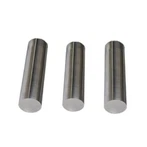
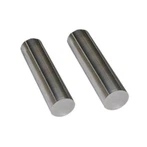
- Bars / Rounds: Includes round bars (typical diameter range from 10 mm to 300 mm), turned rounds, forged rounds, rolled rounds, etc.
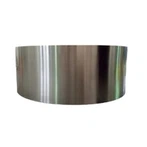
- Plates / Sheets: Thickness ranges from a few millimeters to several hundred millimeters (e.g., 6 mm to 300 mm), including rolled plates, forged plates, and strips.
- Other Forms: Also available as wire, strip, foil, and tubing.
These products are typically delivered in the solution‑annealed condition.
Advantages of Haynes Alloy 214
- One of the key advantages of Haynes Alloy 214 is its outstanding ability to withstand high temperatures and highly corrosive environments, including those found in critical applications such as aerospace and chemical processing. This exceptional alloy offers excellent resistance to oxidation, carburization, and sulfidation, ensuring its integrity even under the harshest conditions.
- In addition, Haynes Alloy 214 provides good formability and weldability, making the manufacturing process easier through straightforward shaping and fabrication of parts. This in turn helps manufacturers reduce costs and improve efficiency.
- Furthermore, the alloy combines high strength, excellent thermal stability, and superior creep resistance, making it an attractive choice for high‑stress applications. It maintains structural integrity even after long‑term exposure to extreme conditions, making it a reliable option for demanding environments.
- In summary, Haynes Alloy 214 not only delivers the necessary strength and durability for critical applications, but also offers excellent corrosion resistance, ease of fabrication, and outstanding performance under high‑stress conditions.
Test Equipment

Applications of Haynes Alloy 214
Haynes Alloy 214 is a highly versatile material with a wide range of applications across various industries. In the aerospace sector, the alloy is used in critical gas turbine components such as afterburners and nozzle diaphragms. Its excellent resistance to high‑temperature oxidation and corrosion makes it ideal for such demanding applications.
- In the chemical processing industry, Haynes Alloy 214 is highly sought after for the manufacture of reaction vessels and piping. This is primarily due to its outstanding resistance to corrosion caused by strong acids and alkalis. Its durability and reliability make it a preferred material for handling corrosive substances in chemical plants.
- In the heat treatment industry, the alloy's uses extend to furnace muffle retorts, radiant tubes, and thermocouple sheaths. Its ability to withstand high temperatures while maintaining structural integrity makes it a dependable choice for these critical applications.
- Overall, the outstanding performance and broad range of applications make Haynes Alloy 214 a preferred material for industries such as aerospace, chemical processing, power generation, and heat treatment.

FAQ
Q1: What is Haynes 214 alloy?
Haynes 214 alloy is a nickel‑chromium‑aluminum‑iron (Ni‑Cr‑Al‑Fe) wrought austenitic material developed to provide the optimum high‑temperature oxidation resistance available in a wrought alloy, while still allowing conventional forming and joining processes.
Q2: What are the main alloying elements in Haynes 214?
The nominal composition is: Nickel (Ni) as balance (minimum ~75%), Chromium (Cr) ~16%, Aluminum (Al) ~4.5%, and a small addition of Yttrium (Y) ~0.01%. The aluminum enables formation of a protective Al₂O₃ oxide scale, while yttrium improves adhesion of this scale.
Q3: What is the principal advantage of this alloy?
Its outstanding oxidation resistance at high temperatures. At 1750°F (955°C) and above, it forms a tightly adherent Al₂O₃‑type protective scale that is far more resistant than conventional chromium‑oxide‑forming alloys. It can be used continuously in air or combustion gases up to about 2300°F (1260°C), and for short‑term exposures even up to 2400°F (1315°C).
Q4: How does it perform at temperatures below 1750°F (955°C)?
Below 1750°F, it develops a mixed oxide scale of chromium and aluminum oxides. This mixed scale is somewhat less protective but still provides oxidation resistance comparable to the best nickel‑base alloys.
Q5: Does it also resist other forms of high‑temperature attack?
Yes. The Al₂O₃‑type scale also provides excellent resistance to carburization, nitriding, and corrosion in chlorine‑bearing oxidizing environments.
Q6: What is the gamma prime (γ') phase in this alloy?
γ' is the intermetallic compound Ni₃Al. It forms rapidly between about 1000°F (540°C) and 1750°F (950°C) and provides significant strengthening. However, it also reduces ductility in the intermediate temperature range (~1300–1400°F / 700–760°C) and can make the alloy susceptible to strain‑age cracking if highly restrained components are slowly heated through that range.
Q7: What is the standard heat treatment for Haynes 214?
The alloy is normally supplied in the solution heat‑treated condition. The typical solution annealing temperature is about 2000°F (1095°C), followed by rapid cooling (water quenching or air cooling) to prevent precipitation of gamma prime and carbides.
Q8: Can the alloy be cold worked?
Yes. Its room‑temperature tensile ductility is high enough for cold forming. However, due to its work‑hardening tendency, parts that are heavily cold worked should be annealed and rapidly cooled to restore the best balance of properties.
Q9: Can it be used in automotive or chemical processing industries?
Yes. Industries supplied include aerospace, automotive (especially exhaust systems and high‑temperature seals), industrial heating, medical waste disposal, and land‑based gas turbines. It also serves in high‑temperature fixtures and reactor linings for chemical processing.
Q10: In what forms is Haynes 214 available?
Haynes 214 is available as: sheet, strip, plate, foil, wire, bar, seamless tube, and hot‑worked shapes. It is typically delivered in the solution‑annealed condition.
Hot Tags: haynes alloy 214, China haynes alloy 214 manufacturers, alloy steel retail, alloy steel for impact environments, premium alloy steel, alloy steel for functionality, alloy steel in electrical engineering, alloy steel for quality enhancement
You Might Also Like