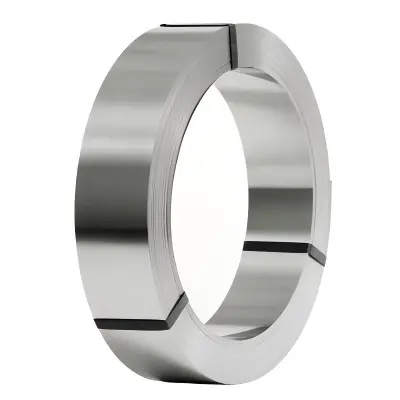
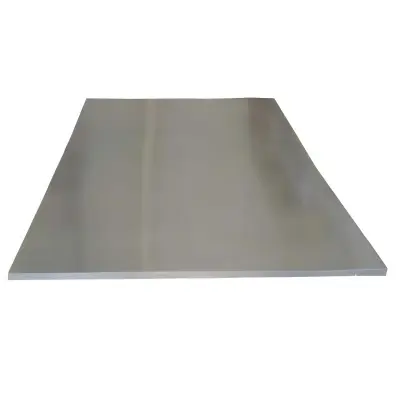
If you need a controlled-expansion alloy whose thermal expansion matches borosilicate glass and alumina ceramic for a hermetic glass-to-metal seal, 4J29 Kovar is the answer. We supply it in strip, sheet, bar, and wire - custom sizes, factory direct, fast delivery from China.
The one-line rule: glass-to-metal or ceramic-to-metal hermetic seal → 4J29 Kovar. Low-expansion structural stability without sealing → 4J36 Invar.
Already written about Kovar before? This page focuses on 4J29 as a sealing alloy - not Invar, not Alloy 42. If your search is about hermetic sealing, this is the right page.
As a factory supplier, we provide custom sizes in strip, sheet, bar, and wire forms with full traceability and fast delivery from China.
Common Types of Kovar alloys
| Grade | Components | Coefficient Of thermal Expansion (×10-°℃) |
Core Features |
| 4J29 | Fe-Ni- Co | 4.5~5.5(20~400℃) | Compared to hard glass/ Ceramic perfect match, Excellent airtightness |
| 4J33 | Fe-Ni- Co | 5.8~6.5(20~450℃) | The expansion coefficient is slightly higher in the medium temperature range, Suitable for special glass |
| 4J36 | Fe-Ni | 1.5~2.5(-60~80℃) | Ultra-low expansion, Outstanding low-temperature stability |
| 4J50 | Fe-Ni | 9.0~10.0(20~300℃) | High expansion characteristics, Used for compensating devices |
4J29 Kovar Alloy Specifications
| Test Item | Typical Reference Value | Remarks |
|---|---|---|
| Standard | ASTM F15 / UNS K94610 / GB/T 14986 | International standard compliant |
| Composition | Ni 28.5–29.5%, Co 16.8–17.8%, Fe Balance | Strict control of impurities (C, Mn, Si, Al) |
| CTE (20–400°C) | 4.6 – 5.2 × 10⁻⁶/°C | Matches hard borosilicate glass |
| Curie Temperature | ~ 435 °C | Do not exceed during sealing/annealing |
| Density | 8.36 g/cm³ | |
| Tensile Strength | ≥ 515 MPa | (Soft/Annealed state) |
| Hardness | ≤ 85 HRB | Excellent for machining and stamping |
| Forms Available | Wire, Rod, Strip, Tube | Custom dimensions available |
👉 Explore 4J29 Kovar Specifications & Request a Sample
Available Forms & Sizes
| Form | Range |
|---|---|
| Strip | 0.05–3.0 mm thickness |
| Sheet / Plate | 0.3–20 mm thickness |
| Bar | 3–150 mm diameter |
| Wire | 0.10–5.0 mm diameter |
| Condition | Annealed / 1/8 Hard / Cold Drawn |
| Surface | Bright annealed, pickled, or polished |
Want to learn more about how 4J29 Kovar complies with UNS K94610 / ASTM F15 requirements for chip housing and semiconductor sealing design?Check our article on 4J29 Kovar Alloy semiconductor hermetic packaging applications
Why Choose 4J29?
Unlike standard metals, 4J29 is a "controlled expansion alloy." It doesn't just have a low expansion rate; its expansion rate exactly matches that of hard glass (like Pyrex or borosilicate).
Key Technical Advantages:
- Perfect CTE Match: A coefficient of thermal expansion (CTE) of about 4.6–5.2 × 10⁻⁶/°C in the 20–400°C range ensures the metal and glass compress and expand in unison without stress.
- The Oxide Layer Advantage: Kovar is designed to form a dense, tightly adherent oxide layer (Fe3O4/FeO) during a specific "pre-oxidation" firing process. This oxide layer chemically bonds with the glass, creating a vacuum-tight seal.
- Curie Point Control: Below its Curie temperature (~435°C), Kovar is ferromagnetic. Above this, the expansion rate changes. Our strict annealing processes ensure your sealing cycles stay below this critical threshold.
- Excellent Machinability: Can be easily machined, stamped, drawn, and etched for complex pin, shell, and eyelet designs.
Application of Kovar Alloy 4J29 Precision Sealing Alloy
4J29 Kovar precision sealing alloy is widely applied for hermetic sealing components:
- Electronic tube: anode, cathode, lead‑in pins
- Transistor & IC packaging: housing, base, lead frame
- Vacuum devices: vacuum switch tube, vacuum relay, vacuum capacitor
- Sensors: pressure, temperature and acceleration sensor encapsulation parts
For deeper insights into real‑world deployment scenarios, design considerations and specification comparison, read our full article:4J29 Kovar Alloy (UNS K94610 ASTM F15) Applications in Semiconductor Hermetic Packaging
Delivery & Commercial Terms
| Item | Details |
|---|---|
| Available Forms | Precision strip coil, sheet, flat bar, round bar, wire |
| MOQ | Stock items: 50 kg; Custom rolling / slitting: 200 kg; test samples available |
| Tolerance | Follow ASTM F15; custom tolerance acceptable per customer drawings |
| Lead Time | Stock materials:7–12 working days; Custom production:25–40 working days |
| Trade Terms | EXW, FOB Shanghai / FOB Qingdao or China (other ports negotiable), CIF, CFR |
| Payment Terms | 30% T/T deposit + 70% balance before shipment; L/C at sight also accepted |
| Certificates | MTC material test certificate; PMI third-party inspection upon request |
| Shipping | Sea freight for bulk orders; air freight for small urgent samples |
Comparison: Kovar 4J29 vs. Alternative Alloys
When designing a hermetic package, buyers often evaluate other materials. Here is why 4J29 remains the king of glass sealing:
| Feature | Kovar Alloy 4J29 (This Product) | Invar 4J36 | Oxygen-Free Copper (OFC) |
|---|---|---|---|
| Primary Advantage | Matches hard glass & ceramic CTE perfectly | Ultra-low thermal expansion (near zero) | Highest electrical & thermal conductivity |
| CTE (20-400°C) | ~ 4.6 – 5.2 × 10⁻⁶/°C | ~ 1.2 × 10⁻⁶/°C | ~ 17.0 × 10⁻⁶/°C |
| Glass Sealing | Excellent (Forms optimal oxide layer) | Poor (Often used for optical instruments, not GTMS) | Not suitable (Expands too much, cracks glass) |
| Strength | Good | Moderate | Soft / Highly ductile |
| Best Application | Microwave tubes, transistor outlines, sensor feedthroughs | Precision measurement, laser cavities | High-power electrical conductors |
👉 Send your specification for a quotation
About Us
As a specialized domestic manufacturer focused on high‑reliability precision sealing alloys, HSMetal owns the full in‑house production chain covering vacuum induction melting, precision cold rolling, controlled stress‑relief annealing and custom cut‑to‑size processing for 4J29 Kovar alloy. We strictly execute GB/T 15005 and YB/T 5237 specifications, exercising tight control over Ni‑Co elemental tolerance within ±0.02% and keeping oxygen content below 30 ppm to minimise non‑metallic inclusions that cause sealing failure.
Every production batch undergoes mandatory testing on chemical composition, mechanical performance and thermal expansion coefficient, with complete mill test certificates provided for each shipment to guarantee lot‑to‑lot material consistency. More than just supplying standard and custom‑dimension strip, sheet, bar and wire for R&D prototypes and large‑volume serial production, our professional material engineering team delivers application‑driven technical support, including material selection advice, heat‑treatment suggestions, glass‑to‑metal sealing know‑how and welding parameter guidance.
We help global customers effectively tackle common production pain‑points such as CTE deviation, glass‑ceramic cracking and vacuum hermetic leakage, serving electronic packaging, vacuum device and sensor manufacturers worldwide as your dependable one‑stop partner for controlled‑expansion sealing alloy solutions.
Our Factory

Vacuum Melting Furnace

Metal Strip Continuous Annealing Production Line

Alloy Welding Wire Drawing Production Line for High Performance Alloy

Seamless Pipe Production Line

Automatic Cold Drawing Line For Expansion Alloy Bars

Solution Annealing Furnace
Secure Your Hermetic Seals with Reliable Kovar 4J29?
Don't let thermal expansion mismatches cause leaks and device failures. HS Metal supplies premium 4J29 Kovar alloy in the exact form, dimension, and temper you need to guarantee a perfect seal.
Send us your drawing or specification today:
- Form required (Wire, Rod, Strip, Tube)
- Dimensions (Diameter, Thickness, Width)
- Glass/Ceramic matching target (e.g., Corning 7056)
Our technical team will review your design and provide a tailored recommendation, sample availability, and a fast quotation.
👉 Contact HSMetal for a Technical Consultation
Explore our precision alloy products → 4J29 Kovar Strip | 4J29 Kovar Bar | 4J29 Kovar Wire | 4J36 Invar Sheet
FAQ
Q1: What is 4J29 Kovar alloy used for?
A: 4J29 Kovar alloy is used for electronic tubes, transistors, integrated circuits, vacuum devices, and sensors. It is chosen when you need a hermetic glass-to-metal or ceramic-to-metal seal with expansion matching to hard glass (DM-305, DM-308) or 95% alumina ceramic.
Q2: What forms of 4J29 Kovar can HSMetal supply?
A: Strip (0.1‑3.0 mm), sheet/plate, bar/rod, wire. Custom cut‑to‑size is available for samples and bulk orders.
Q3: Why thermal‑expansion coefficient varies among different Kovar suppliers?
A: It mainly comes from inaccurate Ni‑Co ratio, residual rolling stress without proper annealing, high impurity content. HSMetal strictly controls composition tolerance and mandatory annealing + CTE test for every batch.
Q4: What is the thermal expansion coefficient of 4J29?
A: The coefficient of thermal expansion is α ≈ 5.0–5.5 × 10⁻⁶/°C across −60°C to +450°C. At 20–100°C, it is 4.6–5.2 × 10⁻⁶/°C. This matches DM-305 and DM-308 hard glass and 95% alumina ceramic.
Q3: What is the leak rate of 4J29 after sealing?
A: After proper heat treatment, 4J29 achieves a leak rate of ≤1 × 10⁻⁹ Pa·m³/s - suitable for electronic tubes, vacuum devices, and other high-reliability applications.
Q6: How do I verify that the 4J29 material is genuine?
A: Request a spectrochemical analysis report and material certificate for each batch. 4J29 chemistry must meet the standard: Ni 28.5–29.5%, Co 16.5–17.5%, C ≤0.04%, P ≤0.020%, S ≤0.020%. For high-risk applications, arrange third-party thermal expansion verification. A material certificate alone is not enough - it proves chemistry only, not grain size, inclusions, or processing history, which directly affect sealing performance.
Q7: Can the thermal expansion coefficient be adjusted?
A: It can be fine-tuned, but within strict limits. Adjusting the Ni/Co ratio during melting can slightly shift the α value, but deviating from the standard 4J29 formulation requires proprietary know-how and is usually only possible with a manufacturer that has R&D capability. Any deviation from the standard composition directly affects matching with DM-305/DM-308 glass and 95% alumina ceramic, so stay within the standard range.
Q8: What is the difference between 4J29 and 4J36?
A: 4J29 is a Fe-Ni-Co controlled-expansion sealing alloy designed for glass-to-metal and ceramic-to-metal seals. 4J36 (Invar) is a Fe-Ni low-expansion alloy designed for near-zero thermal expansion and dimensional stability. 4J29 is for sealing; 4J36 is for dimensional stability. They are not interchangeable.
Q9: What is Kovar 4J29 alloy?
A: Kovar 4J29 (also known as UNS K94610 or ASTM F15) is a nickel-cobalt ferrous alloy specifically designed to have a thermal expansion coefficient that perfectly matches hard borosilicate glass and alumina ceramics. It is the gold standard for glass-to-metal hermetic seals.
Q10: Why does 4J29 crack during machining?
A: 4J29 work-hardens quickly, causing fast tool wear. The root cause of cracking in deep drawing, bending, or heavy forming is usually uneven grain size or micro-cracks in the material. Recommendations: request a grain size report (Grade 5–8 is best for cold working), confirm the material has been vacuum-annealed to relieve internal stress, and choose ultra-fine grain material for complex shapes.
Q11: What causes leak rate failure after sealing?
A: Leaks usually trace to three root causes: (1) Improper oxide layer control - too thin gives weak sealing strength, too thick causes bubbles or cracks; recommended thickness is 0.2–0.5 μm. (2) Internal material defects - inclusions, porosity in powder-metallurgy material, or rolling residue can form through-channels at the sealing interface. (3) Mismatched heat treatment - cooling too fast leaves residual stress and causes delayed leaks.
Q12: Why do different suppliers'4J29 materials perform differently?
A: Even with identical chemistry, processing history is the deciding factor. Two suppliers can both hold an ASTM F15 certificate while their material differs completely in carbon content, grain morphology, hardness distribution, inclusion type, and martensite content. These differences only appear during sealing, annealing, or brazing. Do not buy on the certificate alone - ask for processing history records and microstructural requirements (e.g., fully annealed, equiaxed grain).
Q13: What should I watch for in packaging and shipping?
A: Standard packaging includes vacuum-sealed anti-rust bags, plastic end caps for bar, and spooled wire. For material that must retain a pre-oxidized surface, specify no pickling or excessive cleaning, and avoid surface scratches during transport.
Q14: What is the difference from 4J42? Can it be substituted?
A: No simple substitution. 4J42 contains no cobalt, costs about 15–20% less, and has a thermal expansion coefficient of about 5.3×10⁻⁶/°C - suitable only where expansion matching is not extremely critical. 4J42 also has lower magnetic performance and oxidation resistance, and slightly poorer high-temperature stability. If your seal requires zero-stress matching with DM-305 glass or 95% alumina ceramic, you must use 4J29.
Q15: How do I judge whether a supplier is professional?
A: A professional supplier should provide: per-batch spectrochemical reports, grain size reports, measured expansion coefficient data, and processing history records. If a supplier can only offer a photocopied material certificate and cannot answer questions about grain size, annealing process, or inclusion control, the risk is high. Ask about pre-oxidation process parameters or request sealing test data as verification.
Hot Tags: Kovar Alloy 4J29, 4J29 precision sealing alloy, UNS K94610, ASTM F15 Kovar, glass-to-metal sealing alloy, FeNi29Co17, Kovar strip and wire, controlled expansion alloy