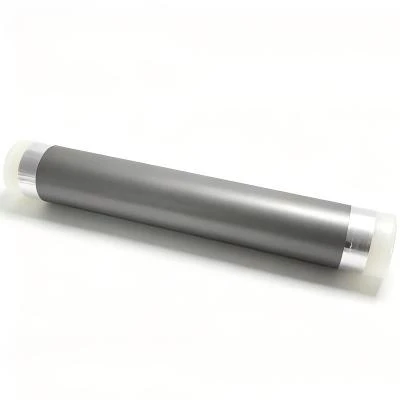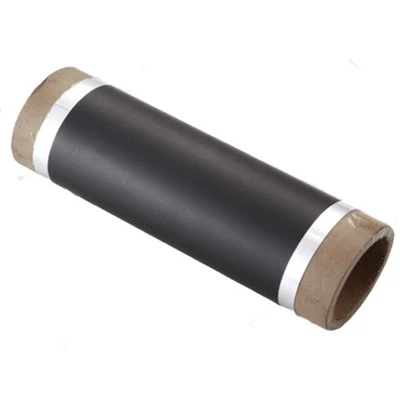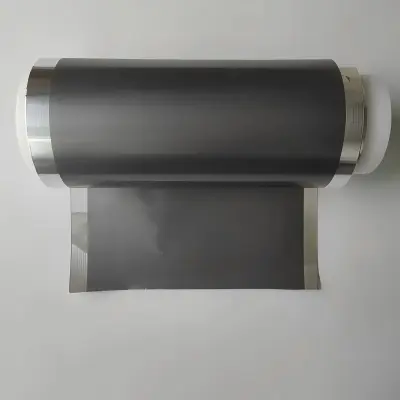
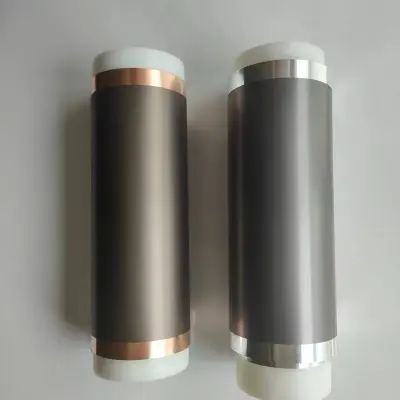
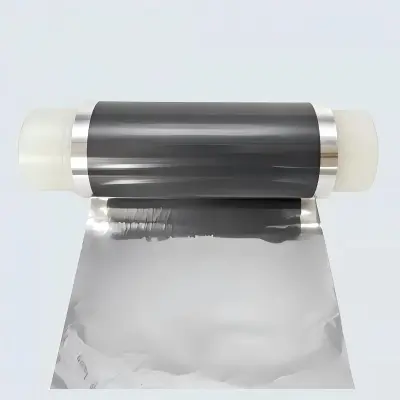
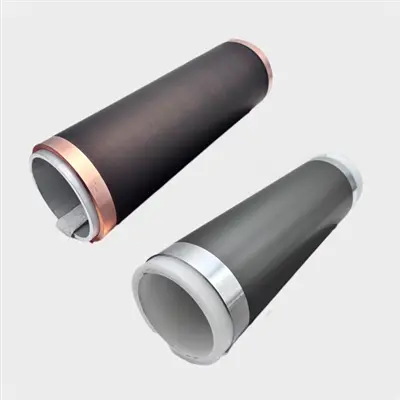
Our Carbon Coated Aluminum Foil for Sodium-Ion Batteries is a high-performance conductive current collector designed for battery cathode applications. It consists of a battery-grade aluminum foil substrate coated with a uniform conductive carbon layer to improve electrode-to-current-collector contact and support stable electrode manufacturing.
By combining the conductivity of the aluminum substrate with the surface properties of a conductive carbon coating, this material provides a practical solution for battery manufacturers seeking reliable electrode adhesion, consistent coating quality, and optimized interfacial contact.
Our carbon coated aluminum foil is suitable for sodium-ion battery cathodes and can also be customized for various lithium-ion battery chemistries, including LFP, NMC, LCO, and LMO systems.We offer customized aluminum foil thicknesses, carbon coating formulations, coating weights, single-sided or double-sided coatings, and roll dimensions to meet different electrode designs and manufacturing requirements.
Looking for a reliable carbon coated aluminum foil manufacturer? Contact us for technical specifications, customized samples, and competitive quotations.
Product Specifications
| Property | Value / Range | Engineering Note |
|---|---|---|
| Substrate Thickness | 6 μm / 8 μm / 10 μm/12 μm/15 μm | 8 μm - 12 μm is the industry standard for Na-ion cathodes. |
| Carbon Coating Thickness | 1.0 – 2.0 μm (Total double-side) | Do not exceed 4.0 μm. Thicker layers increase impedance. |
| Areal Density | 1.2 – 2.4 g/m² (Double-side) | Power batteries usually adopt 1.5–2.0 g/m². |
| Substrate Purity | ≥ 99.9% | High-purity electronic-grade aluminum. |
| Surface Roughness (Base) | Ra 0.2 – 0.6 μm | Optimized for slurry wetting and preventing separator piercing. |
| Surface Resistance | < 30 Ω / 25 μm² | Standard conductive test. |
| Coating Weight Penalty | +5.6% ~ 11% (Foil weight) | Translates to only +0.5% ~ 1.3% total cell weight. |
👉 Request a Free Comparison Sample (Carbon-Coated vs. High-Dyne)
Carbon Coated Aluminum Foil: Product Classification
| Product Type | Key Features | Typical Applications |
|---|---|---|
| Single-Sided | Carbon layer on one side only; flexible electrode design; custom coating weight | Selected sodium-ion cathodes, Li-ion cathodes, specialty electrodes, lab/pilot development |
| Double-Sided | Carbon on both surfaces; consistent properties for double-sided coating; roll-to-roll production | Sodium-ion cathodes, LFP/NMC/LCO cathodes, high-throughput manufacturing |
Thin Carbon Coated Aluminum Foil |
Lightweight substrate; optimized coating weight; high energy density | Lightweight Li-ion electrodes, sodium-ion development, high-energy-density research |
| High-Loading | Adjustable carbon loading; custom formulation; application-specific surface properties | High-loading cathode formulations, specialty energy storage, pilot-scale production |
One note: The optimum coating loading should be determined by adhesion, resistance, uniformity, and electrochemical testing-not by simply increasing coating thickness.
Why Choose Our Carbon Coated Aluminum Foil?
- Uniform Conductive Carbon Coating: We focus on coating uniformity and consistent surface quality to help battery manufacturers achieve stable electrode processing.
- Customized Coating Formulations: Different battery chemistries require different interface properties. We can adjust the conductive coating formulation according to the customer's electrode materials and production requirements.
- Flexible Thickness and Coating Weight: From thin aluminum substrates to customized carbon coating weights, we offer flexible product configurations for laboratory testing, pilot production, and commercial manufacturing.
- Single-Sided and Double-Sided Coating Options: Customers can choose between single-sided and double-sided carbon coating depending on their electrode structure and manufacturing process.
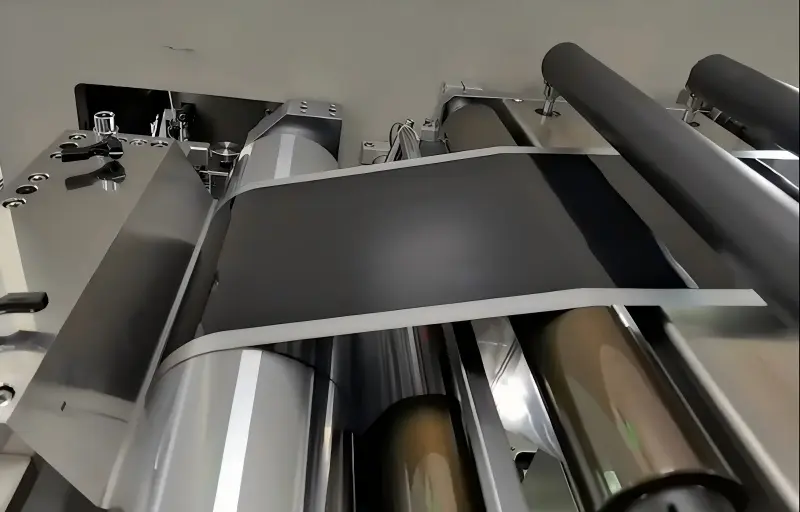
- Stable Roll Quality: We pay attention to coating consistency, edge quality, roll winding, surface defects, and packaging to support downstream slitting and electrode coating processes.
- Technical Support for Material Selection: Our team can help customers evaluate aluminum foil thickness, coating weight, coating structure, and roll dimensions based on their battery chemistry and electrode manufacturing process.
👉 Send Your Cathode Specification for a Quote
Material‑Selection Guidance for Buyers: Coated vs. High-Dyne vs. Copper Foil
| Your Electrode | Choose | Why |
|---|---|---|
| Cathode - cost-sensitive ESS, mature production lines, standard LFP/NMC | Carbon Coated Al Foil | Proven drop-in; carbon layer bridges interface; lower substrate cost, adds coating step |
| Cathode - high-end power cells, fast charging (2C–3C), high calendering pressure | High-Dyne Bare Al Foil | 30–60% lower interfacial impedance; no rigid carbon layer to crack under calendering; ~10–15% lower cost by eliminating the coating step |
| Anode - graphite or silicon | Carbon Coated Cu Foil | Never use aluminum for anodes-Al-Li alloying causes catastrophic failure. Copper is mandatory |
- Cathode (Positive): Choose carbon-coated foil if you need a proven drop-in material for cost-sensitive ESS. Upgrade to high-dyne bare foil if you are pushing fast-charging and zero impedance barriers.
- Anode (Negative): Do not use aluminum. You must use Carbon Coated Copper Foil for Anodes to prevent aluminum-lithium alloying.
👉 Pushing for 2C-3C fast charging? Explore our High-Dyne Bare Foil for Na-Ion Cathodes.
👉 Building the anode side? See our Carbon Coated Copper Foil for Anodes.
Applications of Carbon Coated Aluminum Foil
Carbon coated aluminum foil is used wherever conductive surface modification improves electrode manufacturing or interfacial contact. The coating formulation and loading are matched to your active material, binder, and electrolyte.
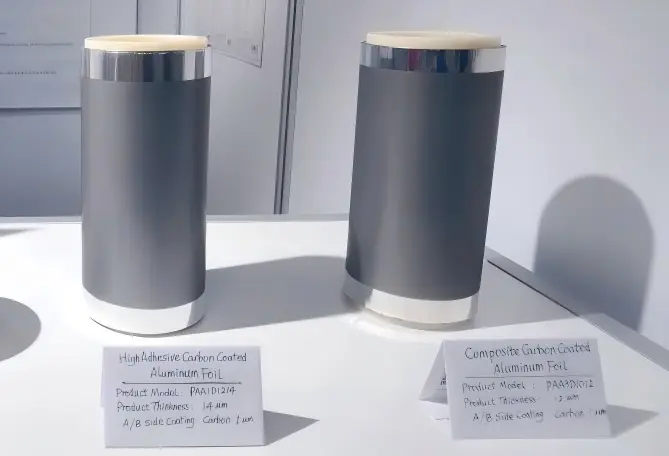
Sodium-Ion Batteries: Sodium-ion designs can use aluminum current collectors for both cathode and anode-unlike lithium-ion, which needs copper on the anode side. Our coated aluminum foil is customized for sodium-ion cathodes including Prussian Blue/White analogues, layered transition metal oxides, and polyanionic compounds.
LFP Lithium-Ion Batteries: Improves current collector-to-electrode contact when the interface is properly optimized. Used in LFP energy storage, EV cells, industrial Li-ion, and stationary storage.
NMC Lithium-Ion Batteries: For customized NMC electrode designs requiring improved interface contact and adhesion. Used in EV batteries, high-performance Li-ion, and power battery systems.
LCO and LMO Batteries: Customized for lithium cobalt oxide and lithium manganese oxide cathodes. Coating formulation depends on active material, electrode density, binder, and cell process.
Supercapacitors & Specialty Energy Storage: For selected supercapacitor electrodes and specialty devices. Coating porosity, conductivity, electrolyte compatibility, and adhesion must be evaluated against the specific device design.
| Term | Details |
|---|---|
| MOQ | 50 kg |
| Sample Lead Time | 5–7 days for standard 8μm + 2.0μm configurations |
| Production Lead Time | 10–15 working days depending on width and volume |
| Packaging | Vacuum-sealed with desiccant; export wooden cases |
| Documentation | MTC, COA with coating thickness/resistance data, RoHS/REACH |
| Payment Terms | T/T 30% deposit, 70% before shipment |
Request a Quote for Carbon Coated Aluminum Foil
Looking for a reliable supplier of carbon coated aluminum foil for sodium-ion or lithium-ion battery manufacturing? We provide customized conductive carbon coated aluminum foil for battery cathode current collectors, including different aluminum thicknesses, coating weights, coating structures, and roll dimensions.
Whether you are developing a new sodium-ion battery, optimizing an LFP cathode, or sourcing materials for commercial electrode production, we can help you identify a suitable specification.
👉 Request a Sodium-Ion Cathode Foil Comparison Sample
👉 Pair with Carbon Coated Copper Foil for Anodes
📩 Contact HSMetal for Na-Ion Collector Selection Support
Sodium‑ion batteries adopt a unique dual‑aluminum current‑collector architecture different from lithium‑ion systems. To understand the fundamental electrochemistry behind why aluminum foil can replace copper foil within SIB devices, read our technical article: Why Can Sodium‑Ion Batteries Use Aluminum Foil as the Anode Current Collector While Lithium‑Ion Batteries Cannot?.
FAQ
Q1: What is carbon coated aluminum foil used for in sodium-ion batteries?
A: Carbon coated aluminum foil is used as a cathode current collector. The conductive carbon layer modifies the aluminum surface and can improve electrode-to-current-collector contact and coating adhesion, depending on the electrode formulation.
Q2: Is carbon coated aluminum foil suitable for both sodium-ion and lithium-ion batteries?
A: Yes. It can be used in sodium-ion battery cathodes and various lithium-ion battery cathodes, including LFP, NMC, LCO, and LMO systems. The coating formulation should be selected according to the specific battery chemistry.
Q3: What aluminum foil thicknesses are available?
A: Common options include 6 μm, 8 μm,10 μm and 12 μm. Other thicknesses, such as 15 μm, and 20 μm, can be customized according to production capabilities and application requirements.
Q4: Do you offer single-sided and double-sided carbon coated aluminum foil?
A: Yes. Both single-sided and double-sided carbon coating options are available. Coating thickness and loading can be customized for different electrode structures.
Q5: What is the recommended carbon coating thickness?
A: The recommended thickness depends on the battery chemistry and electrode formulation. Selected double-sided products may use a combined coating thickness of approximately 1.0–2.0 μm. The optimum value should be verified through electrode and cell testing.
Q6: Can carbon coated aluminum foil be used for LFP batteries?
A: Yes. It can be used as a cathode current collector in LFP batteries. The coating formulation and loading should be optimized according to the electrode's conductive additives, binder, and processing conditions.
Q7: What is the difference between carbon coated aluminum foil and bare aluminum foil?
A: Bare aluminum foil has no additional carbon coating, while carbon coated aluminum foil has a conductive carbon layer on one or both surfaces. The coated version can offer improved interfacial contact and surface characteristics, while bare aluminum foil provides a simpler and potentially lower-cost current collector option.
Q8: Can you customize the carbon coating formulation?
A: Yes. We can discuss customized conductive coating formulations, coating weight, thickness, and surface properties according to your electrode materials and manufacturing requirements.
Q9: Do you provide samples before bulk orders?
A: Sample availability can be arranged for technical evaluation. Please provide your required aluminum thickness, coating type, coating weight, and intended battery application.
Q10: Why is a thicker carbon coating (>4.0μm) not better for Na-ion cathodes?
A: The binder in the carbon slurry is an insulator. If the coating is too thick, the insulating binder dominates, and the distance between the active material and the aluminum substrate increases. This blocks charge transfer, sharply increasing impedance and polarization, especially during high-rate charging.
Q11: What is the best coating thickness for sodium-ion cathodes?
A: For double-sided coating, a total thickness of 1.0–2.0 μm is optimal. 2.0μm offers the best cycle and low-temperature performance. 1.0μm is the most cost-effective baseline for standard ESS applications.
Q12: What is the difference between Carbon Coated Foil and High-Dyne Bare Foil for cathodes?
A: Carbon-coated foil relies on the carbon layer to "bridge" electrons and lower contact resistance. High-dyne bare foil uses a surface treatment (≥55 mN/m) to "grab" the slurry, relying on the aluminum itself to conduct. High-dyne offers 30-60% lower interfacial impedance and eliminates the risk of carbon layer cracking, making it preferred for high-end power Na-ion. However, carbon-coated foil is more cost-effective and compatible with existing equipment.
Q13: Can I use this carbon-coated aluminum foil for the anode?
A: Yes, in sodium-ion batteries. Because sodium does not alloy with aluminum, carbon-coated aluminum foil can be used for both the cathode and the hard-carbon anode. (However, in lithium-ion batteries, you must use Carbon Coated Copper Foil for the anode).
Q14: Does the carbon layer add significant weight to the battery?
A: Double-sided coating increases the foil weight by about 5.6% to 11%. However, translated to the total cell weight, it only adds 0.5% to 1.3%. The improvement in adhesion and rate capability far outweighs this slight energy density penalty.
Q15: How do I know if I should use carbon-coated or high-dyne foil?
A: If you are producing low-cost ESS or A00-class EVs with cycle life requirements under 500 cycles, use carbon-coated foil. If you are building power batteries with 2C-3C fast charging and high calendering pressures, test the high-dyne bare foil. We can send you both samples for a side-by-side comparison.
Hot Tags: Carbon Coated Aluminum Foil, Sodium-Ion Battery Materials, Battery Current Collector, Na-ion current collector, sodium battery aluminum foil price, high dyne aluminum foil