


FR‑4 epoxy glass‑fabric copper‑clad laminate (CCL) remains the dominant substrate for consumer electronics, automotive ECU, 5G communication hardware and AI‑server multilayer PCBs worldwide. Final electrical performance, hot‑press lamination yield, thermal reliability and signal integrity of finished CCL heavily depend on properly‑specified copper foil, not only resin prepreg.
Under today's competitive procurement landscape, CCL buyers face real‑world pain points: tight supply of high‑grade low‑profile copper foil, volatile raw‑material costs, mixed‑grade counterfeit raw materials, and strict material‑qualification workflows from large‑volume downstream OEMs. Wrong copper‑foil selection triggers expensive mass‑production failures: post‑lamination bubbling & delamination, poor fine‑trace etching, severe high‑frequency conductor loss, copper cracking in lead‑free reflow, and high PCB scrap ratio.
This buyer‑focused deep‑dive guide supports CCL material engineers and procurement teams to pick optimal copper‑foil grades by application frequency, current‑carrying requirement, thermal cycle condition and total‑cost budget. Helps CCL manufacturers and PCB material specifiers choose the correct ED copper foil grade for FR4, high-Tg and high-frequency laminate production.Check our base‑material background resource: C1100 copper foil for PCB & CCL substrates to understand fundamental copper‑material properties for laminate manufacturing.
Current‑Day Market Demands for FR‑4 CCL‑Grade Copper Foil
Global downstream CCL‑copper‑foil demands clearly split into two major streams:
High‑volume general‑purpose segment: Standard FR‑4 for household appliances, IoT terminals and industrial‑control PCBs. Core requirements are stable peel strength, RoHS/REACH compliance and competitive total‑cost‑of‑ownership. HTE‑grade electrodeposited copper foil dominates this segment.
High‑end performance‑driven segment: Driven by AI servers, 5G base stations, millimeter‑wave radar and automotive ADAS hardware. Designers require HVLP ultra‑low‑profile copper foil to mitigate skin‑effect‑caused signal loss under multi‑GHz operating frequency, alongside robust thermal resistance for repeated thermal‑cycle profiles.
Many CCL manufacturers struggle with long lead‑time and high‑MOQ from premium overseas foil vendors. Qualified alternative suppliers delivering full‑range IPC‑4562A‑compliant copper‑foil portfolios are in strong global demand.
Critical buying warning: Lithium‑battery anode copper foil cannot replace dedicated CCL‑PCB‑grade copper foil. Its surface‑roughening and anti‑tarnish treatment cannot deliver stable peel‑strength during FR‑4 hot‑press lamination.
Understanding FR4 CCL Copper Foil Grades: HTE vs RTF vs HVLP
ED copper foil is manufactured via electro‑plating deposition. It achieves high peel‑strength bonding with epoxy resin and balanced cost‑performance, occupying mainstream rigid FR‑4 CCL mass‑production. Not all ED copper foil is interchangeable. The three main grades used in FR4 CCL production serve fundamentally different performance requirements,Key sub‑grades:
HTE (High Temperature Elongation) Copper Foil - Standard FR4 CCL
HTE foil is the workhorse for general FR4 and high-Tg rigid copper-clad laminate. Its defining property is elongation retention at elevated temperatures - critical because CCL lamination exposes the foil to 180-200°C for extended periods, and PCB soldering adds another thermal cycle.
Mainstream general‑purpose grade. Retains good elongation at 180 °C, resists copper cracking during lead‑free soldering and multi‑layer‑board thermal cycling. Fits standard‑Tg / high‑Tg FR‑4 for consumer electronics, power‑supply PCBs and low‑speed automotive control boards.
When to choose HTE: Consumer electronics PCB, industrial control boards, standard FR4 multilayer inner/outer layers. HTE delivers the best balance of peel strength (typically ≥1.4–1.8 kg/cm for 18–35 µm) and cost.
RTF (Reverse Treated Foil) - Medium-High Speed CCL
RTF foil has a treated matte side and a controlled-roughness shiny side. The smooth side faces the signal path after lamination, reducing conductor loss for mid-speed digital applications (10–25 Gbps). RTF is the cost-effective middle ground between standard HTE and premium HVLP.
Rough bonding surface faces resin prepreg, while smooth shiny side serves as etching outer‑layer surface. It improves fine‑line etching resolution and lowers inner‑layer delamination risk for mid‑speed multilayer boards, acting as a cost‑efficient transition grade before adopting full HVLP material. Widely used for 5G‑access‑point FR‑4‑based substrates.
When to choose RTF: 5G communication substrates requiring moderate loss reduction, server CCL in the 10–25 Gbps range, multilayer boards where impedance control matters but 56G
HVLP (Hyper Very Low Profile) - High-Speed Low-Loss CCL
HVLP foil is engineered for AI servers, 5G infrastructure and 112G+ PAM4 channels. Surface roughness (Rz) drops to ≤2 µm, sometimes ≤1.5 µm, dramatically reducing skin-effect loss at mmWave frequencies. Indispensable for AI‑server high‑speed links, 5G millimeter‑wave hardware and radar‑module CCL. Must match low‑loss FR‑4 or modified‑epoxy prepreg to unlock full electrical performance.
The trade-off you must manage: Ultra-smooth HVLP foil has weaker mechanical interlocking with prepreg resin, resulting in lower peel strength - typically 3–4 lb/inch versus 5–7 lb/inch for standard HVLP . Lamination pressure profiles and surface treatment processes must be adjusted accordingly.
When to choose HVLP: AI accelerator boards, 56G+ SerDes channels, high-speed backplanes, any application where insertion loss margin is tight.
Choosing the Right Grade for Your CCL Product Line
| Your CCL Product | Recommended Foil Grade | Key Reason |
|---|---|---|
| Standard FR-4 (consumer/industrial) | HTE 18–35 µm | Best peel strength and cost balance |
| High-Tg FR-4 (automotive/industrial) | HTE with verified high-temp elongation | Thermal reliability during assembly |
| 5G mid-speed substrate | RTF 12–18 µm | Moderate loss reduction, cost-effective |
| AI server / 56G+ high-speed | HVLP 12–18 µm | Minimum conductor loss |
| HDI / advanced CCL | Ultra-thin HTE (9–12 µm) | Fine line etching capability |
Critical note: PCB manufacturers do not purchase bare copper foil directly. All copper traces on finished PCB are etched from CCL laminated with electrodeposited copper foil. Your foil selection decision is a laminate product decision - it determines what your CCL customers can build.
Quick Application Selection
| Target CCL Application | Recommended Copper‑Foil Grade | Preferred Thickness | Core Purpose |
|---|---|---|---|
| Cost‑sensitive consumer / IoT FR‑4 | HTE ED copper foil | 1 oz(35 μm) | Stable peel‑strength, mass‑production yield, cost control |
| Mid‑speed multi‑layer inner‑layer CCL | RTF reverse‑treated foil | 0.5 oz‑1 oz | Fine‑line etching, reduce delamination probability |
| 5G / AI‑server high‑speed FR‑4 | HVLP ultra‑low‑profile foil | 0.5 oz‑1 oz | Minimize high‑frequency skin‑effect loss |
| Automotive / high‑multi‑layer power CCL | HTE heavy‑copper foil | 2‑3 oz | Anti‑thermal‑shock performance, large‑current capacity |
| HDI & micro‑circuit substrate | UTF carrier‑supported thin foil | 9‑12 μm | Ultra‑fine trace geometry formation |
How HSMetal Meets Modern CCL Buyers: Capacity & Quality Assurance
From CCL‑factory procurement perspective, copper‑foil supplier evaluation goes far beyond datasheet parameter comparison. Real‑batch‑to‑batch mass‑production consistency, complete‑set audit documentation, overseas‑logistics adaptability and flexible production capacity jointly decide project success. HSMetal (Luoyang Hongsheng Trading Co., Ltd.) addresses core customer pain‑points as below:
1. Full‑range IPC‑4562A‑compliant product portfolio
We supply complete ED‑copper‑foil product lines covering HTE, RTF, HVLP grades with thickness ranging from 9 μm‑105 μm. General‑purpose and high‑performance CCL copper‑foil can be sourced from one single vendor to simplify supplier‑management workload. Review fundamental copper‑material knowledge via C1100 copper foil for PCB & CCL substrates.
2. Production capacity & flexible order handling
‑ Provide original jumbo‑roll supply plus custom slitting service to fit CCL continuous hot‑press‑line width requirements.
‑ Support qualification‑sample‑roll orders (7‑10 working‑day lead‑time) for customer internal lamination‑simulation lab tests; scale‑up to mass‑volume serial supply after sample qualification passes.
‑ Maintain stable stock for mainstream thickness (12 μm,18 μm,35 μm); clearly communicate lead‑time for custom‑special‑thickness orders for customer production planning.
3. QC system built for CCL‑factory incoming‑quality‑audit (build buyer trust)
Every production batch undertakes full‑item pre‑shipment inspection scope:
- Peel‑strength test based on standard FR‑4 prepreg stack‑up;
- Surface‑roughness Rz/Ra measurement for matte and shiny surfaces;
- Full‑width scanning for thickness tolerance, tensile‑strength & high‑temperature elongation testing;
- Visual inspection for pin‑holes, scratches and oxidation discoloration.
We deliver complete Mill‑Test‑Certificate(MTC), dedicated test‑reports plus RoHS & REACH compliance declarations, fully matching incoming‑lab‑audit workflows of global CCL factories. This capability is validated through long‑term cooperation with Thailand local CCL manufacturer. Our copper‑foil passed on‑site hot‑press‑lamination verification without bubbling or delamination, even after long‑distance sea‑freight transportation under humid Southeast‑Asia climate.
4. Export‑grade anti‑oxidation packaging for maritime shipment
For long‑haul ocean transport: moisture‑barrier film wrapping + desiccant + vacuum‑sealed anti‑tarnish foil bag plus reinforced wooden crate. Prevent copper‑foil oxidation and surface scratch during 20‑30‑day sea transit, solving one major raw‑material risk for overseas laminate manufacturers.
5. Engineering‑level technical support for customer material‑qualification cycle
Our technical team supports customers through full copper‑foil qualification process: cross‑check required parameters against end‑application (general‑FR‑4 / high‑speed low‑loss substrate), clarify surface‑treatment matching for different prepreg resin systems, and provide basic troubleshooting guidance for root‑cause analysis of lamination‑related defects.
Why Copper Foil Selection Determines Your CCL Yield and PCB Performance
In FR4 copper-clad laminate production, electrodeposited (ED) copper foil is not a commodity - it is a performance-critical material that directly governs three outcomes you cannot compromise on:
- Lamination yield. Copper foil with inconsistent surface treatment or thickness variation causes bubbling, delamination and pinhole defects during hot-press lamination. Every rejected CCL sheet is lost resin, lost glass fabric and lost production time.
- Electrical performance. As PCB signal speeds move from 10G to 56G and beyond, copper foil surface roughness becomes the dominant factor in conductor loss. At 25 GHz, standard foil can double conductor loss compared to an ideally smooth surface . The skin effect means current flows only in the outermost ~0.66 µm of copper at 10 GHz - surface roughness features larger than this force current into a tortuous path, directly increasing insertion loss .
- End-product reliability. Peel strength that is too low causes trace lifting during PCB assembly. High-temperature elongation (HTE) that is insufficient causes foil cracking during soldering. These failures reach your customer, not you - but the cost of field failures lands on your reputation.
Critical Copper Foil Parameters for FR4 CCL Quality Control
When you evaluate a copper foil supplier for FR4 CCL production, these are the parameters that determine whether your lamination line runs smoothly or struggles with yield:
| Parameter | Why It Matters | Typical Spec (18 µm HTE) |
|---|---|---|
| Peel strength | Low peel strength causes trace lifting; must match your resin system | ≥1.4 kg/cm (≥7.8 lb/in) |
| Surface roughness (Rz) | Higher roughness = better adhesion but higher signal loss | Matte Rz ≤6 µm for HTE |
| Thickness uniformity | Variation causes resin starvation or excess resin flow | Tight tolerance across roll width |
| High-temp elongation | Insufficient HTE causes foil cracking during soldering | ≥2.5% at 180°C |
| Pinholes / leaking points | Any pinhole becomes an electrical short after etching | None accepted |
| Anti-tarnish treatment | Without proper treatment, oxidation during storage/shipping ruins lamination | 200°C/30 min no oxidation |
The parameter most suppliers understate: batch-to-batch consistency. A single jumbo roll that performs perfectly in your lamination trial means nothing if the next shipment has 15% higher surface roughness or slightly different treatment chemistry. CCL production lines run continuously - inconsistent foil stops the line.
Buyer's Checklist: How to Qualify a CCL Copper Foil Supplier You Can Trust
Standing in your position as a CCL manufacturer or PCB material procurement manager, here is the evaluation framework that separates reliable suppliers from risky ones:
1. Technical Capability Verification
Ask for:
IPC-4562A compliance statement with specific foil designation (e.g., IPC-4562/1 CU E 3)
Actual peel strength test data on FR-4 prepreg, not just spec sheet values
Surface roughness measurement methodology and instrument calibration
High-temperature elongation test results at 180°C
Red flag: Supplier cannot provide batch-specific test data, only generic product specifications.
2. Batch Consistency Evidence
Ask for:
Cpk (process capability index) data for thickness and peel strength
Historical batch-to-batch variation range
Change management notification process for treatment chemistry adjustments
Red flag: Supplier claims "consistent quality" without statistical process control data.
3. Supply Chain Reliability
Ask for:
Current production capacity and capacity utilization rate
Lead time commitment with buffer for demand spikes
Alternative logistics routing if primary shipping lane is disrupted
Red flag: Unrealistic lead time promises (e.g., 5 days for custom-spec HVLP) without explanation.
4. Export Packaging and Documentation
Ask for:
Packaging specification with moisture barrier and anti-oxidation measures
Reference from another overseas CCL customer in a similar climate
Complete documentation package (MTC, RoHS, REACH, inspection data)
Red flag: Willing to ship without full documentation package - creates customs delays and incoming QC disputes.
5. Technical Support Responsiveness
Ask for:
Troubleshooting support if lamination defects occur
Sample roll availability for your lab qualification
Willingness to adjust treatment parameters for your specific resin system
Red flag: No technical contact beyond sales, no interest in understanding your lamination process.
Get the Copper Foil Your CCL Line Needs - Without the Qualification Risk
HSMetal supplies IPC-4562A compliant electrodeposited copper foil specifically engineered for FR4 CCL production. Every batch ships with full inspection documentation. Packaging protects surface quality through long-haul ocean freight. Technical support helps you troubleshoot lamination issues before they become line stoppages.
Start with a qualification sample. Tell us your CCL product (FR4 standard, high-Tg, high-speed), required foil grade (HTE/RTF/HVLP), thickness, target roll width and peel strength requirement. We will prepare a sample roll with matching inspection data for your lamination trial.
Request a quotation for bulk supply with your monthly volume, destination port and required delivery schedule. We will confirm lead time and provide a complete documentation package for your incoming quality audit.
Contact HSMetal today - tell us what your CCL line needs, and we will tell you exactly how we meet it.
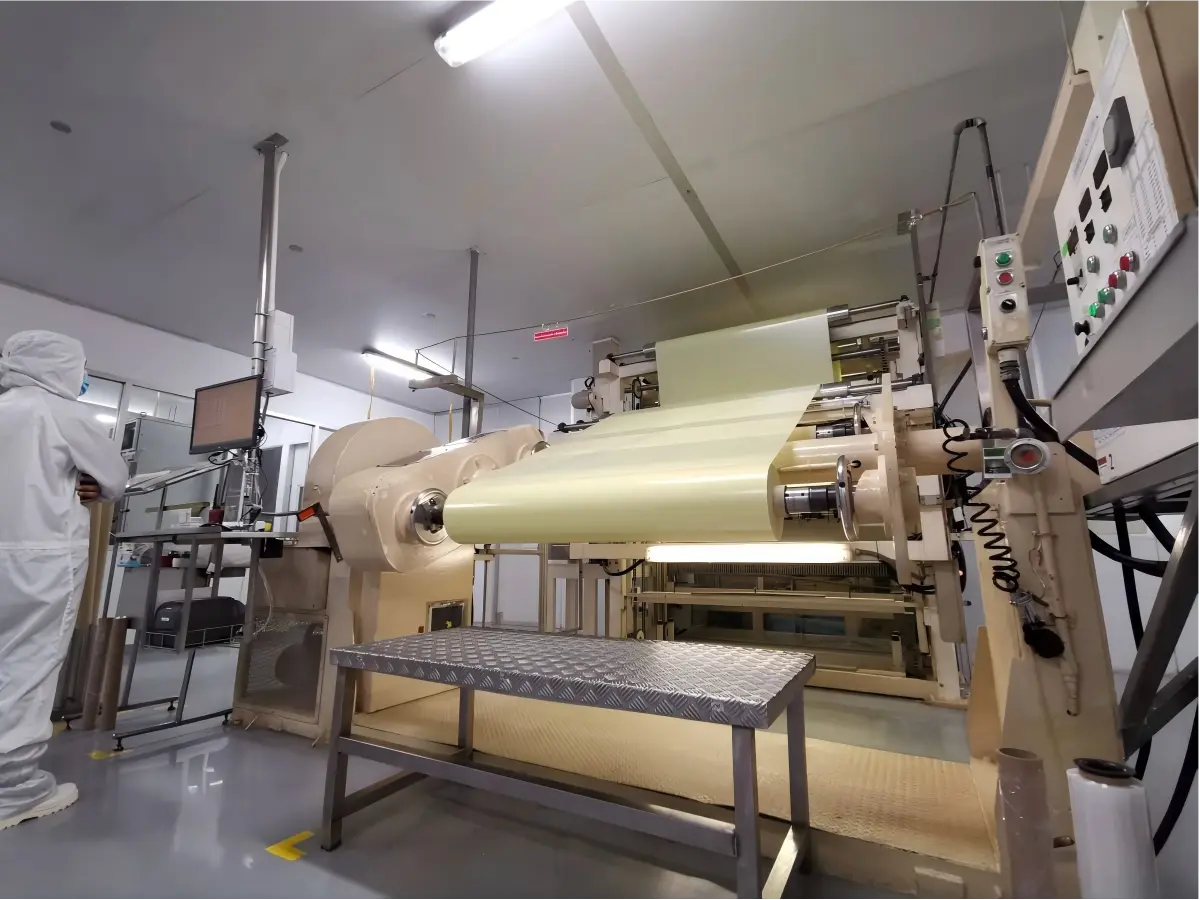
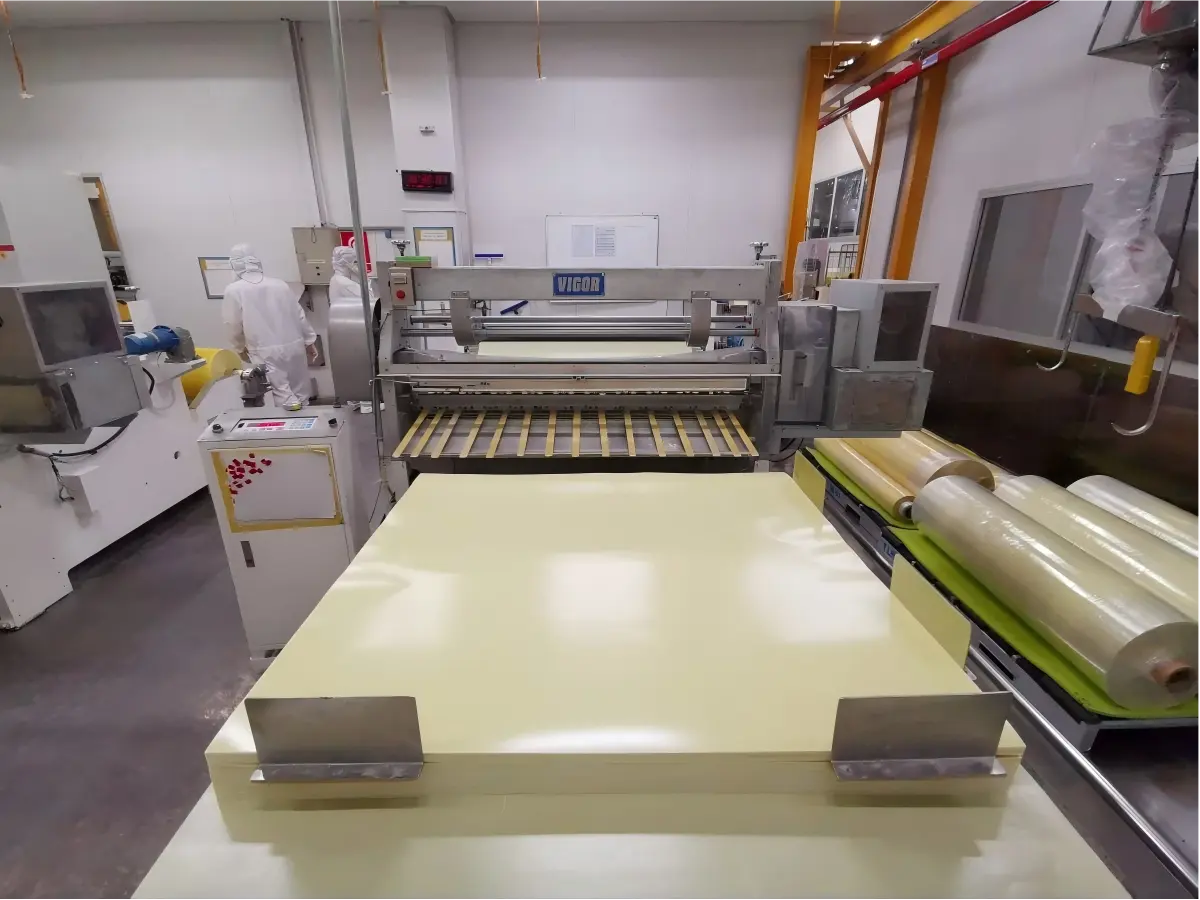
HSMetal Copper Foil Running at Thailand CCL Customer Plant
Our IPC‑4562A compliant electrodeposited copper foil has been fully verified in mass production at a Thailand CCL manufacturer. You can review our official shipment news for this Thailand CCL project to learn about pre‑shipment inspection, export anti‑oxidation packaging and ocean‑freight arrangement for this order.
The entire production workflow, from jumbo‑roll feeding, prepreg stacking, hot‑press lamination, precision cutting to final quality acceptance, runs stably with HSMetal copper foil. Our dedicated vacuum anti‑tarnish packaging protects copper foil during long ocean transportation under Thailand's humid tropical climate, avoiding oxidation and scratches. Controlled surface treatment delivers consistent peel strength between copper foil and FR‑4 prepreg, eliminating common defects like bubbling and delamination. Batch MTC test reports are provided for customer incoming audit. Finished qualified CCL panels are delivered to PCB factories throughout Southeast Asia.


FAQ
Q1: What defects will occur if lithium‑battery‑grade copper foil is used for FR‑4 CCL manufacturing?
A: Lithium‑ion‑battery copper foil adopts different surface‑treatment formulation and cannot maintain stable peel‑strength under FR‑4 high‑temperature lamination process. It will trigger bubbling, delamination and high finished‑CCL reject‑rate, hence cannot replace dedicated circuit‑grade ED copper foil.
Q2: When should I select HVLP instead of RTF copper‑foil for high‑speed FR‑4 CCL production?
A: Select HVLP for operating frequency above 5‑6 GHz, AI‑server 112G+ high‑speed differential‑link and millimeter‑wave radar hardware. RTF delivers cost‑optimized performance for medium‑speed 5G‑access‑point‑level substrates below 3‑4 GHz.
Q3: What inspection documents can HSMetal provide for CCL‑factory incoming audit?
A: Mill‑Test‑Certificate(MTC), peel‑strength test report, surface‑roughness inspection record, thickness‑tolerance scan data, tensile‑elongation test data, alongside RoHS / REACH compliance statement, fully complying with overseas laminate‑factory audit practice.
Q4: What key information needs preparing to submit precise copper‑foil inquiry?
A: Please offer: foil grade(HTE/RTF/HVLP), nominal thickness(μm or oz), target jumbo‑roll width & inner‑diameter, minimum required peel‑strength & roughness, end‑application(general‑FR‑4 / high‑speed substrate), order volume and destination country (for customized packaging suggestion).
Q5: Can lithium-ion battery copper foil be used for CCL production?
A:No. This is one of the most dangerous false economies in material procurement.
Lithium-battery anode copper foil uses a completely different surface treatment formula and roughness design. It cannot satisfy the peel strength, high-temperature lamination or anti-tarnish requirements for copper-clad laminate. Using battery foil for CCL will cause delamination, bubbling and trace lifting - often not detected until after PCB assembly.
Always specify CCL-grade / circuit-grade electrodeposited copper foil with dedicated roughening and anti-tarnish treatment.
Q6:What copper foil grades do you offer for CCL, and how do I choose the right one?
A:We supply IPC-4562A compliant electrodeposited copper foil in HTE, RTF and HVLP grades. HTE is the standard choice for general FR4 and high-Tg rigid laminate, offering the best balance of peel strength and cost. RTF suits medium-high speed substrates in the 10–25 Gbps range where moderate loss reduction is needed. HVLP is designed for AI servers, 5G infrastructure and 56G+ high-speed links, where ultra-low surface roughness minimizes skin-effect loss. If your insertion loss budget is tight, choose HVLP; if yield and cost matter more, stay with HTE.
Q7:What peel strength and thickness should I specify?
A:Typical peel strength requirements on standard FR4 with 7628 prepreg are ≥1.2 kg/cm for 12 µm, ≥1.4 kg/cm for 18 µm and ≥1.8 kg/cm for 35 µm. Common commercial thicknesses include 12 µm (1/3 oz), 18 µm (1/2 oz) and 35 µm (1 oz), with custom thickness available on request. Peel strength must match your specific resin system and lamination curve, so we always recommend a trial run with your actual prepreg before bulk ordering.
Q8:Can lithium-ion battery copper foil be used for CCL?
A:No. Battery anode foil uses a different surface treatment formula and roughness design, and cannot meet the peel strength, high-temperature lamination or anti-tarnish requirements of copper-clad laminate. Using battery foil will cause delamination, bubbling and trace lifting. Always specify CCL-grade circuit copper foil with dedicated roughening and anti-tarnish treatment.
Q9:What documents and quality control do you provide?
A:Every batch ships with a Mill Test Certificate, peel strength test report, surface roughness inspection record, thickness tolerance data, tensile-elongation test data and RoHS & REACH compliance declaration. Each jumbo roll undergoes full pre-shipment inspection covering pinholes, scratches, oxidation, thickness scan, peel strength and roughness. Only rolls passing all items are released for packing. This documentation package follows overseas laminate factory audit practice and has been verified in our Thailand CCL manufacturer project.
Q10:How do you ensure batch consistency and handle export packaging?
A:Our automated continuous production lines use real-time electrolyte additive monitoring and statistical process control on thickness, peel strength and roughness, keeping batch-to-batch variation within a defined range your lamination line can accommodate. For ocean freight, we use moisture-barrier film, desiccant, vacuum-sealed foil bags and reinforced wooden crates, a packaging system validated through 20–30 days of maritime transit to Southeast Asia with no surface oxidation or scratch issues.
Q11:What is your MOQ, lead time and sample policy?
A:MOQ depends on product type, thickness and specification, and we support both prototype quantities and large-volume contracts. If master jumbo rolls are in stock, slitting takes 3–7 working days; new-production custom-spec batches take 20–28 working days. Qualification sample rolls are available with a 7–10 working day lead time, supplied together with matching inspection data for your lamination simulation test.
Q12:What should I include in my inquiry?
A:Please provide the foil grade (HTE/RTF/HVLP), nominal thickness, required jumbo-roll width and inner diameter, target peel strength and roughness, application type (standard FR4, high-Tg or high-speed substrate), order volume and destination port. The more specific your inquiry, the faster we can confirm feasibility, lead time and price. Contact our technical sales team and we will give you a straight answer, including whether our foil is the right fit for your application.


