


What allows an aircraft engine component to withstand intense heat, enormous centrifugal forces, and repeated mechanical stress without losing its structural integrity?
The answer is not simply a high melting point. It is the ability to maintain strength, resist fatigue, and preserve structural stability under demanding operating conditions.
Inconel 718, a precipitation-hardenable nickel-based superalloy, is widely used in aerospace and other high-performance industries because it combines elevated-temperature strength, fatigue resistance, corrosion resistance, and good fabricability.
But is Inconel 718 always the best choice for high-temperature service? Not necessarily. Its suitability depends on operating temperature, exposure time, mechanical loading, environmental conditions, and the required service life.
In this guide, we explore how Inconel 718 performs at elevated temperatures, why its metallurgical design matters, and how to determine whether it is the right material for your application.
Need Inconel 718 for a demanding application? Explore our [Inconel 718 alloy products] or contact HSMetal with your required dimensions, material specifications, and operating conditions.
Is Inconel 718 the Material of Choice for High-Temperature Applications?
Inconel 718 is one of the leading material choices for high-temperature applications that require a combination of mechanical strength, fatigue resistance, and environmental durability.
It is particularly valuable in components exposed to elevated temperatures and substantial mechanical loads, such as aircraft engine discs, rings, shafts, and high-strength fasteners.
However, selecting a high-temperature alloy requires more than comparing maximum temperature ratings. A material that performs exceptionally well under one set of conditions may not be suitable for prolonged exposure to higher temperatures or a different corrosive environment.
For many demanding applications, Inconel 718 offers an effective balance of performance, manufacturability, and reliability. Understanding its temperature capabilities and limitations is essential to making the right material decision.
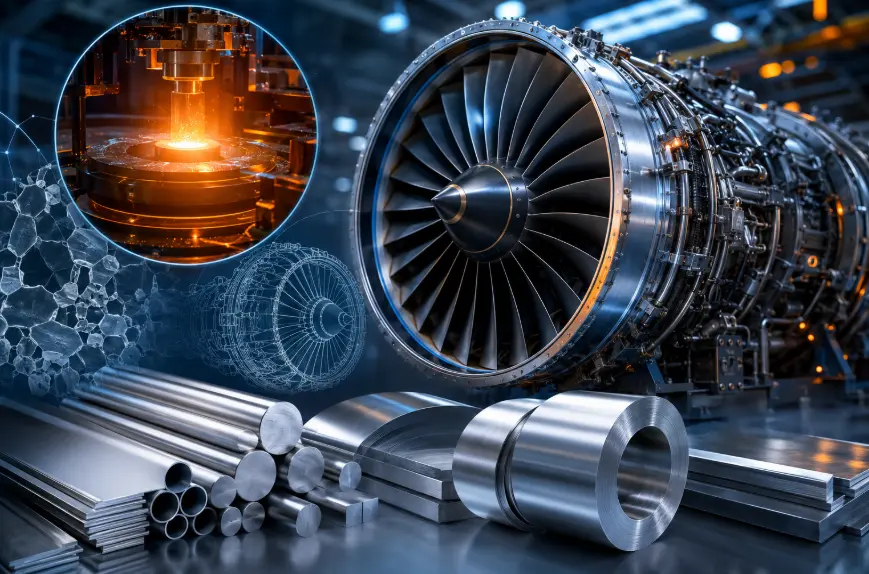
What Makes Inconel 718 Stand Out for High‑Temperature Service
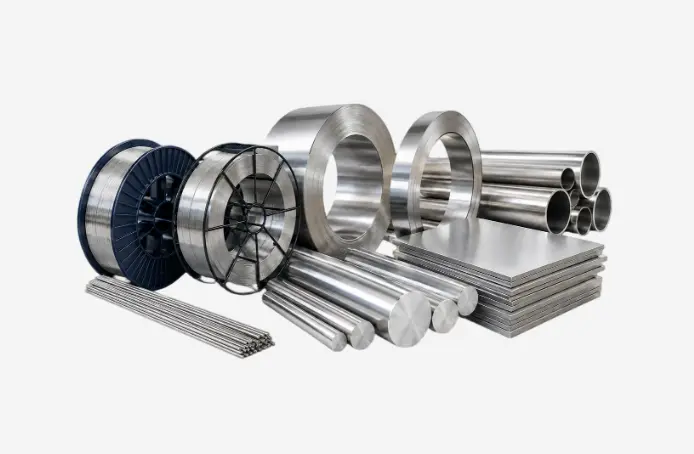
- Exceptional high-temperature strength and creep resistance.
At 650°C, Inconel 718 still delivers tensile strength above 1000 MPa, with excellent creep resistance - enough to withstand the massive centrifugal loads of turbine and compressor disks.
- Balanced all-round performance.
It combines fatigue resistance, oxidation resistance (a dense oxide film forms below 900°C), and good weldability - handling the combined demands of high temperature + high stress + corrosion.
- Wide application, strong cost-performance.
As a precipitation-hardening nickel-based alloy, 718 offers a high performance-to-price ratio and is widely used in aero engines, gas turbines, nuclear power, and energy/chemical equipment.
For hydraulic cooling pipelines, sensor protection tubing and fluid transfer assemblies fitted inside aero‑engines and gas‑turbine equipment, high‑quality [AMS 5589 Inconel 718 Seamless Tube | UNS N07718 Nickel Alloy Tube Supplier] serves as the qualified tubing solution. HSMetal supplies Inconel 718 across multiple product forms: seamless tube, round bar, plate, forging and strip, with full 3.1 MTC, PMI inspection and custom heat‑treatment service.
Inconel 718 Limitations & Alternative Material Solutions
Even as a "jack‑of‑all‑trades" superalloy, Inconel 718 has clear technical boundaries. Select substitute grades when operating conditions exceed its working window.
Upper temperature limit: performance drops above 750 °C The primary strengthening γ″ phase gradually dissolves and transforms into brittle δ‑phase when sustained service temperature exceeds 750 °C, resulting in sharp strength and creep‑life degradation.
For continuous service 750‑900 °C: Select cast superalloys such as Inconel 713 or single‑crystal superalloys.
For oxidation‑focused service above 900 °C without heavy mechanical load: Inconel 600 family can be considered.
Restrictions under extremely aggressive corrosive media Inconel 718 performs well in neutral, weak‑acid, sulfide‑containing and chloride‑stress‑corrosion environments. However, it suffers fast corrosion rate in strong reducing acids such as concentrated hydrochloric acid or hydrofluoric acid. For these severe chemical‑process environments, turn to Hastelloy C‑22 or comparable high‑corrosion‑resistant alloys.
Manufacturing boundary: deformed‑alloy feature Inconel 718 is a wrought superalloy optimized for forging, rolling and welding. For extremely complex monolithic hot‑section components working at 700‑900 °C, cast superalloys are more suitable options.
Practical procurement reminder: Not all Inconel 718 materials on the market deliver equal performance. Some low‑cost suppliers supply off‑spec material with insufficient niobium content. Low Nb content will not cause obvious short‑term property change yet can cut high‑temperature creep service life by more than 50 %. Always require PMI spectrum reports and complete heat‑treatment documentation before order confirmation.
The Composition Secret - Why Niobium Matters
Nb combines with Ni and Fe to form the γ″ phase (Ni3Nb) plus a small amount of γ′ (Ni3(Al,Ti)) - the precipitation-strengthening phases that let Inconel 718 keep high strength above 650°C.
- Without Nb, it's just another heat-resistant steel.
- Too little Nb, and creep life drops sharply.
Buyer warning: Some low-cost "Inconel 718" on the market is short on Nb - labeled 5%, actually around 3%. Short-term performance looks identical, but long-term high-temperature rupture life can be cut by more than 50%. Always request a spectral report focusing on Nb, Mo, and Ti.
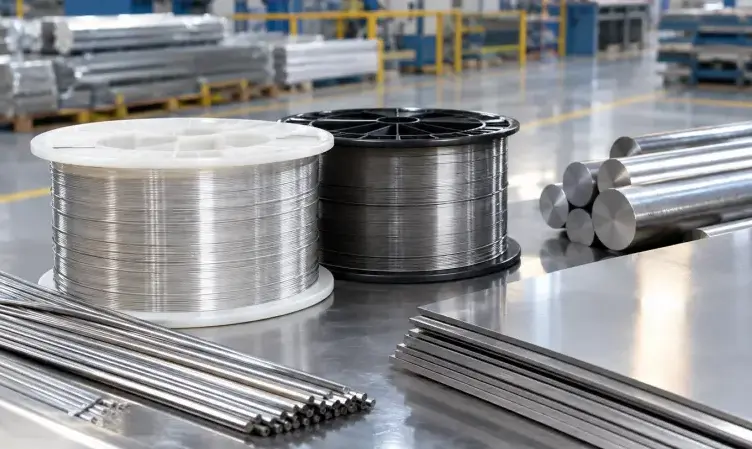
Typical Applications - Where Inconel 718 Is Irreplaceable
| Industry | Typical Components | Service Temperature | Core Requirements |
|---|---|---|---|
| Aero‑Engine | Turbine discs, blades, casings, high‑strength bolts | Up to 650 °C | High creep strength, thermal fatigue resistance |
| Aerospace | Liquid‑oxygen / liquid‑hydrogen pipe joints | ‑253 °C ~ Ambient | Low‑temperature toughness, non‑magnetic |
| Nuclear Industry | Control‑rod drive mechanisms, pump shafts | 350 °C under irradiation | Radiation resistance, low‑activation |
| Oil & Gas | Acid‑gas compressor impellers & valves | 450 °C with H₂S environment | Sulfide stress‑corrosion resistance |
| Automotive High‑Performance | Turbocharger housings, exhaust manifolds | 950 °C (intermittent) | Oxidation resistance, thermal fatigue |
Common buyer objection: "My service temperature is only 550°C - do I really need this?"
If the medium contains halogens, sulfur, or long-term creep load, lower-grade alloys may fail within a year, while 718 can run safely for 5–10 years - a lower total cost of ownership.
Supplier Selection - Avoid These Three Traps
- Off-spec chemistry: Demand a spectral report; focus on Nb, Mo, Ti.
- Wrong heat treatment: Confirm solution treatment (980°C) + duplex aging (720°C/620°C) - not simple annealing.
- Surface defects: Check for micro-cracks and folds, especially in bar and tube. Inconel 718 is extremely sensitive to surface defects, which become fatigue origins.
Recommended standards: ASTM B637 (bar/wire/forging), AMS 5662/5663 (aerospace grade).
Conclusion
Inconel 718 is not a universal alloy - but in 650°C-and-below service where strength and corrosion resistance must coexist, it remains a globally recognized first-choice alloy. Understand its composition logic, respect its machining behavior, and enforce strict heat treatment - and its service life will far exceed expectations.
Your high-temperature components don't have to be short-lived. Let's get the material right.
Ready to specify Inconel 718 with confidence?
Looking for verified Inconel 718 UNS N07718 material for your high‑temperature projects in aerospace, energy or petrochemical sectors?
HSMetal provides AMS‑compliant Inconel 718 seamless tube, bar, plate, forging and strip products. Custom dimension, heat‑treatment status and cutting‑to‑length services are supported. Every batch is delivered with full 3.1 MTC and PMI inspection reports, third‑party inspection is acceptable.
Share your drawing, operating‑condition parameters, dimensions and quantity requirements with us. Our technical‑sales team will send you factory‑direct competitive quotation within 24 hours. Sample pieces are available for lab validation.
[Request a Quote / Send Inquiry] - tell us your temperature, stress, and corrosion conditions, and our engineers will recommend the right grade and heat treatment.
FAQ
Q1: What is the maximum service temperature of Inconel 718?
A:Inconel 718 is commonly associated with long-term service around 650°C, although the actual allowable temperature depends on stress, exposure time, heat treatment, and design requirements. Higher short-term temperatures may be possible in specific conditions, but they should not be treated as a universal continuous-service rating.
Q2: Can Inconel 718 be used at 700°C?
A:Potentially, depending on the application and required service life. At 700°C, creep behavior, stress-rupture life, microstructural stability, and mechanical-property requirements deserve particular attention. Engineers should verify the relevant material data before approving the alloy for long-term service.
Q3: Is Inconel 718 suitable for temperatures above 750°C?
A:For prolonged service above approximately 750°C, Inconel 718 may no longer be the preferred choice because its strengthening microstructure becomes less stable as temperature increases. Other nickel-based superalloys may offer better long-term performance, depending on the application.
Q4: Why is niobium (Nb) so important in Inconel 718?
A:Nb forms the γ″ phase (Ni3Nb), the primary precipitation-strengthening phase that lets 718 maintain high strength above 650°C. Insufficient Nb sharply reduces creep life - some cheap material labeled 5% Nb actually contains only ~3%, cutting high-temperature rupture life by over 50%.
Q5: Is Inconel 718 stronger than stainless steel at high temperatures?
A:Inconel 718 can provide substantially higher strength than many common stainless steels under certain elevated-temperature conditions. However, the comparison depends on the exact stainless steel grade, temperature, heat treatment, product form, and loading requirements. A specification-based comparison is more reliable than a general ranking.
Q6: Is Inconel 718 corrosion-resistant?
A:Yes, Inconel 718 offers useful corrosion and oxidation resistance in many environments. It is not immune to corrosion, however. Strong reducing acids and other aggressive media may require a different alloy. Always evaluate the actual chemical environment.
Q7: Is Inconel 718 difficult to machine?
A:Yes. Its strength, work-hardening behavior, and low thermal conductivity can make machining challenging. Appropriate tooling, cutting parameters, cooling methods, and process planning are important for achieving the required dimensional accuracy and surface quality.
Q8: What product forms of Inconel 718 can I purchase from HSMetal?
A:According to the available HSMetal product information, product forms include wire, strip, bar, tube, and plate. Availability, dimensions, specifications, and delivery conditions should be confirmed for each inquiry.
Q9: Which standards should I specify when purchasing Inconel 718?
A:The appropriate standard depends on product form and application. ASTM B637 and relevant AMS specifications, including AMS 5662 and AMS 5663 for applicable product conditions, are examples that buyers may need to evaluate. Confirm the exact specification and revision required by your drawing, engineering authority, or end user.
Q10: Is Inconel 718 the absolute first choice for all high-temperature environments?
A:No. It's one of the most balanced first choices for 650°C–750°C high-stress, high-fatigue conditions. Above 750°C, its γ″ strengthening phase dissolves and strength drops - cast alloys like Inconel 713 or single-crystal alloys are better. Above 900°C with no aggressive corrosion, Inconel 600 may be more suitable.
Q11: What heat treatment does Inconel 718 require?
A:Standard treatment is solution treatment at 980°C + duplex aging at 720°C and 620°C. Simple annealing is not sufficient. Welded parts must undergo vacuum aging to avoid weld-zone softening.
Q12: Can Inconel 718 be used at cryogenic temperatures?
A:Yes. It retains good toughness even at −253°C, making it suitable for liquid oxygen and liquid hydrogen piping and fittings.
Q13: Can Inconel 718 components be welded? What precautions should we take?
A: Yes, Inconel 718 shows outstanding weldability among precipitation‑hardened superalloys. ERNiFeCr‑2 matching filler metal is recommended. To restore full mechanical properties, double‑ageing heat‑treatment (720 °C + 620 °C) after welding is strongly suggested; otherwise weld‑zone softening and early‑time failure may occur.
Q14: My working condition is only 550 °C, is Inconel 718 over‑specified?
A: If your system contains halogen elements, sulfur media or long‑term sustained creep load, ordinary stainless steel grades such as 316L may fail within 1 year. Although Inconel 718 brings higher upfront material cost, its long service life greatly lowers total‑life‑cycle cost for critical hardware.
Q15: What key inspection items should I request when purchasing Inconel 718?
A: Ask for PMI spectral report focusing on Nb, Mo, Ti element content; verify proper solution‑annealed plus double‑ageing heat‑treatment records; check surface quality for micro‑cracks or folding defects which may become fatigue initiation sources.


