Latest Products


Contact Us
- NO.86 South Wuhan Road, Jianxi District, Luoyang, Henan Province, China
- info@lyhsmetal.com
+8615824923250
Whatsapp/Skype:+8615824923250




ASTM A36 Carbon Structural Steel
ASTM A36 is the most widely used general-purpose carbon structural steel in the United States. It is a mild/low-carbon steel known for its excellent weldability, formability, and relatively low cost making it suitable for a variety of structural and mechanical purposes. ASTM A36 Carbon Structural Steel also is one of the most widely used carbon steels in construction and industrial applications.
Description
ASTM 36 is an American standard carbon structural steel, which follows the standard ASTM A36/A36M-03a. This standard is applicable to riveted, bolted, and welded structures used in bridges and buildings, as well as carbon steel sections, plates, and bars of general structural steel quality.
Standards and Specifications
- ASTM Standard: ASTM A36/A36M (Standard Specification for Carbon Structural Steel).
- Equivalent Standards
- EN: S275JR (European standard).
- JIS: SS400 (Japanese standard).
- ISO: Fe360B (International standard).
Chemical Composition
A36 is property‑driven, so composition ranges are typical rather than absolute. Below are common limits.
| Element | Content | Role |
|---|---|---|
| Carbon (C) | ≤ 0.26% | Ensures good weldability and toughness |
| Manganese (Mn) | 0.80 – 1.20% | Main strengthening agent; improves hot working |
| Phosphorus (P) | ≤ 0.04% | Harmful impurity – reduces ductility and toughness |
| Sulfur (S) | ≤ 0.05% | Harmful impurity – causes hot cracking |
| Silicon (Si) | ≤ 0.40% | Deoxidizer; improves steel cleanliness |
| Copper (Cu) | ≥ 0.20% (optional) | Slightly improves atmospheric corrosion resistance |
Properties of ASTM A36 Steel
- Mechanical Properties
Tensile Strength: 400-550 MPa (58,000-79,800 psi).
Yield Strength: 250 MPa (36,300 psi) minimum.
Elongation: 20-23% (in 200 mm gauge length), indicating good ductility.
Hardness: Typically around 119-159 HB (Brinell hardness).
- Weldability
Excellent weldability due to its low carbon content, making it suitable for various welding methods, including arc welding, gas welding, and resistance welding.
- Machinability
Good machinability, especially when treated with sulfur to improve cutting performance.
- Ductility and Formability
High ductility allows it to be easily formed, bent, or shaped without cracking.
Chemical Composition
| Steel Grade | C | Si | Mn | P | S | Als |
| Grade AH36 | ≤0.18 | ≤0.50 | 0.9-1.6 | ≤0.035 | ≤0.035 | ≥0.015 |
| Grade DH36 | ≤0.18 | ≤0.50 | 0.9-1.6 | ≤0.035 | ≤0.035 | ≥0.015 |
| Grade EH36 | ≤0.18 | ≤0.50 | 0.9-1.6 | ≤0.035 | ≤0.035 | ≥0.015 |
| Grade FH36 | ≤0.18 | ≤0.50 | 0.9-1.6 | ≤0.035 | ≤0.035 | ≥0.015 |
Mechanical Properties
| Steel grade | Yield Strength MPa | Tensile Strength MPa | Elongation % | Temperature ℃ | V-type impact test | ||
| Akv/J | |||||||
| ≤50MM | 50-70MM | 70-100MM | |||||
| Grade AH36 | ≥355 | 490-630 | ≥21 | 0 | 34/24 | 41/27 | 50/34 |
| Grade DH36 | ≥355 | 490-630 | ≥21 | -20 | 34/24 | 41/27 | 50/34 |
| Grade EH36 | ≥355 | 490-630 | ≥21 | -40 | 34/24 | 41/27 | 50/34 |
| Grade FH36 | ≥355 | 490-630 | ≥21 | -60 | 34/24 | 41/27 | |
Comparison with Similar Steels
| Feature | ASTM A36 | ASTM A572 Gr. 50 | ASTM A992 (for W-shapes) | ASTM A53 (Pipe) |
|---|---|---|---|---|
| Primary Use | General structures | High-strength structures | Preferred for structural shapes | Pipe & tubing |
| Yield Strength | 36 ksi | 50 ksi | 50 ksi min | Varies by type |
| Key Difference | Basic carbon steel | Columbium/Vanadium micro-alloyed for strength | Replaced A36 for shapes; tighter chemistry control | Manufactured as hollow sections |
Note on A992: For structural shapes (beams, channels), A992 has largely superseded A36 in modern building design due to its higher, more consistent yield strength and better weldability controls.
Quality Control


Comparison & Selection – When to consider other grades?
| Material | Min. Yield | Typical Use | Remarks |
|---|---|---|---|
| ASTM A36 | 36 ksi | General structural | Excellent all‑rounder |
| ASTM A572 Gr. 50 | 50 ksi | Higher strength structures, bridges | When higher strength is needed |
| ASTM A992 | 50 ksi | Wide‑flange shapes (W‑shapes) | Improved chemistry and toughness, often preferred for seismic‑resistant building frames |
Advantages of ASTM A36 Steel
- Cost-Effective: Widely available and economical compared to higher-grade steels.
- Versatility: Suitable for a broad range of applications due to its balanced properties.
- Ease of Fabrication: Can be easily welded, machined, and formed.
- Durability: Provides good strength and toughness for structural applications.
Test Equipment

Applications
ASTM A36 is the backbone of general construction and industrial fabrication.
- Building Construction: Structural frames, columns, beams, base plates, and bracings.
- Bridges: Girders, bridge decking, and ancillary structures.
- Industrial: Machine bases, frames, platforms, stairways, and guard rails.
- General Fabrication: Truck frames, trailer parts, agricultural equipment, and repair work.
- Shipbuilding: Non-critical structural members.

FAQ
Q1: What is ASTM A36?
A: It's a common carbon structural steel grade, widely used for buildings, bridges, and general construction.
Q2: What does "A36" stand for?
A: The "36" means its minimum yield strength is 36,000 psi (about 250 MPa).
Q3: What is it made of?
A: Low carbon steel (C ≤ 0.26%), with small amounts of manganese, silicon, and impurities limited.
Q4: What is it used for?
A: Steel frames, bridges, machine parts, platforms, railings, storage tanks – general structural use.
Q5: Can A36 be welded?
A: Yes, it's one of the most weldable carbon steels. Use standard welding procedures for mild steel.
Q6: What's the difference between A36 and Q235?
A: A36 is the US standard; Q235 is the Chinese equivalent. They are similar but not identical – always check before substituting.
Q7: Does A36 require heat treatment?
A: No, it's usually supplied as hot-rolled and used as-is. Normalizing can improve toughness but is not required.
Q8: Is A36 stainless steel?
A: No, it's carbon steel. It will rust if uncoated.
Q9: What shapes does A36 come in?
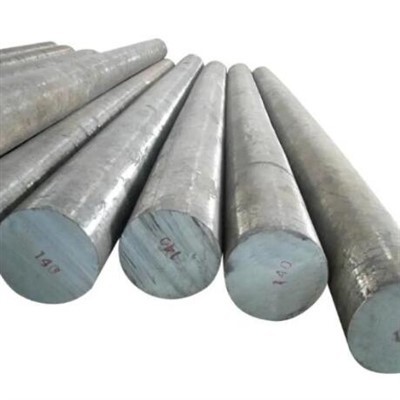
A: Plates, bars, angles, beams, channels, and wide-flange shapes (W-shapes).
Hot Tags: astm a36 carbon structural steel, China astm a36 carbon structural steel manufacturers, carbon steel in stock, carbon steel dealer, carbon steel stability, carbon steel alternative, carbon steel disadvantage, cheap carbon steel
You Might Also Like