


In battery development, current collectors are often selected based on electrical conductivity, thickness, mechanical strength, and compatibility with electrode manufacturing. However, as battery designs evolve toward higher energy density, faster charging, longer cycle life, and advanced anode configurations, the structure of the current collector is becoming an increasingly important design consideration.
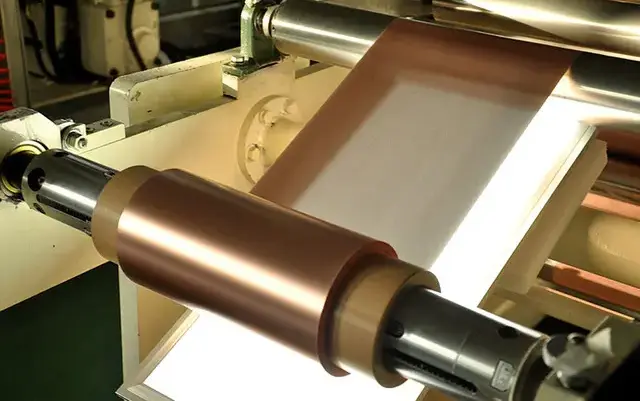
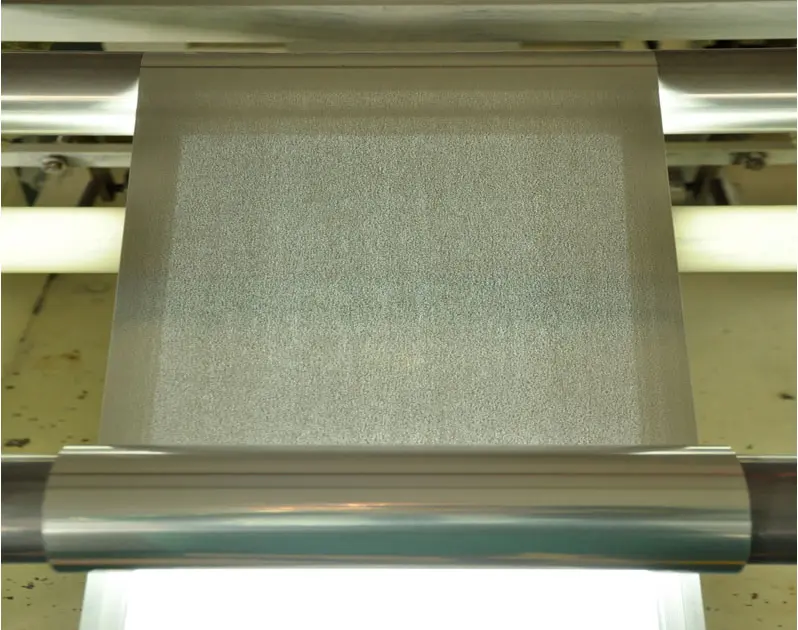
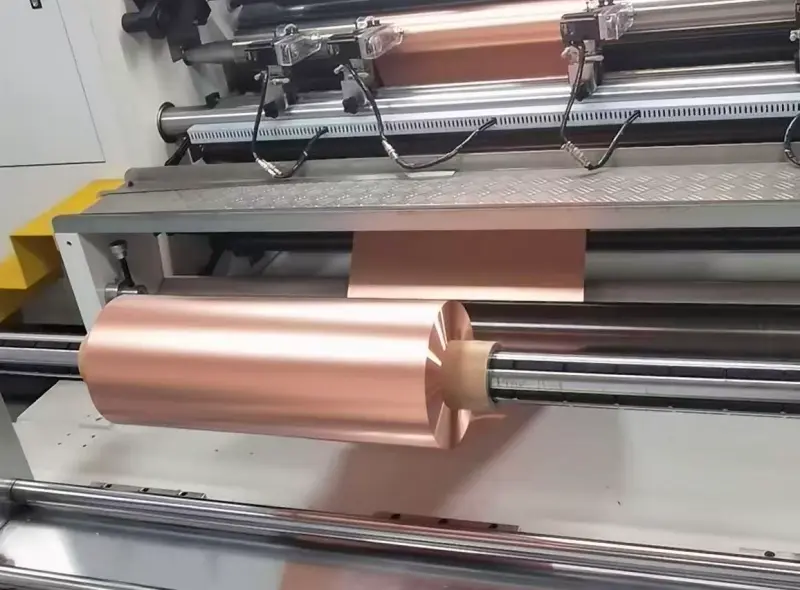
Conventional copper and aluminum foils provide a relatively flat, continuous surface for electrode coating. Microporous foils introduce distributed through-holes or a porous architecture that can change how the electrode interacts with the current collector, electrolyte, and active materials.
These structural differences may influence electrolyte infiltration, electrode anchoring, ion transport, local current distribution, and the accommodation of material volume changes. Research on three-dimensional porous copper current collectors has demonstrated potential benefits for lithium-metal deposition and cycling stability, although performance depends on the specific structure, surface chemistry, and cell design.
For battery engineers and procurement teams, the key question is not whether microporous foil is always better than conventional foil. It is which current collector structure best matches the target battery chemistry, electrode design, manufacturing process, and performance requirements.
This article breaks down the fundamental differences between conventional foil and 3D microporous foil, explains why the 3D structure is becoming the foundation for next-generation batteries, and helps procurement and R&D teams select the right specification. To explore our full product range, see our Microporous Copper Foil and Microporous Aluminum Foil pages.
What Is Microporous Foil?
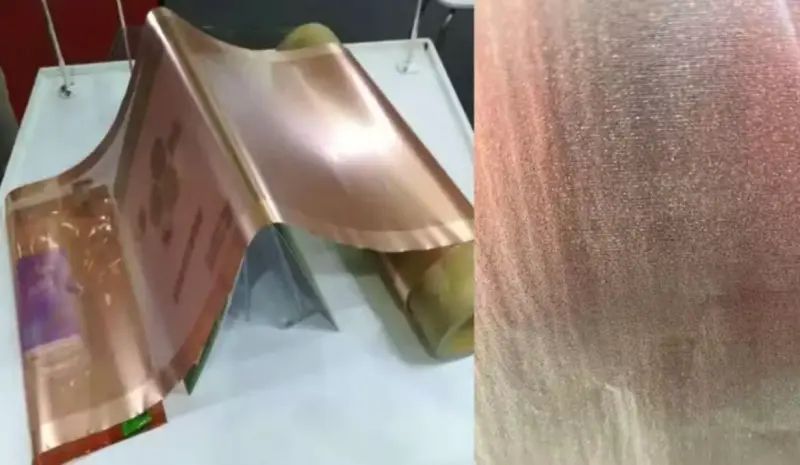
Microporous foil is a specially etched current collector featuring a uniformly distributed, interconnected 3D through-hole network on either copper or aluminum base foil. Unlike conventional flat foil, this porous structure accelerates electrolyte infiltration, homogenizes lithium-ion distribution, suppresses dendrite formation, and creates mechanical interlocking to firmly anchor the electrode slurry. Available as microporous copper foil for anodes (including lithium-ion, lithium-metal, and anode-free designs) and microporous aluminum foil for cathodes, it is widely adopted in the R&D and production of high-rate fast-charging, solid-state, and silicon-carbon anode batteries.
Core Difference Between Microporous 3D Foil and Conventional Solid Foil
Transport Geometry (2D vs. 3D)
- Conventional Foil: Lithium ions must travel a 2D path along the plane of the foil toward the tab. This limits rate capability and creates a long diffusion path.
- 3D Microporous Foil: Through-pores allow ions to migrate vertically (3D transport) through the foil. This increases the contact area between the active material and the electrolyte, shortens the ion migration path, and effectively doubles the electrical cross-sectional area, significantly lowering impedance.
Current Density & Dendrite Suppression
- Conventional Foil: Flat surfaces lead to localized high current density, which promotes the growth of lithium dendrites that can pierce the separator and cause short circuits.
- 3D Microporous Foil: The high specific surface area of the porous network significantly reduces local effective current density. This homogenizes lithium-ion flux, suppressing vertical dendrite growth and guiding uniform deposition-a critical advantage for anode-free and lithium-metal batteries.
Electrolyte Wetting & Manufacturing Efficiency
- Conventional Foil: Electrolyte must wick slowly from the edges, often leading to dry zones in thick electrodes.
- 3D Microporous Foil: The through-pores form a 3D interconnected network for rapid electrolyte infiltration. This prevents dry zones, ensures 100% wetting consistency, and can improve production efficiency by over 50%.
Stress Buffering for Silicon Anodes
- Conventional Foil: Silicon-based anodes undergo massive volume expansion, causing severe stress and interfacial degradation against a flat foil.
- 3D Microporous Foil: The pore volume provides abundant space to accommodate the volume expansion and contraction of silicon-carbon materials during cycling, acting as a conductive dual-skeleton to stabilize the electrode.
Mechanical Anchoring ("H"-Shaped Interlock)
- Conventional Foil: Adhesion relies entirely on surface roughness. Active materials can delaminate under stress.
- 3D Microporous Foil: Active material slurry fills the pores, connecting the front and back coatings to form an "H"-shaped mechanical interlock. This anchoring prevents electrode shedding, extending cycle life and stabilizing the interface.
Key Applications & How to Choose Your 3D Foil
The choice between conventional foil, Carbon Coated Copper Foil for Battery Anode Substrate, and microporous foil depends entirely on your cell chemistry and performance targets.
| Application Area | Recommended Foil Solution | Why It Fits |
|---|---|---|
| Anode-Free / Lithium-Metal Batteries | Microporous Copper Foil | 3D structure lowers local current density, suppresses Li dendrites, and guides uniform deposition. |
| Silicon-Carbon (Si-C) Anodes | Microporous Copper Foil | Pore volume buffers severe silicon expansion; "H" interlock prevents delamination. |
| High-Nickel Cathodes | Microporous Aluminum Foil | 3D network accelerates electrolyte wetting for thick, high-loading cathodes, reducing polarization. |
| Fast-Charge / High-Rate Cells | Microporous Foil (Cu & Al) | Vertical ion transport shortens diffusion paths, drastically lowering resistance for high C-rates. |
| Solid-State / Dry Electrode Processes | 3D Microporous Foil | Directly forms the electrode (e.g., slurry/spraying) with high strength and low resistance, eliminating the need for costly PTFE/PVDF fibrillation and secondary transfer. |
| Standard-Rate / Cost-Sensitive Cells | Conventional Foil or Carbon Coated Foil | Sufficient for low-rate applications where 3D transport is not the bottleneck. |
For detailed specifications on our 3D foil series, including pore density and thickness options, visit our Microporous Copper Foil page. If your R&D requires baseline comparisons, review our Carbon Coated Aluminium Foil Purchasing Guide.
Conclusion: Choose the Structure That Matches Your Battery Design
Microporous foil expands the design options available to battery engineers by introducing structural features that conventional solid foil does not provide. Depending on the application, these features may support improved electrode contact, electrolyte access, local current distribution, or accommodation of material volume changes.
The right choice still depends on battery chemistry, electrode architecture, production compatibility, cost, and verified test results. Conventional foil remains a strong option for many established designs, while microporous copper or aluminum foil may be worth evaluating when a specific interface or transport challenge needs to be addressed.
Request a Microporous Foil Quotation from HSMetal
Ready to test the 3D advantage in your cell design?
Whether you are developing anode-free lithium-metal cells, high-silicon anodes, or fast-charge systems, our technical team can help you select the right microporous specification (pore size, density, and thickness).
Request a Technical Consultation & Sample Kit → Contact Sales
Explore our full current collector portfolio:
Microporous Copper Foil- For high-rate anodes and dendrite suppression.
Microporous Aluminum Foil- For high-loading cathodes and fast wetting.
Carbon Coated Copper Foil for Battery Anode Substrate- For conventional Si-C and graphite anodes requiring enhanced adhesion.
FAQ
Q1: What is the main difference between microporous foil and conventional copper or aluminum foil?
A: Conventional foil has a predominantly continuous surface, while microporous foil contains engineered pores or a porous architecture. These structural differences may influence electrode anchoring, electrolyte access, local current distribution, and volume accommodation.
Q2: Does microporous foil always improve battery energy density?
A: No. Potential gains depend on the complete electrode and cell design. Added pore volume may support certain performance objectives, but the metal mass, open-area ratio, electrode loading, and manufacturing yield must also be considered.
Q3: Can microporous copper foil prevent lithium dendrite growth?
A: A suitably designed porous copper current collector may help distribute local current and provide space for lithium deposition. It cannot guarantee dendrite-free operation or eliminate short-circuit risk. Cell-level validation remains essential.
Q4: Is microporous copper foil suitable for silicon–carbon anodes?
A: It may be worth evaluating where volume change, interface stability, or electrode integrity is a concern. Suitability depends on the silicon content, binder system, pore geometry, electrode loading, and cycling conditions.
Q5: What is microporous aluminum foil used for?
A: It is generally evaluated for cathode-side current collector applications in lithium-ion batteries. The foil must be compatible with the cathode chemistry, operating potential, coating process, and required mechanical properties.
Q6: What do the third-party tests show regarding cycle life?
A: Third-party testing on anode-free cells demonstrated that HSMetal's 3D microporous foils maintained significantly higher capacity retention and more stable Coulombic efficiency over 100 cycles compared to conventional copper foil, which showed rapid degradation and fluctuating CE. This validates the role of the 3D structure in stabilizing the interface.
Q7: Which parameters are most important when buying microporous foil?
A: Start with base metal, thickness, width, pore diameter, pore density, open-area ratio, mechanical properties, surface quality, and the intended electrode process. The required tolerances should be agreed with the supplier.
Q8: Can HSMetal provide customized microporous copper or aluminum foil?
A: Buyers can submit their target dimensions, pore specifications, application, and estimated demand for review. Customization scope, technical feasibility, minimum order quantity, and delivery schedule must be confirmed for the specific requirement.
Q9: How should I compare microporous foil samples with conventional foil?
A: Use comparable electrode formulations and cell test conditions. Evaluate processing performance, adhesion, impedance, rate capability, cycle retention, and other application-specific requirements rather than relying on a single test result.
Q10: Can microporous foil completely replace conventional solid foil for all lithium‑ion battery projects?
A: No. Microporous foil delivers prominent performance gain for advanced battery systems such as lithium‑metal, solid‑state, high‑rate fast‑charging and silicon‑carbon anode batteries. For conventional low‑rate batteries where cost is the core factor, solid foil still remains the most cost‑effective solution.
Q11: Does microporous foil require changes to my existing coating equipment?
A: No. Microporous copper and aluminum foils are designed as drop-in replacements for conventional foil. They run on your existing coating, drying, calendering, and slitting lines without the need for new equipment or complex process re-qualification.
Q12: What test data supports the performance advantage of your microporous foil?
A: Third‑party lab has run comparative cycling test on anode‑free cells. The test results show our microporous foil obtains better interfacial stability and higher cycle retention compared with regular solid foil. We can provide full inspection reports for your R&D evaluation.
Q13: What are the critical parameters I should define before ordering microporous foil samples?
A: You need to confirm substrate thickness, target pore density / pore diameter, edge‑blocking layout (edge‑blocking / single‑cut / multi‑cut for tab‑welding), battery chemistry and target C‑rate. Our engineering team will recommend suitable grades according to your requirements.
Q14: Can I order both microporous copper foil and microporous aluminum foil at one time for full‑cell research?
A: Yes. We supply anode‑side microporous copper foil and cathode‑side microporous aluminum foil simultaneously. We can coordinate structural parameters for your full‑cell prototyping and deliver complete batch test documents.
Q15: Does a higher pore density always mean better battery performance?
A: No. While higher pore density improves 3D transport and increases pore volume for stress buffering, it also reduces the tensile strength and elongation of the foil. Excessive perforation can compromise web handling during high-tension coating and calendering. Buyers must balance pore density with mechanical processability. We offer multiple series to help you find the optimal balance.
Q16: How does microporous foil help with solid-state or dry electrode manufacturing?
A: In dry electrode or solid-state processes, the 3D interconnected network allows the electrode to be formed directly onto the foil (via slurry or spraying). Its high strength and low resistance eliminate the need for a secondary transfer step, and the interconnected pores bypass the difficult and costly process of forming PTFE/PVDF fibril networks.
Q17: Can I use microporous aluminum foil for supercapacitors?
A: Yes. The 3D porous structure greatly improves electrolyte infiltration and ion transport, which is highly beneficial for high-power supercapacitor electrodes. See our Carbon Coated Aluminium Foil for Supercapacitor page for related surface-treated options.


