Latest Products


Contact Us
- NO.86 South Wuhan Road, Jianxi District, Luoyang, Henan Province, China
- info@lyhsmetal.com
+8615824923250
Whatsapp/Skype:+8615824923250


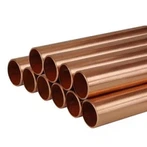
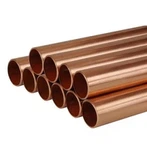
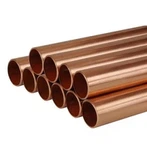
Beryllium Copper Pipe
C17510 beryllium copper (BeCu, UNS C17510) can be regarded as the most advanced elastic material with the best performance among copper alloys. Its chemical composition is: beryllium (Be) 0.38-0.40%, nickel (Ni) 2.4-2.8%, with the balance being copper (Cu), and containing trace amounts of aluminum, cobalt and other elements. After solid solution and aging heat treatment, C17510 possesses mechanical properties such as high strength, high elasticity, high hardness, high fatigue strength, and low elastic hysteresis, as well as excellent physical and chemical properties such as corrosion resistance, wear resistance, cold resistance, high conductivity, high thermal conductivity, non-magnetic and impact spark free properties. It is widely used in fields such as explosion-proof tools, precision molds, bearings and electrodes.
Description
Beryllium copper pipes are high-performance tubular products made from copper-beryllium alloys. Known as the "copper alloy with the strength of steel," they combine exceptional mechanical properties with excellent electrical and thermal conductivity, making them indispensable in demanding aerospace, automotive, marine, and industrial applications
Beryllium copper is a precipitation-hardening alloy that achieves remarkable strength through heat treatment. The addition of beryllium (typically 0.2–2.0%) creates a material that can be harder than certain steel grades while remaining lightweight and formable
Available Grades and Specifications
Beryllium copper pipes are available in several standard grades, each offering a specific balance of strength and conductivity.
| Grade | UNS | Be Content | Conductivity | Strength | Primary Applications |
|---|---|---|---|---|---|
| C17200 (CuBe2) | C17200 | 1.8–2.0% | 15–23% IACS | Very High | Aerospace, high-stress mechanical, non-sparking tools |
| C17500 | C17500 | 0.4–0.7% + Co | 45–60% IACS | Moderate | Resistance welding, current-carrying members |
| C17510 | C17510 | 0.2–0.6% + Ni | 48–60% IACS | Moderate | Projection welding dies, electrical connectors |
Main performance characteristics
- Tensile strength: ≥ 1105 MPa
- Yield strength: ≥ 1035 MPa
- Elastic modulus: ≈ 128 GPa
- Elongation rate: ≥ 1%
- Hardness (HRC): 38-44
- Softening temperature: ≈ 930 ℃
- Corrosion resistance: The corrosion rate in seawater is only (1.1-1.4) × 10 ⁻ ² mm/year, the corrosion depth is (10.9-13.8) × 10 ⁻ ³ mm/year, and the strength remains unchanged for 40 years
- Sulfur and acid resistance: ≤ 80% concentration, room temperature corrosion depth 0.0012-0.1175mm/year
C17510 has stable performance in the range of -196 ℃ to 250 ℃, with low fatigue limit and elastic hysteresis, making it extremely suitable for high-frequency reciprocating load applications.
Specifications and Standards
| Standard | Title | Applicable Grades |
|---|---|---|
| ASTM B643 | Seamless Copper-Beryllium Alloy Tube | C17200 |
| ASTM B937 | Copper-Beryllium Seamless Tube | C17500, C17510 |
| ASTM B441 | Copper-Cobalt-Beryllium Rod and Bar | C17500 |
| RWMA Class 3 | Resistance Welding Alloys | C17510 |
Production process flow
- Raw material preparation: For the production of beryllium copper CuBe1.7, high-purity copper and beryllium need to be prepared first. The quality of these two raw materials directly affects the performance of the final alloy. Ensuring the purity and proportion of raw materials is the crucial first step.
- Alloy melting: The prepared copper and beryllium raw materials are sent into a special induction melting furnace for alloy melting. In this process, by controlling the temperature and proportion of ingredients, it is ensured that copper and beryllium are fully mixed to form a uniform alloy liquid. The smelting process needs to be strictly controlled to avoid the introduction of impurities.
- Alloy casting: After melting, the alloy is cast into the desired shape, which can be a billet, bar, plate, etc. During the casting process, attention should be paid to controlling the cooling rate and solidification process to ensure a uniform crystal structure and improve the mechanical properties of the alloy.
- Heat treatment: After alloy casting is completed, heat treatment is usually required to improve its properties. Heat treatment includes solution treatment and aging treatment. Solid solution treatment involves heating the alloy to a sufficiently high temperature to uniformly dissolve its elements, and then controlling the cooling rate to form a uniform solid solution. Aging treatment is achieved by keeping the alloy at a lower temperature for a period of time, gradually increasing its hardness and strength.
- Cold processing: For applications with special requirements, beryllium copper CuBe1.7 may require cold processing, such as rolling, drawing, or forging. Cold working can further improve the mechanical properties of alloys while adjusting their size and shape.
- Surface treatment: The final product may require surface treatment such as polishing, pickling, or coating to meet specific application requirements. This helps to improve the corrosion resistance and appearance of the alloy.

heat treatment process
- Solution treatment: 860-880 ℃ for 1-2 hours, air quenching to ensure uniformity of the substrate without precipitation.
- Time hardening: 300-330 ℃ for 2-4 hours, precipitation of strengthening phase to achieve the highest strength and hardness.
- Cold processing and hot processing: Combining high plasticity and plasticity, supporting stamping, deep drawing, and precision forming;
- Cutting: With the use of hard alloy cutting tools and high-pressure coolant, high-precision and high-efficiency cutting can be achieved;
- Surface treatment: Polishing, electroplating, or chemical plating can further enhance corrosion resistance and decorative effects.
Supply specifications
- Outer diameter: Φ 1.0- Φ 50 mm (commonly available as Φ 2- Φ 20 mm)
- Wall thickness: 0.1-3.0 mm (precision thin walls can reach 0.1-0.5 mm)
- Length: 100-3000 mm, supports fixed length, zero cutting, chamfering
- Status: Soft (M), Semi Hard (Y2), Hard (Y)
For specific size, grade, temper, or quantity requirements, please provide your detailed specifications and I can help you further.
inspection and Quality Control
Strict testing and quality control must be carried out during the production process to ensure that the product meets specifications and customer requirements. This may include metallographic microscopy, chemical composition analysis, mechanical property testing, etc.
- Chemical composition is one of the important indicators of beryllium copper tubes, which directly affects the performance and reliability of the material.
- Mechanical properties are one of the important indicators for evaluating the quality of beryllium copper tubes, including tensile strength, yield strength, hardness, etc.
- Beryllium copper tubes face corrosion challenges in many fields, therefore their corrosion resistance is crucial. Conduct comprehensive testing on the corrosion resistance of beryllium green copper pipes, including salt spray testing, wet heat testing, etc., to evaluate their corrosion resistance under various environmental conditions.
- Non destructive testing is one of the important means to ensure the quality of beryllium copper tubes. Comprehensive non-destructive testing such as ultrasonic testing, X-ray testing, etc. is performed on beryllium bronze pipes to discover and evaluate internal and surface defects and damage.
- Size and Visual inspection: Accurately measure and evaluate the size and appearance of beryllium green copper pipes to ensure they meet design requirements and customer standards.
Test Equipments

Applications
Beryllium copper tube is a type of pipe made of copper and beryllium alloy, which has excellent electrical and thermal conductivity, as well as good corrosion resistance. Therefore, it has a wide range of applications in industry and daily life.
- Beryllium copper tubes are widely used in the field of electronics. Due to its excellent conductivity, it can be used to manufacture wires, cables, connectors, etc. in electronic products. It has good conductivity and corrosion resistance, is not easy to rust, and has a long service life. At the same time, beryllium copper tubes are widely used in semiconductor technology to manufacture lead architectures in integrated circuit IC packaging.
- Beryllium copper tube is also a common material in the aerospace industry. Due to its lightweight, high strength, and excellent thermal conductivity, it can be used to manufacture components such as radiators, cooling pipes, and high-temperature pipelines in aircraft engines and gas turbines. In aerospace devices, beryllium copper tubes are also used to manufacture components such as heat conduction plates, heat conduction tubes, and heat conduction feet to ensure the normal operation of spacecraft.
- Beryllium copper tubes are also widely used in the medical equipment and instrumentation industries. Due to its excellent corrosion resistance and antibacterial properties, it can be used to manufacture infusion tubes, conduits, and conductive lines in medical equipment and medical instruments. In the high-end instrument field, such as laser manufacturing equipment, nuclear magnetic resonance instruments, etc., beryllium copper tubes are also commonly used as key components.
- Applied in industries such as chemical, petroleum, and energy. Due to its excellent corrosion resistance and high temperature resistance, it can be used to manufacture heat transfer pipelines, condensers, evaporators, etc. in chemical equipment. Beryllium copper tube is also an important material in oil exploration, used to manufacture well pipes, drill rods, tubing, etc. for oil and gas wells.
Due to its excellent performance characteristics, beryllium copper tubes have a wide range of applications in electronics, aerospace, medical, chemical and other fields, playing a crucial role in improving product stability, reliability and performance. With the continuous development of industry, it is believed that the application fields of beryllium copper tubes will continue to expand and deepen.

FAQ
Q1: What are the main components of Beryllium Copper?
A: Beryllium copper, as the name suggests, is a copper alloy with copper as the matrix and beryllium as the main alloying element. Its typical beryllium content is between 0.5% and 3%, and small amounts of cobalt, nickel, or other elements may be added to optimize performance. Although the content of beryllium is not high, it plays a crucial role in the performance of the alloy
Q2: Does the electrical conductivity ofBeryllium Copper decrease due to processing?
A: Beryllium Copper is a high-performance copper alloy material, featuring excellent electrical conductivity, thermal conductivity, and machinability, and is widely used in electronics, machinery, energy, and other fields.
Q3: What surface treatments is Beryllium Copper suitable for?
A: Support silver plating, nickel plating, passivation and other processing, it is recommended to degreasing and pickling before pretreatment to improve adhesion.
Q4: How to distinguish Beryllium Copper from copper chromium zirconium?
A: Beryllium Copper has better cutting ability, while chromium zirconium copper (CuCrZr) focuses on high-strength wear resistance scenarios.
Q5: What is the corrosion resistance of Beryllium Copper?
A: Corrosion resistance in conventional industrial environment is better than pure copper, but strong acid and alkali environment is recommended to use with surface coating.
Q6: What parameters are required when ordering Beryllium Copper?
A: It is necessary to specify the alloy grade (such as C17200), state (hard/semi-hard), dimensional tolerance and testing standard (ASTM/GB).
Hot Tags: beryllium copper pipe, China beryllium copper pipe manufacturers, Cold Drawn Brass Pipe, TP1 TP2 Copper Pipe, Oxygen Free Copper Pipe
You Might Also Like