


Anode-free sodium-ion batteries are gaining attention for their potential to reduce inactive materials, simplify battery structures, and improve energy density. However, without a pre-installed hard carbon anode, sodium ions deposit directly onto the negative current collector as metallic sodium during charging. This creates challenges such as uneven sodium deposition, dendrite formation, dead sodium accumulation, and volume expansion, which can affect battery performance and cycle life.
To address these challenges, carbon-coated aluminum foil and microporous aluminum foil offer two different approaches to improving anode-free sodium battery performance. Carbon-coated foil helps promote uniform sodium nucleation and improve interfacial contact, while microporous foil provides internal space for sodium deposition and volume expansion.
In this article, we compare their functions, advantages, and limitations, and explain how to choose the right current collector for your anode-free sodium battery applications.
Why Is the Current Collector So Important in Anode-Free Sodium Batteries?
In conventional sodium-ion batteries, hard carbon typically serves as the negative electrode and provides a host structure for sodium-ion storage. An anode-free sodium battery, by contrast, is assembled without any pre-installed negative active material; the negative side initially consists mainly of a current collector, usually an aluminum-based substrate. During the first charge, sodium ions leave the cathode, migrate through the electrolyte, and deposit as metallic sodium directly onto the negative current collector. On discharge, the deposited sodium dissolves back and returns to the cathode. This design reduces inactive material on the anode side, but it also introduces several technical challenges.
👉Send Your Specifications For Quotation
Carbon-Coated Foil :Solving "How Sodium Grows"
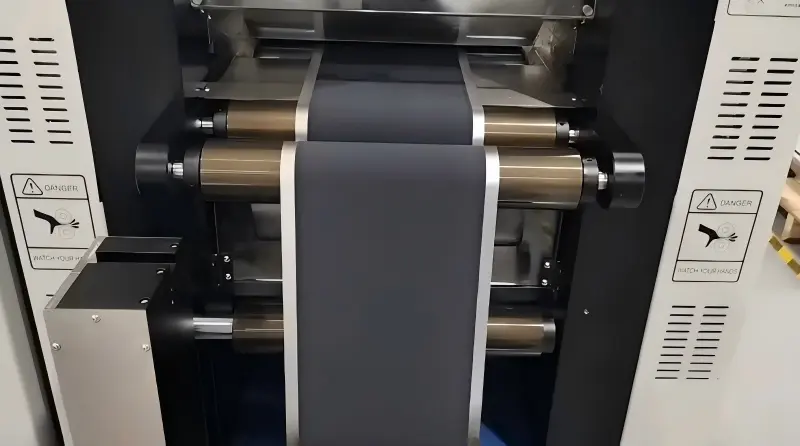
A carbon-coated foil applies a thin functional carbon layer (typically carbon black or graphene) onto the aluminum substrate. It acts as a sodiophilic (sodium-loving) runway.
How it works:
- Lower Nucleation Barrier: The carbon layer provides abundant active sites, allowing sodium to nucleate uniformly rather than clustering into localized lumps.
- Improved Interfacial Contact: The conductive carbon layer enhances electron transfer and adheres firmly to the substrate.
- Higher Coulombic Efficiency (CE): Studies using air-plasma-treated carbon-coated aluminum foil have achieved an average CE of ~99.88% in low-temperature half-cells.
The Engineering Limit:
Carbon-coated foil is still a 2D planar structure. It has limited internal space to store sodium. As sodium continues to plate, it will inevitably swell outward. Over repeated cycles, this causes voids, contact loss, and eventual failure.
👉Explore our Carbon Coated Aluminum Foil for Battery Research
Microporous Foil: Solving "What Happens When Sodium Swells"
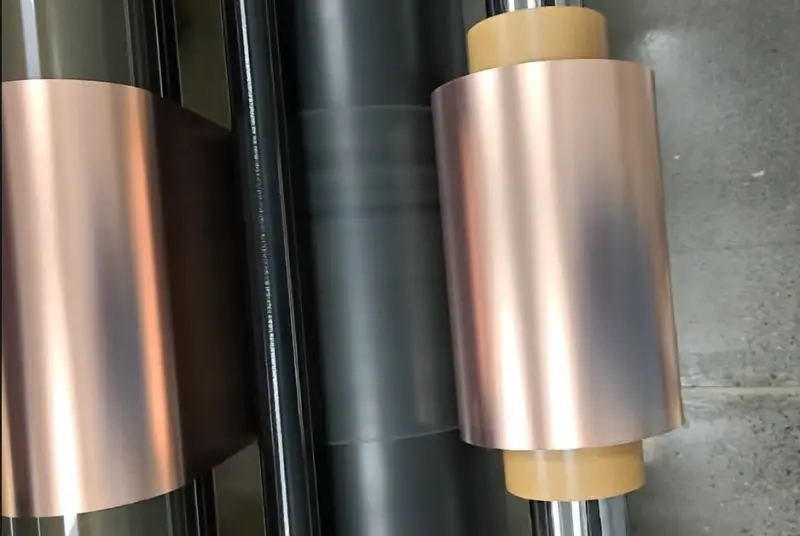
Microporous foil (typically aluminum or copper) is a 3D porous metal skeleton. Instead of sitting on the surface, sodium is forced to fill the microscopic pores.
How it works:
- Internal Storage Space: Sodium preferentially deposits inside the pores rather than piling up on the outer surface.
- Stress Accommodation: The 3D metal framework physically absorbs the volume expansion, preventing the electrode from bulging or cracking.
- Dendrite & Dead Sodium Suppression: The porous structure expands the effective surface area, lowering local current density and guiding uniform deposition. Pouch cell studies using porous Al collectors achieved 84.9% capacity retention after 100 cycles and an energy density of 420.4 Wh/kg.
The Engineering Limit:
Microporous foil is structurally complex. Higher porosity buffers expansion better, but adds dead weight and increases the surface area for side reactions. To maintain energy density, the thickness must typically be kept below 15 μm.
👉Explore our Microporous Aluminum Foil for Next-Gen Batteries
How to Choose for Your Anode-Free Na Battery
You cannot simply pick one and ignore the other. Your choice depends on your cell architecture and energy targets:
| Criterion | Carbon-Coated Foil | Microporous Foil | Composite Solution (Microporous + Carbon Coating) |
|---|---|---|---|
| Primary Function | Guides where sodium nucleates | Accommodates how much sodium grows | Ultimate solution: Pores buffer volume; coating guides deposition |
| Thickness | 12–16 μm (Standard) | <15 μm (Must be ultra-thin to offset porosity) | 15–20 μm |
| Volume Expansion | Poor (2D plane, swells outward) | Excellent (3D skeleton absorbs stress) | Excellent |
| Applicability | Simple processes, low areal capacity, thin-film R&D. | High areal capacity, low external pressure (pouch cells). | High-energy-density, zero-pressure commercial cells. |
| Cost Position | Lower | Moderate | Highest |
| Decision Rule | Use for initial prototyping and baseline sodiophilic interface testing. | Use when testing high areal loading and needing structural buffering. | The future standard. Use when targeting >400 Wh/kg and long cycle life. |
The Decision Rule, stated plainly:
- If you are just starting R&D and need a stable baseline, start with Carbon-Coated Foil.
- If your cell is bulging and failing due to volume expansion at high capacities, switch to Microporous Foil.
- If you want to achieve zero external pressure and commercial viability, specify our Microporous Foil with a Carbon/Graphene Coating.
Advanced Tip: Looking for a high-end conductive coating? Our Graphene Coated Aluminum Foil can be applied as a superior sodiophilic layer on planar or porous substrates.
Material Specifications (Typical Reference)
| Property | Carbon-Coated Al Foil | Microporous Al Foil (for Na) |
|---|---|---|
| Substrate | Aluminum (1060/1070) | Aluminum Alloy |
| Thickness | 12–18 μm | 10–15 μm |
| Porosity | N/A (Surface coating) | 50–80% (Adjustable) |
| Pore Size | N/A | 5–30 μm |
| Surface Treatment | Sodiophilic Carbon / Graphene | Optional Carbon Coating |
| Width | 150–1450 mm | 100–1000 mm |
| Application | Baseline Na plating, cathode current collector | Anode-free skeleton, stress buffering |
Stop Guessing-Test the Right Sodium Host
Anode-free sodium batteries are the future of low-cost, high-density energy storage, but the interface engineering is unforgiving. Whether you need the baseline stability of Carbon-Coated Aluminum Foil or the 3D structural buffering of Microporous Foil, HSMetal provides the exact current collector materials you need.
Send us your cell design, areal capacity target, and testing protocol. Our engineers will recommend the exact substrate, porosity, and coating specification for your ANAFS (Anode-Free Sodium) research or production line.
👉 View Carbon-Coated Aluminum Foil Page
👉 View Microporous Aluminum Foil Page
📩 Contact HSMetal for Sodium Battery Material Selection
FAQ
Q1: What is the role of a current collector in an anode-free sodium battery?
A: In an anode-free sodium battery, the negative current collector serves as the substrate for sodium metal deposition during charging. It provides an electronic conduction pathway and supports sodium plating and stripping. Its surface properties and structural design can influence sodium nucleation, deposition uniformity, interfacial stability, and cycling performance.
Q2: Why is carbon-coated aluminum foil used in anode-free sodium batteries?
A: Carbon-coated aluminum foil provides a conductive functional coating that modifies the current collector surface. It can help promote more uniform sodium nucleation, improve interfacial contact, and support more stable sodium deposition and stripping.
Q3: What is the difference between carbon-coated aluminum foil and microporous aluminum foil?
A: Carbon-coated aluminum foil mainly improves surface chemistry and sodium nucleation behavior. Microporous aluminum foil focuses on structural design by providing internal pore space for sodium deposition and volume accommodation. In simple terms, carbon coating helps regulate how sodium grows, while microporous structures help accommodate where sodium grows.
Q4: Is microporous aluminum foil better than carbon-coated aluminum foil for anode-free sodium batteries?
A: Not necessarily. The better choice depends on the cell design and performance requirements. Carbon-coated aluminum foil may be suitable for applications focusing on surface modification, interfacial contact, and thin current collector structures. Microporous aluminum foil may be more suitable for evaluating high areal capacity, sodium volume accommodation, and low-pressure cell designs.
Q5: Can carbon-coated aluminum foil reduce sodium dendrite formation?
A: A suitable carbon coating can provide additional sodium nucleation sites and help promote more uniform sodium deposition. This may reduce localized sodium growth and dendrite formation risks. However, the actual result depends on coating properties, electrolyte chemistry, current density, and cycling conditions.
Q6: How does microporous aluminum foil help accommodate sodium volume expansion?
A: Microporous aluminum foil contains internal pore spaces that can provide additional volume for deposited sodium. By encouraging sodium deposition within the porous structure, it may reduce excessive outward growth and help accommodate repeated volume changes during charging and discharging.
Q7: Can carbon-coated aluminum foil and microporous aluminum foil be used together?
A: Yes. A hybrid current collector can combine a porous metal framework with a functional carbon coating. The porous structure provides internal deposition space, while the carbon layer modifies the surface interface and sodium nucleation behavior. This is a promising design direction, although its benefits need to be verified through cell-level testing.
Q8: What is the difference between carbon-coated aluminum foil and graphene-coated aluminum foil?
A: Both are conductive carbon-based surface coatings, but their coating composition, microstructure, and electrical properties can differ. Graphene has a two-dimensional structure that may provide different conductive network and surface characteristics. The most suitable option depends on coating formulation, adhesion, electrical resistance, and electrochemical test results.
Q9: What thickness of aluminum foil is suitable for anode-free sodium batteries?
A: There is no universal thickness requirement. The suitable thickness depends on the battery design, mechanical strength requirements, current collector structure, energy density target, and manufacturing process. For microporous designs, thickness and porosity should be optimized together to balance deposition space, mechanical integrity, and inactive material mass.
Q10: How can I select the right current collector for my anode-free sodium battery project?
A: Start by defining your target areal capacity, sodium deposition behavior, volume expansion tolerance, operating pressure, and manufacturing requirements. Then compare carbon-coated aluminum foil, graphene-coated aluminum foil, and microporous aluminum foil through controlled electrochemical tests. If you are unsure, consult a current collector supplier and provide your target specifications for material recommendations.
Q11: Can I request customized carbon-coated aluminum foil or graphene-coated aluminum foil?
A: Customization may be available depending on the supplier's manufacturing capabilities. Typical parameters to discuss include substrate thickness, foil width, coating composition, coating thickness, surface properties, and roll specifications. Contact the supplier with your technical requirements to confirm feasibility.
Q12: Why does an anode-free sodium battery need a special current collector?
A: Because there is no hard carbon anode. Sodium plates directly onto the current collector. Bare foil causes uneven nucleation, leading to dendrites (safety risk) and "dead sodium" (rapid capacity fade). The collector must be engineered to guide sodium deposition and survive volume changes.
Q13: Should I use Aluminum or Copper for an anode-free sodium battery?
A: Unlike lithium, sodium does not alloy with aluminum at low potentials. Therefore, Aluminum is the preferred substrate for sodium batteries because it is cheaper and lighter than copper. (For more details on copper, see our Microporous Copper Foil for Anode-Free Sodium).
Q14: What is the difference between Carbon-Coated Foil and Microporous Foil?
A: Carbon-coated foil alters the surface chemistry (providing a sodiophilic layer) to make sodium nucleate uniformly. Microporous foil alters the physical structure (providing a 3D skeleton) to physically store sodium and buffer volume expansion.
Q15: Can I just use carbon-coated foil for high-capacity cells?
A: No. A standard 2D carbon-coated foil lacks internal space. At high areal capacities, the plated sodium will swell outward, crack the SEI, and cause cell failure. For high-capacity designs, you need the 3D space of a microporous foil.
Q16: What is the "composite solution"?
A: It is the combination of a microporous skeleton with a sodiophilic carbon/graphene coating. The 3D pores accommodate the volume expansion and lower local current density, while the carbon coating provides the nucleation sites for dense, flat sodium deposition even under zero external pressure.


